Students planning a small lecture-break snack
Compare calories for the bar you will eat, as well as its weight. A smaller portion can contribute fewer calories without having a lower calorie value per 100g.


For a small snack alongside lunch, start with calories per bar: Alpen Light Summer Fruit lists 65 kcal for a 19g bar, while the fruit-and-nut and protein examples below contain more calories in larger portions. If you want more protein or fibre for a longer gap between meals, compare those figures alongside calories, check per 100g values when bar sizes differ, and read the current pack for allergens.
Compare calories for the bar you will eat, as well as its weight. A smaller portion can contribute fewer calories without having a lower calorie value per 100g.
Compare the protein and fibre listed per bar alongside calories if a larger snack would suit your timetable. A protein label alone does not tell you how many calories the bar contains.
Read the ingredients and allergen information for the exact flavour. Bars in this comparison contain or carry warnings for different combinations of nuts, milk, soya and cereals.
Decide how much of your lecture lunch the bar needs to provide, then compare the portion you would eat with the nutrition and allergen information on its pack.
| Priority | What to check | Your needs |
|---|---|---|
| Calories and portion | Read kcal per bar and the bar weight. Use kcal per 100g to compare different-sized bars on the same basis, as Nature Valley's label guidance explains. | I want a small snack alongside lunch, so the calories in the whole bar matter more to my immediate plan than a claim on the front of the pack. |
| Protein and fibre | Compare grams per bar with calories per bar. Weetabix Cereals lists 1.0g protein and 3.8g fibre for Alpen Light Summer Fruit; Nature Valley lists 10.2g protein and 4.4g fibre for its larger Peanut & Chocolate protein bar. | With several hours until my next meal, I may prefer a larger bar for its stated protein or fibre contribution, while accounting for its calories. |
| Sugars | Check the 'of which sugars' value for the portion you will eat, as well as calories. A no-added-sugar claim describes added sugar, not total sugars. | I do not want to mistake 'no added sugar' for a low total-sugars figure: nākd. lists 17g sugars in its 35g Salted Caramel bar. |
| Allergens and dietary claims | Read the current ingredients, emphasised allergens and any 'may contain' statement for the exact flavour. Check dietary claims on that product rather than another bar from the same brand. | If I need to avoid an ingredient, a suitable calorie figure is not enough; I need the individual bar's pack information before choosing it. |
Weetabix Cereals lists Alpen Light Summer Fruit at 65 kcal for 19g; the manufacturer figures for the fruit-and-nut and protein examples refer to bars weighing 35g or 40g. Per-bar figures show the portion's contribution, while per 100g figures allow a size-adjusted comparison.
Check both measures before deciding whether a lower per-bar number reflects the portion size you want.
Nature Valley lists 196 kcal for its 40g Peanut & Chocolate protein bar, and Eat Natural lists 220 kcal for its 40g Peanuts & Dark Chocolate protein bar. Both are larger calorie contributions than the 19g Alpen Light example.
Choose on the nutrition figures that matter to your meal plan, not the word 'protein' alone.
nākd. describes its bars as having no added sugar, but lists 17g total sugars for a 35g Salted Caramel bar.
Read total sugars and calories for the exact flavour and portion.
The named bars have different ingredients and precautionary warnings. A dietary claim on one flavour does not establish whether another flavour meets an allergy-related need.
Check the current pack's ingredients, emphasised allergens and any 'may contain' wording for the bar you intend to eat.
These manufacturer examples illustrate different portions and nutrition figures; they are not a ranking of brands or a list of products available on Joybuy.
Weetabix Cereals lists Alpen Light Summer Fruit at 65 kcal per 19g bar.
nākd. lists 134 kcal, 17g sugars and 2.9g fibre per 35g Salted Caramel bar.
Nature Valley lists 196 kcal, 10.2g protein and 4.4g fibre per 40g Peanut & Chocolate protein bar.
Eat Natural lists 220 kcal and 7.8g protein per 40g Peanuts & Dark Chocolate protein bar.
Graze describes its Oat Boosts as baked in the UK and made with wholegrain oats.
Trek protein-bar products appear in a Graze comparison dated February 2022.
These Joybuy options include cereal, fruit-and-nut, oat and protein bars for different lecture-break portions. Compare each exact flavour's current pack rather than applying the figures for a different product in the brand examples above.
 No image available
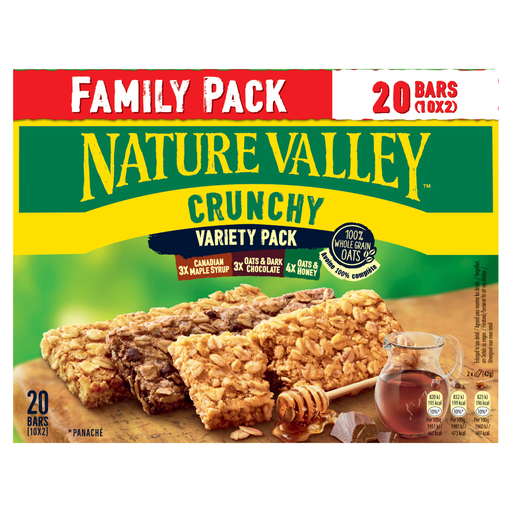
Consider this variety pack if a crunchy cereal bar fits your lecture-break plan. The listing names ten 42g packs; check the individual wrapper for the portion's calories, nutrition and allergens.
 No image available
This 4 x 35g fruit-and-nut pack is an option if you prefer that format to a cereal bar. Check Blueberry Muffin's own calories, total sugars, ingredients and allergen information; figures for nākd. Salted Caramel do not describe this flavour.
 No image available
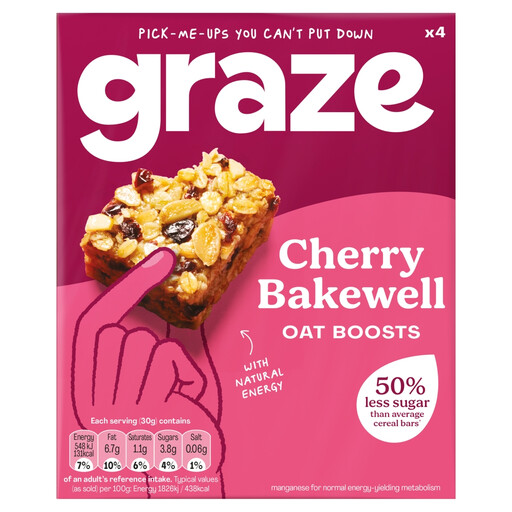
The listing names four 30g oat bars. If that portion suits your break, check Cherry Bakewell's current per-bar calories, fibre and allergens before comparing it with bars of other sizes.
 No image available
This 4 x 40g pack suits a comparison in which protein matters as well as calories. Nature Valley lists 196 kcal, 10.2g protein and 4.4g fibre for a 40g Peanut & Chocolate bar; confirm those figures on the current pack, along with its peanut, soya, milk and tree-nut warnings.
 No image available
This 4 x 40g protein-bar pack offers another flavour to consider when comparing larger snack portions. Read its own nutrition and allergen panel: the manufacturer figures for Peanut & Chocolate should not be applied to Salted Caramel Nut.
Among the manufacturer examples here, Alpen Light Summer Fruit has the smallest stated contribution per bar: Weetabix Cereals lists 65 kcal for 19g. That is a smaller portion than the 35g and 40g examples, so check both per-bar and per-100g values if portion size matters to your comparison.
Use calories per bar to assess the portion you plan to eat, and per 100g to compare bars of different weights on the same basis. Nature Valley's nutrition-label guidance distinguishes these two uses.
No. nākd. lists 17g total sugars and 134 kcal for its 35g Salted Caramel bar, despite the brand's no-added-sugar statement. Check total sugars and calories for the exact flavour you intend to buy.
Read the current bar's ingredients, emphasised allergens and any precautionary 'may contain' statement. GOV.UK guidance says the ingredients list on pre-packed food must emphasise allergens that are required to be declared; information for another flavour is not a substitute for checking the pack in hand.