Hosts serving dessert with Christmas pudding
If ice cream will accompany pudding or crumble, a sharing tub may make serving straightforward. Compare its fat, saturates and sugars per 100g rather than choosing by ‘light’ wording alone.


For a Christmas dessert where a low-fat claim matters, compare the fat figure per 100g with the threshold in UK labelling guidance rather than relying on ‘light’ wording. A reduced-fat tub may be useful when serving a group, while sorbet offers a fruit-based alternative; in either case, check sugars, allergens, portions and storage instructions on the exact pack.
If ice cream will accompany pudding or crumble, a sharing tub may make serving straightforward. Compare its fat, saturates and sugars per 100g rather than choosing by ‘light’ wording alone.
If the distinction between low-fat and reduced-fat matters to your choice, read the claim and the fat figure on the exact pack. UK Department of Health guidance published in November 2011 gives no more than 3g fat per 100g as the threshold for a low-fat claim on a solid food.
Sorbet provides an alternative to a creamy ice cream. Check its sugars and allergen statements before serving it to guests: Asda’s Raspberry Sorbet, for example, lists less than 0.5g fat and 22g sugars per 100g, with a may-contain warning for nuts and milk.
Decide whether the claim, serving format or flavour matters most for your Christmas meal, then compare the exact products on their labels.
Consider it: If you want creamy ice cream with an explicit low-fat claim; M&S Food lists 1.1g fat per 100g for its Low Fat Birthday Cake Ice Cream.
Check: That M&S product also lists 18.1g sugars per 100g and has allergen restrictions, so its low-fat claim is only one part of the choice.
Consider it: If a large vanilla tub suits the number of guests or the dessert you are serving; Sainsbury’s lists Wall’s Soft Scoop Vanilla Light in a 1.8L tub.
Check: Sainsbury’s lists 4.3g fat and 3.9g saturates per 100g for that tub, despite its comparison claim of 30% less fat than similar ice cream products.
Consider it: If you would rather serve a fruit-based frozen dessert than a creamy one; Asda’s Raspberry Sorbet lists less than 0.5g fat per 100g.
Check: The same Asda sorbet lists 22g sugars per 100g and may contain nuts and milk.
| Priority | What to check | Your needs |
|---|---|---|
| Fat claim | Read the precise claim and fat per 100g. UK Department of Health guidance from November 2011 gives 3g fat per 100g as the low-fat claim threshold for a solid food; ‘reduced fat’ describes a comparison instead. | I want to distinguish a dessert labelled low fat from one described as light or reduced fat. |
| Nutrition | Compare fat, saturates and sugars per 100g, then check the suggested serving. The figures answer different questions, so a lower fat figure alone does not settle the choice. | Alongside fat, I care about the sugars or saturates in the portion I plan to serve. |
| Allergens | Read the exact product’s ingredients, declared allergens and may-contain statements. Do not infer that a sorbet is free from milk or nuts. | Before offering dessert to guests, I need to check the pack against their stated allergy requirements. |
| Servings and storage | Compare pack size with the planned portions and number of guests. Follow that pack’s freezing and refreezing instructions; M&S Food instructs shoppers to keep its Low Fat Birthday Cake Ice Cream frozen at −18°C and not to refreeze it. | A sharing tub or separate pieces could suit my table; I also need freezer space until the meal. |
Sainsbury’s lists Wall’s Soft Scoop Vanilla Light at 4.3g fat per 100g, although it is described as having 30% less fat than similar ice cream products. UK Department of Health guidance from November 2011 gives 3g per 100g as the low-fat claim threshold for a solid food.
If a low-fat claim matters to you, check the exact wording and per-100g fat figure rather than treating a comparison claim as equivalent.
Asda Raspberry Sorbet lists less than 0.5g fat per 100g, alongside 22g sugars per 100g and a may-contain warning for nuts and milk.
Compare sugars and read the ingredient and allergen information on the product you intend to serve.
A product listing does not establish that the dessert can be ordered for your chosen Christmas delivery slot or collected from your selected store.
Confirm the item when arranging the shop, and check the current pack label before serving it.
M&S Food specifies −18°C storage and no refreezing for its Low Fat Birthday Cake Ice Cream. Directions for another frozen dessert may differ.
Make room in the freezer before shopping and follow the storage and refreezing instructions on each pack.
These retailer examples help distinguish dessert formats and label wording; check the exact product rather than applying one listing’s figures to an entire range.
M&S Food lists ice cream, frozen yoghurt and sorbet, including Low Fat Birthday Cake Ice Cream.
Waitrose & Partners groups some tubs, including Carte D’Or Vanilla Light and Halo Top Gooey Brownie, in a lighter ice-cream browsing category.
Tesco Groceries lists mango and raspberry sorbets and provides calorie-based browsing labels.
Sainsbury’s lists Wall’s Soft Scoop Vanilla Light in a 1.8L tub and Carte D’Or Madagascan Vanilla Light in a 900ml tub.
Asda lists both light ice-cream tubs and fruit sorbet, including its Raspberry Sorbet.
These sorbet mochi and gelato options offer individual pieces or tubs for a Christmas dessert table. Compare each product’s current nutrition, allergen and storage information before choosing.
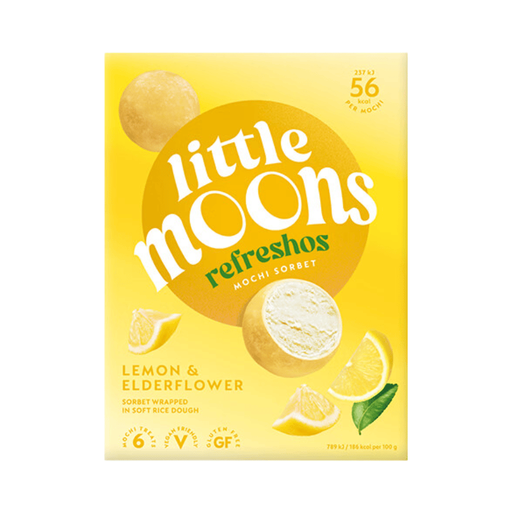 No image available
The six-piece pack is an option when you want to serve separate fruit-flavoured frozen desserts. Check the current nutrition panel, allergen statements and freezer instructions against your guests’ needs.
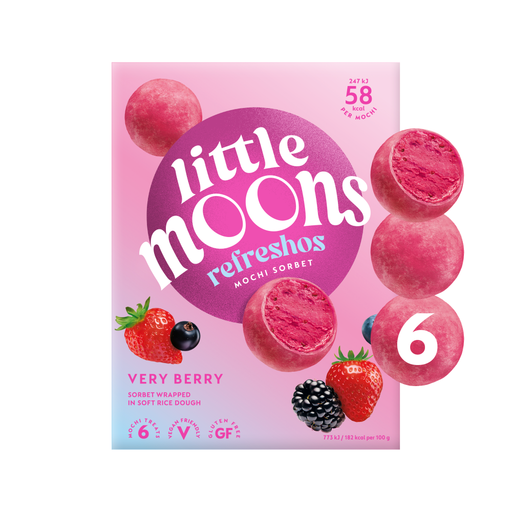 No image available
Six berry-flavoured pieces offer a separately portioned alternative to a sharing tub. Read the current pack for fat, sugars and allergen information before serving.
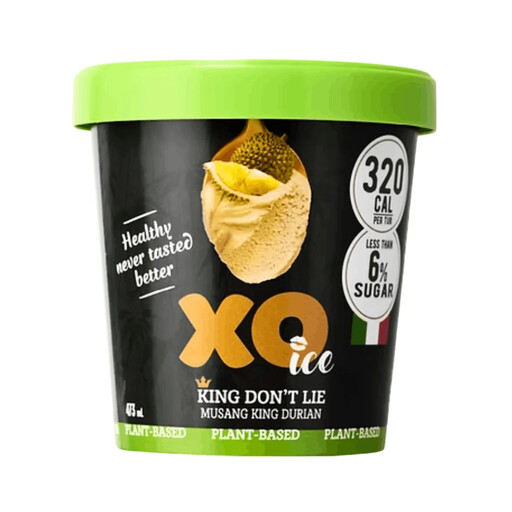 No image available
This durian gelato comes in a tub rather than individual pieces. Its plant-based description does not replace a check of the current ingredient and allergen information; compare the nutrition panel if a low-fat claim matters to you.
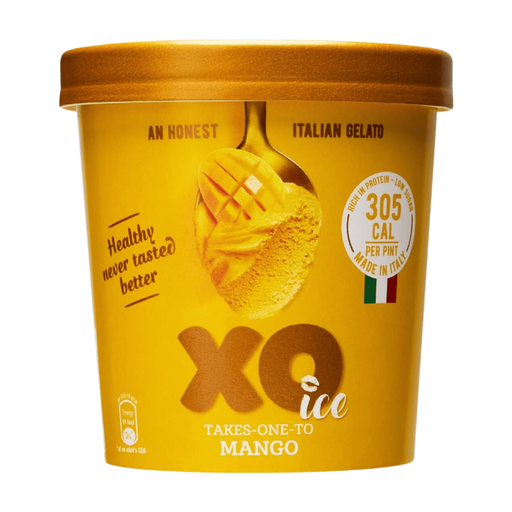 No image available
The mango gelato tub is a format to consider if guests will serve themselves. Check the pack’s fat, sugars, allergens and suggested servings rather than inferring nutritional suitability from its name.
 No image available
The six-piece mango dessert offers portions that can be counted before a gathering. Check the exact pack’s sugars, allergens and storage directions as well as its fat figure.
For a solid food, UK Department of Health guidance published in November 2011 gives no more than 3g fat per 100g as the threshold for a low-fat claim; for a liquid, it gives no more than 1.5g per 100ml. Check both the wording of the claim and the nutrition information on the product you are buying.
No: a reduced-fat statement compares a product with others, rather than giving its fat content on its own. Sainsbury’s describes Wall’s Soft Scoop Vanilla Light as having 30% less fat than similar ice cream products, yet lists 4.3g fat per 100g; the UK Department of Health’s November 2011 low-fat guidance gives 3g per 100g for a solid food.
No. Asda Raspberry Sorbet lists less than 0.5g fat per 100g, but also 22g sugars per 100g and a may-contain warning for nuts and milk. Check the exact sorbet against the guests you are serving.
Follow each product’s own pack instructions and make freezer space before the shop. M&S Food says to keep its Low Fat Birthday Cake Ice Cream frozen at −18°C and not to refreeze it; do not assume those directions cover a different dessert.
Compare fat, saturates and sugars per 100g, then use the serving information to relate those figures to the portion you plan to offer. UK government nutrition-labelling guidance states that nutrition information must be declared on prepacked food; read it on the exact product rather than relying on a category name.