Hosts cooking a coconut-based main or side
If your Easter lunch recipe calls for coconut milk in a curry, soup, sauce or vegetable dish, choose a cooking product before comparing its fat declaration. A carton drink is a different ingredient.


For an Easter lunch curry, soup or sauce that calls for cooking coconut milk, start with a light or reduced-fat tin and compare its saturated-fat declaration with other tins in the same units. Choose a richer cooking milk if the recipe depends on its fuller consistency; a low-fat carton coconut drink is not a direct substitute when the sauce relies on tinned coconut milk for body.
If your Easter lunch recipe calls for coconut milk in a curry, soup, sauce or vegetable dish, choose a cooking product before comparing its fat declaration. A carton drink is a different ingredient.
Read the saturated-fat value and its stated basis on each nutrition panel. Similar-sounding light and reduced-fat tins can have different figures, and a value per 100g should not be treated as a value per 100ml.
Check both the recipe’s required form of coconut milk and the current product’s ingredients. A carton coconut drink may suit a recipe written for a milk alternative without giving a sauce the same body as a cooking milk.
Decide what the dish needs from coconut milk, then compare the exact packs you might use. Nutrition figures stated per 100g and per 100ml are different comparison bases.
Choose when: The lunch recipe calls for cooking coconut milk and reducing fat is part of the buying decision.
Bear in mind: A light or reduced-fat name does not tell you the saturated-fat value; read the nutrition panel.
Choose when: The recipe specifically relies on a richer coconut ingredient and that matters more than the reduced-fat aim.
Bear in mind: Check its fat and saturated-fat figures rather than assuming it meets a low-fat requirement.
Choose when: The recipe calls for a milk alternative, or you are using it as a drink.
Bear in mind: Its formulation differs from tinned cooking milk, so check whether a thinner result would work in the dish.
| Priority | What to check | Your needs |
|---|---|---|
| Saturated fat | Compare figures stated in the same units. Sainsbury’s lists 4.9g per 100ml for its Light coconut milk; Tesco Groceries lists 5.1g per 100ml for Blue Dragon Light; Waitrose & Partners lists 5.5g per 100ml for essential Reduced Fat. Tesco Light’s 5.2g figure is stated per 100g. | I want to compare the cooking tins without assuming that every product labelled light has the same saturated-fat content. |
| Recipe consistency | Check whether the recipe specifies tinned cooking coconut milk or a carton milk alternative. Alpro says its Coconut Original drink contains 5.3% coconut milk plus rice. | My lunch sauce needs the kind of coconut ingredient the recipe was written for; a lower-fat drink is not automatically a suitable swap. |
| Guest suitability | Read the purchased pack’s ingredients and allergen information, including any precautionary statements. Check the exact product rather than applying one brand’s declaration to another. | When I am serving guests with allergies or other ingredient restrictions, I need to check the pack before cooking. |
| Leftovers | Check the pack size, refrigeration directions and use-after-opening instruction for the product you buy. | I would rather plan another use for an opened tin than assume every coconut milk has the same storage period. |
Light cooking coconut milks do not all declare the same amount of saturated fat. The wording alone cannot tell you how two tins compare.
Read the saturated-fat line on both packs, check whether it is given per 100g or per 100ml, and consider how much the recipe uses.
A coconut drink and a tinned cooking milk have different formulations. The swap can change a sauce or soup that depends on the cooking ingredient for body.
Follow the recipe’s specified ingredient, or use a drink only when the recipe calls for a milk alternative or a thinner result is acceptable.
Ingredients and precautionary statements are product-specific, which matters when serving guests with allergies.
Check the current pack for the particular coconut milk you will serve, including its full ingredients and precautionary wording.
Storage directions can differ between products, so a plan for Easter lunch leftovers needs to fit the tin you open.
Read the refrigeration, container and use-after-opening instructions before putting leftovers away.
These are references to particular coconut products, not a claim that every product from each brand has the same formulation or is available in the Joybuy selection below.
Tesco Light is a tinned cooking coconut milk to consider when a recipe calls for a reduced-fat cooking product.
Sainsbury’s Light is a cooking coconut milk with a published per-100ml nutrition declaration.
Essential Reduced Fat is a tinned cooking option rather than a carton coconut drink.
M&S Reduced Fat Coconut Milk is another cooking product whose nutrition panel deserves a separate check.
Koko Cuisine is a coconut cooking product in a resealable pack, rather than the light tinned route discussed here.
Alpro Coconut Original is a carton coconut drink for uses suited to a milk alternative.
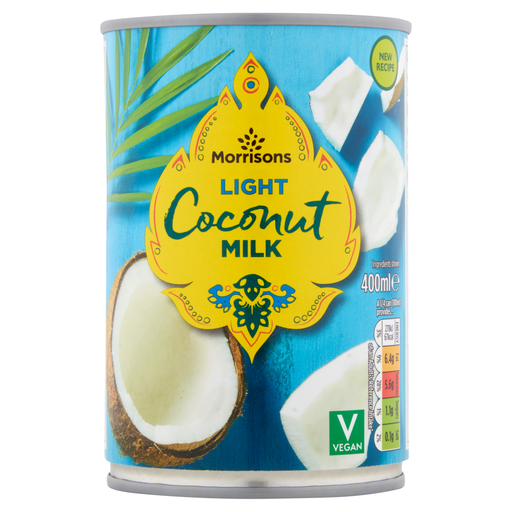
This reduced-fat tinned coconut milk is an option to consider for an Easter lunch recipe that calls for cooking coconut milk. Compare its current pack details with your recipe and guest requirements.
 No image available
A 400ml tin of reduced-fat cooking coconut milk for a recipe that calls for coconut milk rather than a carton drink. Check the current pack’s saturated-fat, ingredient and opened-storage information against your meal plan.
No. Light or reduced-fat wording does not replace the saturated-fat figure on the nutrition panel. For example, Sainsbury’s lists 4.9g per 100ml for its Light cooking milk, while Waitrose & Partners lists 5.5g per 100ml for essential Reduced Fat; compare declarations stated in the same units.
Use a carton drink when the recipe calls for a milk alternative or a thinner result will work. Alpro says its Coconut Original drink contains 5.3% coconut milk plus rice, so do not assume it will replace tinned cooking coconut milk in a sauce that depends on the latter’s body.
Follow the directions on the particular tin before adding it to the dish. Check its instructions for shaking or warming rather than assuming every coconut milk should be handled in the same way.
Follow the purchased product’s instructions for refrigeration, the container to use and the period after opening. Check those directions when planning a second dish, rather than applying another brand’s storage rule.
Yes, check the ingredients and any precautionary allergen statements on the exact pack before serving a guest with an allergy. A statement on one coconut milk does not establish the ingredients or allergen status of another.