Home cooks reducing fat
If you make curries, soups or sauces, a light can gives you a cooking ingredient to compare with standard canned coconut milk. You still need to assess its ingredients and serving size separately for a low-FODMAP diet.


A calcium-fortified UHT coconut drink suits coffee, cereal and smoothies; light canned coconut milk suits curries and sauces when you want a lower-fat cooking option. Neither format nor a reduced-fat label establishes that the exact product and serving are low FODMAP. Check ingredients and product-specific guidance, including the Monash FODMAP App or certification where available.
If you make curries, soups or sauces, a light can gives you a cooking ingredient to compare with standard canned coconut milk. You still need to assess its ingredients and serving size separately for a low-FODMAP diet.
If you use a coconut drink in coffee, cereal or smoothies, look at fat and calcium per 100ml on the drink label. A fortified beverage serves a different purpose from canned cooking milk.
Portions and individual food choices matter during restriction and reintroduction. Monash FODMAP describes a staged approach rather than permanent avoidance of every coconut product.
Choose it for: Drinking, coffee, cereal or smoothies when a thin beverage works for the recipe.
Bear in mind: It is not a like-for-like substitute for the texture of canned coconut milk in a curry.
Choose it for: Curries, soups or sauces when you want a canned cooking ingredient with less fat than a standard can.
Bear in mind: A light can can still contain substantial saturated fat, and its label does not establish a low-FODMAP serving.
Once you have chosen the format for your dish or drink, compare like-for-like nutrition labels and check FODMAP suitability for the exact product and portion.
| Priority | What to check | Your needs |
|---|---|---|
| FODMAP suitability | Check the exact product in the Monash FODMAP App or for Monash certification where available. Read the ingredients, including any added inulin, and check guidance for the intended serving and format. | I want to know whether the product and portion fit my low-FODMAP plan, rather than relying on the words ‘light’ or ‘reduced fat’. |
| Cooking function and fat | Compare fat and saturates per 100ml between canned products. Tesco lists 6.0g fat per 100ml for its Light Coconut Milk and 18.1g per 100ml for its standard Ingredient Coconut Milk; these figures describe those products, not every can. | For a sauce, I need canned coconut milk but want to compare lighter versions with the standard product I would otherwise use. |
| Everyday drinks | Compare UHT drinks with other drinks, not with cooking cans alone. Alpro Coconut Original lists 0.9g fat per 100ml, while the Sainsbury's listing for Koko Coconut UHT gives 2.5g per 100ml. | A drink for cereal or coffee matters more to me than a rich sauce ingredient. |
| Calcium fortification | Read the calcium value per 100ml on the particular drink. Alpro Coconut Original and Koko Coconut UHT each list 120mg per 100ml; do not assume a cooking can has the same fortification. | If I regularly use a plant-based drink in place of milk, I want to compare its labelled calcium content. |
| Diet stage and portion | Use product-specific guidance or a tested recipe rather than treating one recipe portion as a limit for every coconut milk. Monash FODMAP describes restriction followed by reintroduction and personalisation. | I need a portion that makes sense for the product and meal I am using, without turning an initial restriction into a permanent rule. |
A lower-fat claim says nothing about whether the exact product has been tested for FODMAP content or what serving may be suitable. Monash FODMAP says its certification involves independent laboratory testing.
Check for certification or an entry for the exact product in the Monash FODMAP App. Also read its ingredients and follow applicable serving guidance.
A UHT drink and a canned cooking milk have different uses. A drink will not necessarily give a curry the texture expected from canned coconut milk.
Choose the format for the dish first, then compare fat per 100ml with products of the same format.
Light canned coconut milk can still list saturated fat on its nutrition label. Reducing total fat relative to a standard can does not remove the need to compare portions and saturates.
If saturated fat is part of your comparison, read the per-100ml value as well as the amount of canned milk used in the recipe.
Monash FODMAP describes an initial low-FODMAP phase followed by reintroduction and a personalised diet; its 2026 information sheet describes the initial phase as lasting 2–6 weeks.
Follow the staged approach with appropriate individual advice. The NHS notes that a dietitian may recommend a low-FODMAP diet for IBS.
These examples illustrate the difference between drinks, light cooking cans and standard cans; a brand name alone does not establish FODMAP suitability.
Alpro Coconut Original is a UHT drink for uses such as cereal or hot drinks, rather than a canned curry ingredient.
Koko Coconut UHT is a coconut drink, not a canned cooking milk.
Tesco lists both light and standard canned coconut milk for cooking.
Sainsbury's Coconut Milk Light is a canned option for cooking.
Essential Waitrose Reduced Fat Coconut Milk is a canned cooking option rather than a fortified UHT drink.
The M&S Coconut Milk considered here is a standard canned cooking product, not a reduced-fat example.
These options cover a reduced-fat canned cooking milk and a coconut barista drink. Choose by intended use, then check the exact product's ingredients and portion guidance for your low-FODMAP plan.
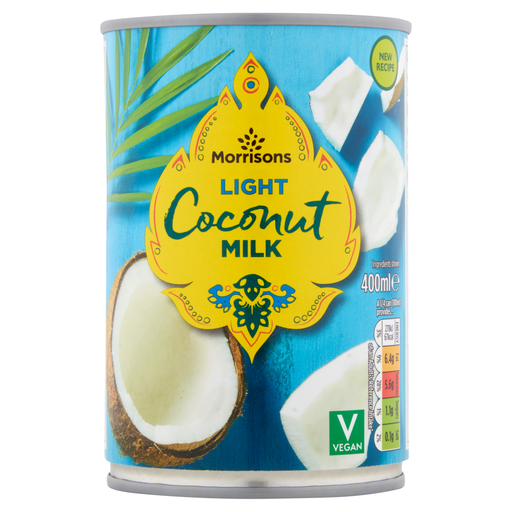 No image available
A canned option to consider for curries, soups or sauces when you want to compare reduced-fat cooking milks. Check its current per-100ml nutrition, ingredients and serving guidance; reduced fat alone does not establish FODMAP suitability.
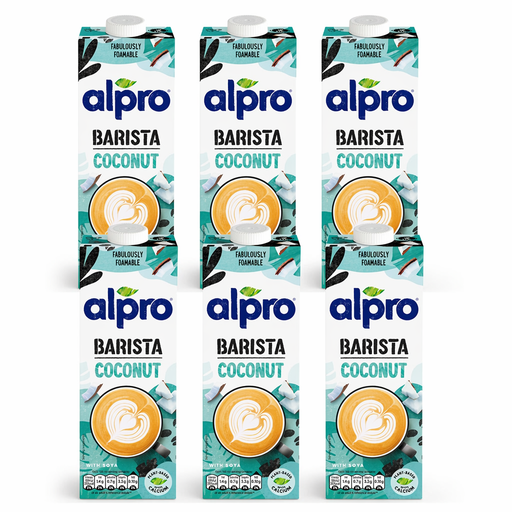 No image available
A barista-style coconut drink to consider for coffee rather than for a canned-milk sauce. Check the ingredients if you avoid soya, and consult guidance for this exact drink and serving before using it during a low-FODMAP phase.
No. A fat value does not tell you whether an exact product or serving is low FODMAP. Check ingredients and product-specific guidance in the Monash FODMAP App, or look for Monash certification where available.
Choose a UHT coconut drink for coffee, cereal or smoothies, and a light canned coconut milk when a curry, soup or sauce calls for cooking milk. Compare fat per 100ml within the format you need, then assess ingredients and the intended portion separately for low-FODMAP use.
Use guidance for the particular product or a tested recipe, not one universal measure. A Monash FODMAP curry recipe uses 200g of canned coconut milk across four servings—50g per serving within that complete recipe—but that does not establish a limit for every brand or meal.
No. Monash FODMAP says a low-FODMAP diet does not have to be dairy-free. Choose a coconut drink if it suits your food choices, but do not assume the diet itself excludes every dairy product; a dietitian can advise on individual restrictions.
No. Monash FODMAP describes an initial 2–6 week phase followed by reintroduction and personalisation. If you are excluding several foods or need help managing the diet, the NHS notes that a dietitian may recommend and support a low-FODMAP approach for IBS.