Breastfeeding parents who want a convenient dessert
The NHS says breastfeeding does not require a special diet. A frozen dessert can be an occasional choice alongside a varied diet, rather than a replacement for meals.


Choose a frozen dessert by its full nutrition panel and the portion you plan to serve, not by a “low fat” name alone. Compare fat, saturates, sugars and calories on the same stated basis, then check ingredients and allergens. For breastfeeding parents, the NHS says no special diet is needed; dessert can sit alongside a varied diet rather than replace regular meals.
The NHS says breastfeeding does not require a special diet. A frozen dessert can be an occasional choice alongside a varied diet, rather than a replacement for meals.
A tub may be convenient when several people will share it. Check its size, serving information, nutrition basis and frozen-storage instructions before choosing.
A low-fat description does not answer every label question. The sugars, saturates, ingredients and allergen statement may all affect which dessert suits the household.
Start with the nutrition panel, then consider who will eat the dessert and how the pack fits your routine.
| Priority | What to check | Your needs |
|---|---|---|
| Nutrition basis | Read fat, saturates, sugars and calories together. Marks & Spencer reports its Birthday Cake ice cream per 100g, while Tesco reports Wall’s Soft Scoop Vanilla Light per 100ml; do not rank those figures as though the units match. | I want to compare labels fairly, rather than choose whichever pack has the smaller-looking fat figure. |
| Place in the diet | Check the portion you expect to serve and the sugars alongside any protein figure. The NHS advises a varied diet while breastfeeding, without a special diet. | A convenient dessert appeals to me, but I do not want it to take the place of a regular meal. |
| Ingredients and allergens | Read the current pack’s ingredients and allergen statement, including any suitability warnings. Check again on repeat purchases because product information can change. | Everyone sharing the dessert needs to be able to eat the particular product I bring home. |
| Pack and storage | Check pack size, any stated serving guidance and freezer space. Follow the product’s storage and refreezing instructions. | For an irregular household routine, I would choose a pack size that fits the number of likely servings. |
Marks & Spencer lists 1.1g fat and 18.1g sugars per 100g for its Low Fat Birthday Cake Ice Cream. A fat figure alone does not describe its sugars or the portion eaten.
Compare the full panel, including saturates, sugars and calories, using matching units where possible.
A frozen dessert does not provide the variety of foods in the diet described by the NHS for breastfeeding parents.
Keep it alongside regular meals. Ask a GP, midwife or health visitor for individual advice if you have concerns about your postnatal diet.
Marks & Spencer’s Birthday Cake ice cream lists milk, wheat and gluten, while its Cherry Fro-Yo lists milk. Both product pages also give nut and peanut suitability warnings.
Read the physical pack each time, particularly when sharing with someone who has an allergy or intolerance.
A large pack may suit a household but not the portions or freezer space available. A particular product may also be unavailable when you plan to buy it.
Check the pack size and current availability, then follow its frozen-storage instructions. Marks & Spencer’s checked dessert pages say not to refreeze their products.
These examples illustrate different pack formats and label details; a brand name alone does not establish that every product in its range is low in fat.
Marks & Spencer publishes per-100g nutrition for its Low Fat Birthday Cake Ice Cream and Greek Style Cherry Fro-Yo.
Tesco lists Wall’s Soft Scoop Vanilla Light as a 1.8L tub for households considering a shared dessert.
Tesco’s listing for Graham’s Goodness Salted Caramel Ice Cream gives nutrition per 100ml.
Waitrose’s frozen-yoghurt category lists kefir and Greek-style frozen-yoghurt products.
The brand describes its Indulgence Mini Cup Multipack as individual cups, an alternative format to a shared tub.
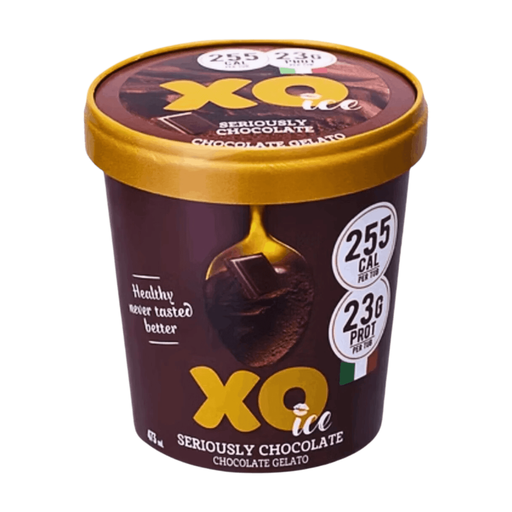
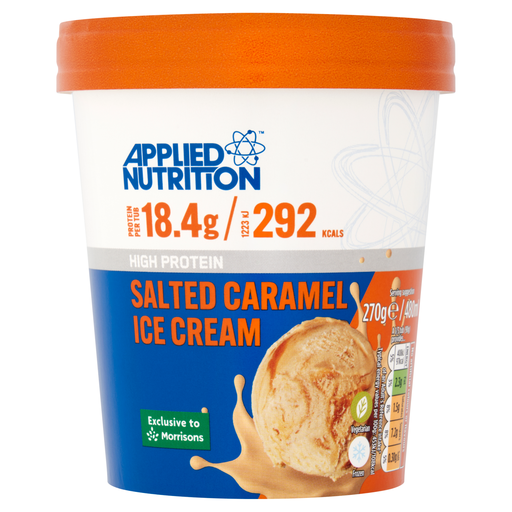
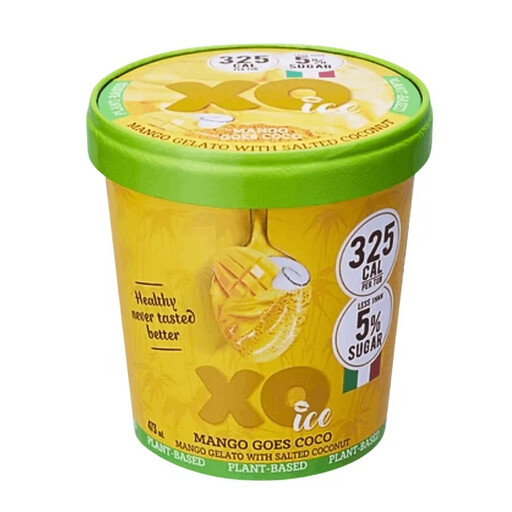
These Joybuy options include chocolate and fruit gelatos alongside salted-caramel and cookie-dough ice creams. Compare their current pack labels before deciding which fits a lower-fat dessert choice.
 No image available
A chocolate gelato tub for those who prefer that flavour. Check the current pack’s fat, sugars, protein, serving information and allergens before choosing it.
 No image available
A salted-caramel ice cream tub to consider if that flavour suits the household. Use the current pack’s serving guidance and compare its fat and sugars alongside protein.
 No image available
A plant-based mango and coconut gelato tub. Check the current nutrition panel and ingredients, particularly if coconut or other allergens matter to your household; the product name alone does not establish its fat content.
 No image available
A cookie-dough ice cream tub for those who prefer that flavour. Check the pack’s fat and sugars as well as its serving guidance, and read the current allergen statement before sharing.
A frozen dessert can sit alongside a varied diet; the NHS says you do not need a special diet while breastfeeding. Choose it as a dessert rather than a replacement for regular meals, and check its ingredients if you have particular dietary needs.
No. Read the sugars and calories as well as fat and saturates. Marks & Spencer lists 18.1g sugars per 100g for its Low Fat Birthday Cake Ice Cream and 20.3g per 100g for its Greek Style Cherry Fro-Yo.
Do not treat them as the same measurement basis. Marks & Spencer reports its checked desserts per 100g, whereas Tesco reports Wall’s Soft Scoop Vanilla Light per 100ml. Use matching units for a direct comparison where possible, then consider your intended serving.
Yes. Read the physical pack on each purchase because ingredients and allergen information can change. Marks & Spencer’s checked Birthday Cake ice cream lists milk, wheat and gluten; its Cherry Fro-Yo lists milk.
Follow the instructions on that product’s pack. Marks & Spencer’s checked frozen-dessert pages say to keep those products frozen at −18°C and not to refreeze them.