Desk workers comparing fat content
If dried fruit is one part of your lunch, comparing nutrition panels per 100g helps you distinguish products with different declared fat figures. The ingredients also show whether oil has been added.


For a low-fat dried-fruit addition to a desk lunch, compare total fat per 100g and read the ingredients rather than relying on a front-of-pack description. Tesco Groceries lists 0g fat per 100g for Sunsweet Stoned Prunes and 1.0g for Whitworths Snacking Raisins, which contain sunflower oil. The NHS uses 30g of dried fruit as one 5 A Day portion; check sugars and allergen information on the pack as well as the fat figure.
If dried fruit is one part of your lunch, comparing nutrition panels per 100g helps you distinguish products with different declared fat figures. The ingredients also show whether oil has been added.
A measured amount is easier to plan around than an open bag at your desk. The NHS states that 30g of dried fruit counts as one 5 A Day portion.
If sulphites or allergen warnings affect your choice, read the current pack rather than assuming that all dried-fruit products have the same ingredients or warnings.
Start with comparable per-100g nutrition figures, then check the ingredients, the amount you plan to pack and any relevant allergen statement.
| Priority | What to check | Your needs |
|---|---|---|
| Total fat | Compare total fat per 100g on each pack. Read the ingredients for added oil; a fat figure alone does not describe the recipe. | I want to compare dried fruits on the same basis, especially if avoiding added oil matters to me. |
| Lunch portion | Check the pack or individual box size against the NHS reference of 30g of dried fruit for one 5 A Day portion. | A small box may be convenient to pack; with a larger bag or tub, I can measure out the amount I want for lunch. |
| Sugars | Read sugars per 100g separately from total fat, and check the ingredients if an added-sugars statement matters to you. | Choosing by fat content alone would not tell me how much sugar the product lists. |
| Ingredients and allergens | Check the current ingredients and allergen statement for sulphites and any relevant nut, peanut or sesame warning. | If an ingredient or allergen affects my choice, I need the information on the pack I will eat. |
Fat and sugars are separate entries on the nutrition panel. A product can have little declared fat while still listing sugars.
Compare both figures on a per-100g basis, then consider the amount you intend to pack.
Tesco Groceries lists sunflower oil among the ingredients of Whitworths Snacking Raisins, alongside 1.0g fat per 100g.
If avoiding added oil matters to you, check the ingredients as well as total fat.
A multi-serving bag does not tell you how much you have packed for one lunch. The NHS identifies 30g of dried fruit as one 5 A Day portion.
Measure a portion before taking a larger pack to your desk.
Ingredient and precautionary allergen information can differ between dried-fruit products. The M&S Dried Pineapple listing identifies sulphites and states nut, peanut and sesame allergy unsuitability.
Check the current physical pack whenever an ingredient or allergen warning matters to you.
These examples show why the details of a particular product matter more than a general impression of its brand.
Tesco Groceries lists Sunsweet Stoned Prunes with 0g fat and 7.1g fibre per 100g.
Tesco Groceries describes Whitworths Snacking Raisins as partially rehydrated raisins and lists 1.0g fat per 100g.
M&S lists 0.4g fat per 100g for its Dried Pineapple and describes it as having no added sugars.
These prune and raisin products offer different pack sizes for adding dried fruit to a desk lunch. Compare each current pack’s nutrition and ingredients for the details that matter to you.
 No image available
These pitted prunes are an option for a fruit addition to lunch. The pack is 500g; check its current nutrition panel and ingredients rather than relying on the sugar-free wording in the longer product name.
 No image available
The 14g boxes provide a defined amount to pack with lunch. The product is labelled 12+ Months; compare the amount you take with the NHS 30g dried-fruit portion reference and check the current pack for nutrition and ingredients.
 No image available
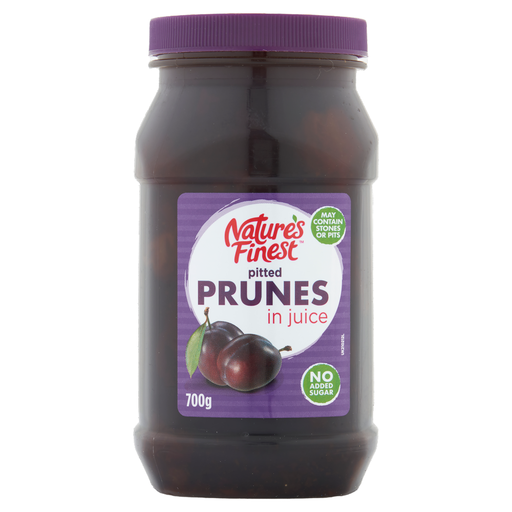
The 700g pack lets you measure out a smaller amount for lunch. The product information warns that stone fragments may occasionally remain, despite the prunes being described as pitted.
 No image available
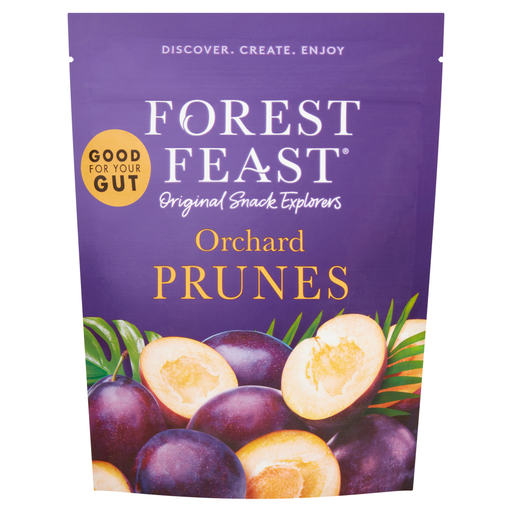
This 200g bag is an option if you prefer to portion prunes yourself for lunch. Check the current ingredients and nutrition panel when comparing it with other dried fruit.
 No image available
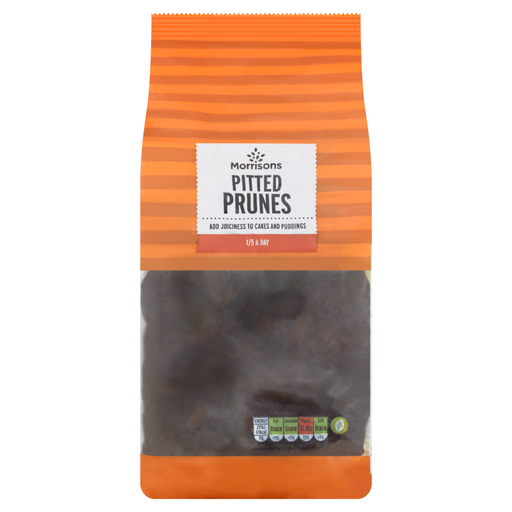
Portion these prunes from the 500g pack if you want a measured fruit addition to lunch. The product information cautions that pieces of stone may occasionally remain in pitted prunes.
No. Compare total fat per 100g and the ingredients instead. Tesco Groceries lists 0g fat per 100g for Sunsweet Stoned Prunes and 1.0g for Whitworths Snacking Raisins, whose ingredients include sunflower oil. Check sugars separately; the fat figure does not describe them.
The NHS states that 30g of dried fruit counts as one 5 A Day portion. You can use that amount as a reference when choosing a small box or measuring fruit from a larger pack for lunch.
No. Check the current product’s ingredients and allergen statement. For example, the M&S Dried Pineapple listing identifies sulphites and states that the product is not suitable for people with nut, peanut or sesame allergies.
A 30g dried-fruit portion is a fruit component, not a description of a complete lunch. The NHS uses that amount to explain what counts towards 5 A Day, so plan the rest of your lunch separately.