Do not use low-fat dried fruit as a snack for children to eat while they search for eggs: the NHS advises giving toddlers dried fruit with meals rather than between them. If you want to serve it with a meal after the hunt, compare the exact pack’s portion size, fat, sugars and ingredients, and consider each child’s age and whether an adult can supervise eating.
Who is this choice for?
The children attending and the way food will be handed out matter more than a low-fat description on its own.
Parents hosting toddlers or preschoolers
Plan when children will eat, not just what will go into a hunt bag. The NHS advises giving toddlers dried fruit with meals rather than as a between-meal snack. Keep eating supervised, and check whether the youngest children can be offered the food you have chosen.
Families considering dried fruit instead of chocolate treats
Compare the nutrition panels of the actual products rather than assuming a lower fat figure settles the choice. Tesco’s 14 g raisin boxes list less than 0.1 g fat and 8.4 g sugars per box; portion size and serving time still matter.
Organisers handing out prepacked food
Keep each product identifiable and check the ingredients and allergens on the exact packs you distribute. Food Standards Agency guidance says prepacked food must have an ingredients list with allergens present emphasised.
What should you check first?
Decide whether dried fruit will be eaten during the hunt or served with a meal afterwards. Then compare packs on the same nutrition basis and choose a format you can distribute and supervise appropriately.
| Priority |
What to check |
Your needs |
| Serving time |
Will children eat the fruit while searching, or with a meal afterwards? The NHS advises giving toddlers dried fruit with meals rather than between them. |
I want a hunt prize children can open straight away; dried fruit does not fit the NHS advice for toddlers in that situation. |
| Fat and sugars |
Read both figures on the same per-100 g basis when comparing products, then check the amount in the portion offered. Tesco lists less than 0.1 g fat and 8.4 g sugars in each 14 g raisin box. |
A low fat figure catches my eye, but I also want to know how many sugars are in the serving a child would receive. |
| Age and supervision |
Check the youngest child’s age and how eating will be supervised. Department for Education guidance says not to offer raisins as a snack to children under 12 months. |
Young children will be attending, so I need to plan a supervised serving rather than leave food prizes to be eaten during the hunt. |
| Pack format |
Check whether portions are individually packed or must be measured from a larger bag. Confirm the amount in each box or the serving you intend to prepare. |
For a handout after a meal, separate packs would make distribution simpler; at home, I can portion fruit from a larger pack myself. |
| Ingredients and allergens |
Read the exact pack’s ingredients and emphasised allergens. Check whether it contains plain fruit, a coating, nuts or other additions rather than relying on the phrase “fruit snack”. |
I am handing food to a group and need to identify what each child would receive, including any ingredients their family needs to check. |
Common buying mistakes
-
Assuming low fat also means low sugar
The two figures describe different things. Tesco’s 14 g raisin boxes list less than 0.1 g fat but 8.4 g sugars per box, while the NHS advises giving toddlers dried fruit with meals rather than between them.
Compare fat and sugars using matching label units, and plan a mealtime serving instead of fruit to nibble throughout the hunt.
-
Offering loose fruit as an on-the-move prize
A larger pack leaves portioning to the adult, while children moving around the hunt may start eating away from a supervised serving area.
If you use dried fruit, portion and serve it with a meal after the activity. Check the youngest child’s age; Department for Education guidance says not to offer raisins as a snack to children under 12 months.
-
Treating every fruit snack as the same product
Plain raisins, partially rehydrated raisins, fruit-and-nut mixes and chocolate-coated raisins can have different ingredients. A plain product’s nutrition panel cannot stand in for a coated or mixed one.
Read the physical label of the exact product you will hand out. For prepacked food, Food Standards Agency guidance says ingredients must be listed and allergens present emphasised.
Brand and product-line references
These examples show why the precise product and pack format matter; a brand name alone does not establish the ingredients or nutrition of everything in its range.
Tesco
Tesco lists both a 12-pack of seedless raisins and a 1 kg pack, giving shoppers two different portioning formats to compare.
- Each 14 g box in the 12-pack lists less than 0.1 g fat and 8.4 g sugars.
- The 1 kg pack needs adult portioning; its label lists 1.0 g fat and 62.6 g sugars per 100 g.
Whitworths
Whitworths Extra Juicy Snacking Raisins are a partially rehydrated raisin product, rather than simply a pack of plain dried raisins.
- The listed ingredients identify partially rehydrated raisins (99%), sunflower oil and potassium sorbate.
- Check this product’s own label and intended portion rather than applying the figures from a different raisin pack.
M&S
M&S lists plain raisins as well as other fruit snacks, including chocolate-coated raisins.
- Its Raisins 500 g product lists raisins and sunflower oil as ingredients, with 0.4 g fat and 69.3 g sugars per 100 g.
- Those figures and ingredients do not describe M&S coated or mixed-fruit products; check the exact pack.
Joybuy dried-fruit options
These options include small raisin boxes and larger dried-fruit packs to consider for a planned serving after the hunt. They are not a recommendation to let children eat dried fruit as they search; check each pack before choosing food for a group.
 No image available
Organix Goodies Raisins 12+ Months, 12 x 14g
The 12 separate 14 g packs offer a defined amount for a planned handout with a meal. The product name specifies 12+ months; check the label and supervise young children while they eat.
View on Joybuy
 No image available
J.ZAO Prebiotic Pitted Chilean Prunes 500g
This 500 g prune option is a different fruit from the raisin packs. If considering it for a handout with a meal, check the exact pack’s ingredients, nutrition panel and how individual servings are packaged.
View on Joybuy
 No image available
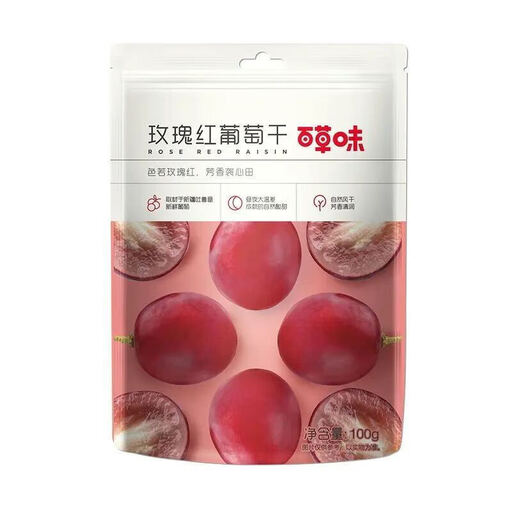
Be&Cheery Rose Red Raisins 100g
The 100 g pack can be considered where an adult will set servings after the hunt rather than hand out the whole pack. Check its fat and sugars per 100 g, ingredients and serving information on the label.
View on Joybuy
 No image available
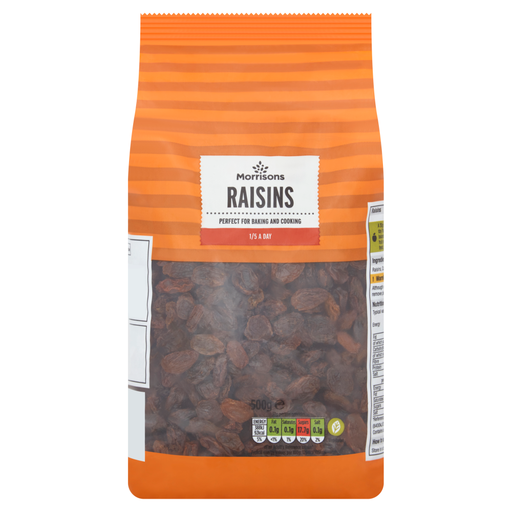
Morrisons Raisins 500g
This 500 g pack suits a plan in which an adult measures the raisins for a serving with a meal, rather than distributing the full pack during the hunt. Joybuy lists 0.4 g fat and 59.0 g sugars per 100 g; check the physical pack before serving.
View on Joybuy
Frequently asked questions
Does low-fat dried fruit make a suitable snack during an Easter egg hunt?
Not for toddlers to eat between meals: the NHS advises giving them dried fruit such as raisins with meals instead. A low fat figure does not describe the sugars in the portion, so check both on the exact pack if you plan to serve dried fruit later.
What should I compare when a raisin pack says it is low in fat?
Compare the fat figures on the same per-100 g basis, then read sugars and the amount in the serving you intend to offer. For example, Tesco’s 14 g raisin box lists less than 0.1 g fat alongside 8.4 g sugars; the fat figure alone does not settle whether it fits the serving occasion.
Can babies and young children have raisins at the hunt?
Do not offer raisins as a snack to children under 12 months, according to Department for Education guidance. For older young children, plan a supervised serving rather than leaving raisins to be eaten while they move around the hunt; the NHS advises giving toddlers dried fruit with meals.
Should I check allergens on prepacked dried fruit?
Yes. Read the ingredients and allergen information on the exact pack being handed out, especially for mixed or coated fruit products. Food Standards Agency guidance says prepacked food must carry an ingredients list with allergens present emphasised.


