Students stocking a first cupboard
If you want dried fruit for breakfasts or cooking, pack size and after-opening storage matter alongside the type of fruit.


For a low-fat dried-fruit option when moving into student accommodation, compare fat per 100g and the ingredients rather than relying on a “reduced fat” label. Plain fruit and fruit-and-nut mixes can differ substantially in fat content; also check total sugars, allergens and how you will store the pack after opening.
If you want dried fruit for breakfasts or cooking, pack size and after-opening storage matter alongside the type of fruit.
Check the fat figure per 100g and the ingredients: a plain fruit mix and a mix containing nuts need not have similar nutrition values.
Read the current pack for sulphites and any nut, peanut or sesame statements, particularly when food will be kept in shared accommodation.
Start with the recipe and fat figure, then check whether the portion, allergen information and storage instructions suit your routine.
| Priority | What to check | Your needs |
|---|---|---|
| Fat and ingredients | Compare fat per 100g and look for nuts or added oils. M&S lists 0.4g fat per 100g for its Mixed Dried Fruit; Whitworths lists 23.6g per 100g for its peanut-containing 1DERS Fruit and Nut Mix. | I want dried fruit without accidentally choosing a fruit-and-nut mix when low fat is my priority. |
| Total sugars and portions | Read total sugars per 100g and per serving, not just added-sugar wording. The NHS says 30g of dried fruit counts as one 5 A Day portion and advises having it at mealtimes to reduce tooth-decay risk. | For breakfast or a meal, I want to judge how much dried fruit I am using rather than free-pouring from a large bag. |
| Allergen information | Check ingredients and precautionary statements on the current pack. The Food Standards Agency says sulphites are often used in dried fruit and notes a higher reaction risk to sulphur dioxide for people with asthma. | If sulphites or other allergen warnings matter to me, I need the information for this particular pack. |
| Storage after opening | Check pack size, resealing and the stated storage or use-by instructions after opening. Tesco advises an airtight container for its dried mixed fruit; M&S gives a three-day post-opening window for its dried pineapple. | A pack needs to fit the space and storage options I have in a shared kitchen. |
The recipes can have very different fat figures: Whitworths lists 23.6g fat per 100g for its peanut-containing 1DERS mix, compared with 0.4g per 100g for M&S Mixed Dried Fruit.
If low fat is your priority, compare the nutrition panels before choosing a mix that contains nuts.
M&S describes its Dried Pineapple as free from added sugars, but lists 73.2g total sugars per 100g.
Read the total-sugars figure as well as the ingredients. The NHS advises having dried fruit with meals rather than repeatedly between them to reduce tooth-decay risk.
Sulphur dioxide appears in the ingredients of Sainsbury's Apple Rings, while other dried-fruit products carry different allergen or precautionary statements.
Check the physical pack for sulphites, nuts, peanuts, sesame and any “may contain” wording relevant to you.
After-opening instructions differ between products: Tesco specifies an airtight container for its mixed fruit, while M&S states a three-day window for its dried pineapple.
Choose a size you can use while following that pack's storage instructions.
Its Apple Rings provide a single-fruit example with a stated 30g serving.
Its Mixed Dried Fruit and Dried Pineapple illustrate why different fruit recipes need separate label checks.
Its 1kg Dried Mixed Fruit is an example to assess for cooking and cupboard storage.
Its 1DERS Fruit and Nut Mix shows why a product containing dried fruit is not necessarily comparable with plain dried fruit.
These dried-fruit packs include raisins, prunes, pineapple and figs to consider for a student cupboard. Compare each current label and its storage instructions against how you plan to use it.
 No image available
The 12 x 14g format offers small packs to consider for breakfasts or meals. Compare fat and total sugars on the current label; the NHS advises having dried fruit at mealtimes.
 No image available
Individual wrapping may suit a cupboard where resealing a larger bag is inconvenient. Check the current ingredients and total-sugars figure rather than judging the prunes by a front-of-pack claim.
 No image available
For this 120g pineapple pack, check total sugars, sulphites and precautionary allergen wording on the physical label. Also check its after-opening instructions before deciding whether the pack size suits you.
 No image available
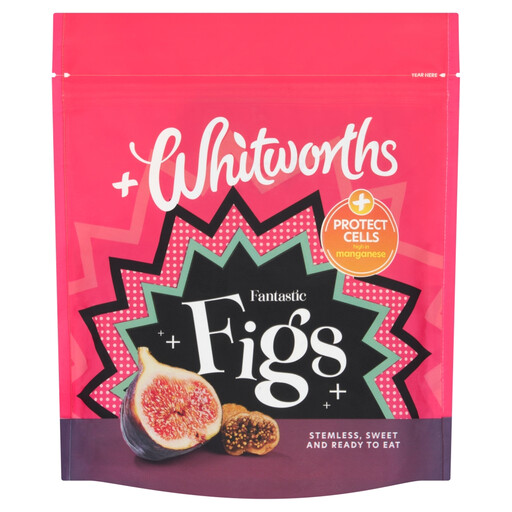
These figs are a 175g option to consider for breakfasts or cooking. Compare fat and total sugars per 100g, and check the pack's precautionary allergen statement if nuts or peanuts matter to you.
 No image available
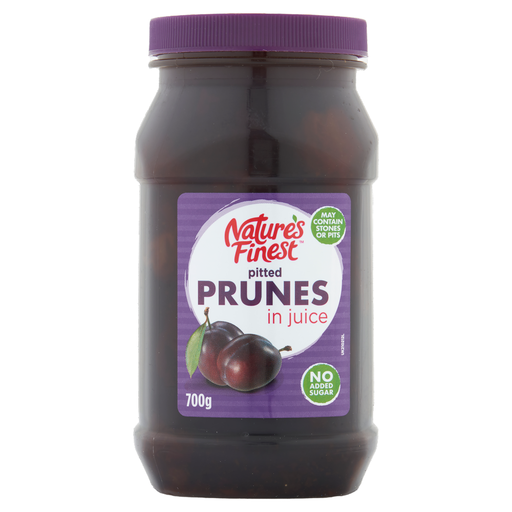
Before choosing a 700g pack for shared accommodation, check whether you can follow its after-opening storage and use instructions. Check the pack's warning about possible pit fragments, despite the prunes being described as pitted.
No. Compare fat per 100g and the ingredients for the packs you are considering. M&S lists 0.4g fat per 100g for its Mixed Dried Fruit, while Whitworths lists 23.6g per 100g for its peanut-containing 1DERS Fruit and Nut Mix.
The NHS says 30g of dried fruit counts as one portion, equivalent to around 80g of fresh fruit. It advises having dried fruit at mealtimes rather than between meals to reduce tooth-decay risk.
No. M&S describes its Dried Pineapple as free from added sugars but lists 73.2g total sugars per 100g. Read the nutrition panel as well as the ingredients and front-of-pack wording.
Yes, if sulphites are relevant to your needs. The Food Standards Agency says they are often used in dried fruit and notes a higher reaction risk to sulphur dioxide for people with asthma. Check the current physical pack rather than assuming all dried fruit has the same ingredients.
Check its after-opening instructions and whether you have suitable storage. Tesco advises keeping its dried mixed fruit in an airtight container after opening, while M&S specifies a three-day post-opening window for its Dried Pineapple.