Late-supper shoppers watching fat content
If you want dried fruit with supper, compare plain fruit with fruit-and-nut mixes rather than assuming they have similar fat content.


Start with plain dried fruit rather than assuming you need a reduced-fat version: Marks & Spencer lists 0.4g fat per 100g for its mixed dried fruit, while ASDA lists 25g per 100g for its cashew-and-raisin mix. Compare total sugars and ingredients as well as fat. For a late supper, follow NHS advice to eat dried fruit at mealtimes; the NHS says 30g counts as one 5 A Day portion.
If you want dried fruit with supper, compare plain fruit with fruit-and-nut mixes rather than assuming they have similar fat content.
A small pack can make the amount easier to see. You still need to check total sugars and treat dried fruit as part of the meal, not something to keep eating afterwards.
Check the exact pack when you want to avoid candied or syrup-containing components, nuts or sulphites. These ingredients and warnings differ between mixes.
Choose the fruit format first, then compare like-for-like nutrition figures and the amount you plan to serve with supper.
| Priority | What to check | Your needs |
|---|---|---|
| Fat content | Compare fat per 100g and check whether the mix contains nuts. Marks & Spencer lists 0.4g per 100g for Mixed Dried Fruit; ASDA lists 25g per 100g for Cashews & Raisins. | I want dried fruit with supper without choosing a nut-containing mix when keeping fat low is my priority. |
| Total sugars | Read sugars per 100g and per serving on the same product label. Marks & Spencer lists 68.8g sugars per 100g for Mixed Dried Fruit, despite its low fat figure. | A low fat figure alone does not answer my question about how much sugar is in the portion I will eat. |
| Portion and timing | The NHS says 30g dried fruit counts as one 5 A Day portion and advises eating dried fruit at mealtimes rather than between meals. | For a late supper, I would rather serve a defined amount with the meal than keep an open bag beside me afterwards. |
| Ingredients | Check for candied fruit, syrup-containing components and nuts. Sainsbury's Mixed Dried Fruit includes candied peel made with glucose-fructose syrup. | If I want a straightforward fruit mix, I need to read beyond the front-of-pack description. |
| Allergens | Read the current pack's ingredients and allergen warnings. ASDA Three Raisin Mix lists sulphites; ASDA Cashews & Raisins contains cashews. | When an ingredient matters to me, I need to check the particular variety rather than rely on the word “dried fruit”. |
Marks & Spencer Mixed Dried Fruit lists 0.4g fat and 68.8g sugars per 100g; ASDA Three Raisin Mix lists less than 0.5g fat and 69g sugars per 100g.
Compare both figures per 100g, then check the amount you intend to serve.
ASDA lists 25g fat per 100g for Cashews & Raisins, compared with less than 0.5g per 100g for its Three Raisin Mix. The cashew mix also contains nuts.
If keeping fat low is the aim, check the ingredients and nutrition panel before choosing a mix with nuts.
The NHS advises eating dried fruit at mealtimes rather than between meals.
Serve the amount you want with supper. The NHS uses 30g as a dried-fruit 5 A Day portion.
Sainsbury's Mixed Dried Fruit contains candied peel made with glucose-fructose syrup, while the ASDA raisin and cashew mixes have different sulphite and nut information.
Read the ingredients and allergen statement on the current pack of the exact product you choose.
These examples show why the exact product matters more than the retailer name when comparing fat, sugars and ingredients.
Marks & Spencer lists mixed dried-fruit products, including a sultana, raisin and currant mix.
ASDA's examples include both a raisin mix and a cashew-and-raisin mix.
Its Mixed Dried Fruit is a baking-style mix containing sultanas, raisins, currants and candied peel.
Whitworths offers Sunny Raisins in small boxes.
Tesco's dried-fruit range includes prunes, cranberries, dates and raisins.
These raisin, sultana and prune options provide different pack sizes for someone considering dried fruit with a late supper. Check each product's current label for fat, total sugars, ingredients and allergens before choosing.
 No image available
The 12 separate 14g boxes make the amount in each box clear. If serving these raisins with supper, check the pack's nutrition and ingredients information as well as the portion you want.
 No image available
These pitted prunes are an alternative to raisins when choosing the fruit for supper. Check the current ingredients list and nutrition panel rather than relying on the pack's sugar-related wording.
 No image available
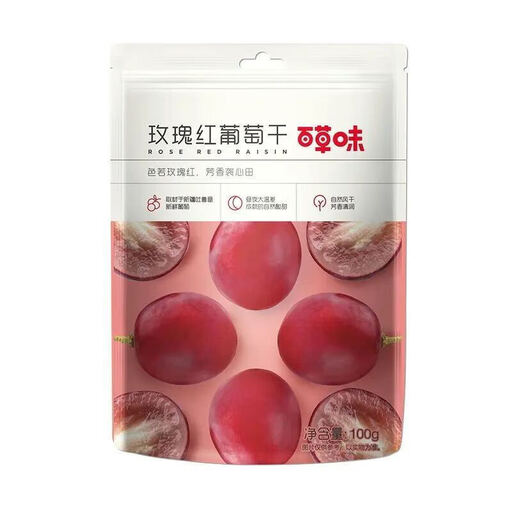
The 100g bag lets you measure the amount you want to serve with supper. Compare its fat and total sugars figures on the current label before deciding how it fits your choice.
 No image available
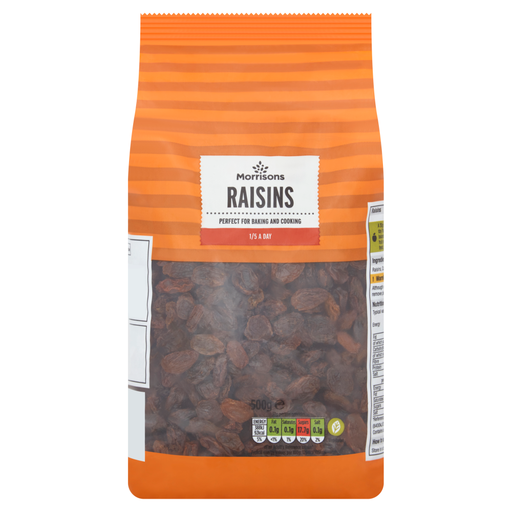
This 500g raisin bag needs portioning if you want a defined amount with supper. Read the pack for its fat, sugars, ingredients and allergen information.
 No image available
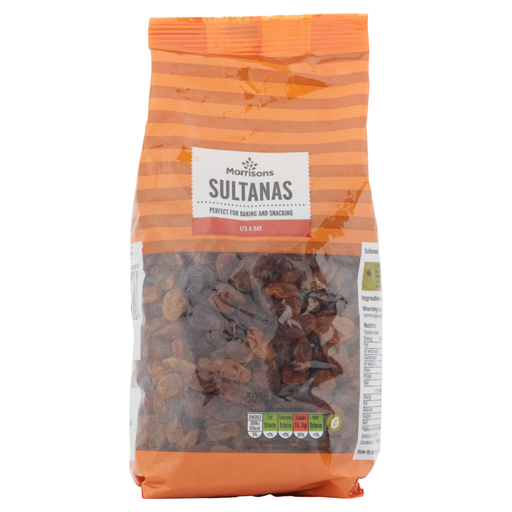
These sultanas come in a 500g bag, so measure a serving if you want a set amount with supper. Check the exact pack's nutrition panel and ingredients before comparing them with raisins or mixed fruit.
Not necessarily. Marks & Spencer Mixed Dried Fruit lists 0.4g fat per 100g, while ASDA Cashews & Raisins lists 25g per 100g. Compare the nutrition panel and ingredients of the exact products you are considering instead of relying on a front-of-pack phrase.
Yes, as part of the meal. The NHS advises eating dried fruit at mealtimes rather than as a between-meal snack, so serve the amount you want with supper instead of continuing to snack from the pack afterwards.
The NHS says 30g of dried fruit counts as one 5 A Day portion. Its guidance also says to eat dried fruit at mealtimes.
Read both the total sugars figure and the ingredients list. Total sugars alone will not identify candied or syrup-containing ingredients; Sainsbury's Mixed Dried Fruit, for example, includes candied peel made with glucose-fructose syrup.
No. ASDA Three Raisin Mix lists sulphites, while ASDA Cashews & Raisins contains cashews. Read the ingredients and allergen statement on the current pack of the particular product you intend to serve.