What should you check?
Start with the nutrition panel for the exact pack, then decide how much you want to take and whether its ingredients suit you.
| Priority |
What to check |
Your needs |
| Fat content |
Compare fat per 100g on the exact pack, especially if nuts are included. Under the UK nutrition-claim condition published on legislation.gov.uk, a solid food labelled low fat must contain no more than 3g fat per 100g; that does not establish whether a separate reduced-fat claim applies. |
If I am choosing primarily on fat content, I want to check the product itself rather than assume every dried-fruit snack has the same composition. |
| Portion size |
Check the pack weight or measure some from a larger bag before boarding. The NHS counts 30g of dried fruit as one 5 A Day portion; a smaller pack is not the same amount. |
A defined amount would be easier for me to carry than eating directly from a large bag throughout the journey. |
| Sugars |
Read sugars per serving alongside the serving weight. A no-added-sugar statement does not mean the product contains no sugars: Sainsbury’s lists 57g sugars per 100g for Forest Feast Williams Pear, which is labelled no added sugar. |
I want to know the sugars in the amount I plan to eat, not judge a pack by fruit imagery or a front-of-pack phrase. |
| Ingredients and allergens |
Read the current ingredients and allergen declaration for nuts, sulphites, preservatives and sweetened fruit ingredients. The Food Standards Agency notes that sulphites are often used in dried fruit. |
If I need to avoid an ingredient, I want to check this particular variety before packing it for the train. |
Dried fruit options on Joybuy
These options include small packs of dried fruit and a larger bag of individually wrapped prunes. For a low-fat train snack, compare each pack’s current nutrition and ingredients rather than assuming that pack size or fruit type establishes its fat content.
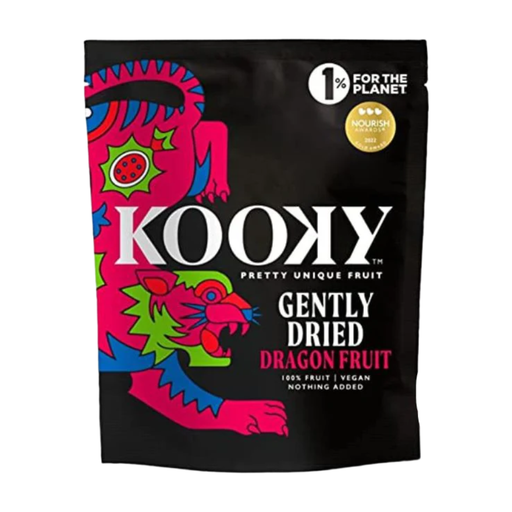 No image available
Kooky Gently Dried Dragon Fruit 20g
The 20g pack gives you a defined amount to take on a journey. It is smaller than the NHS’s 30g dried-fruit 5 A Day portion; check the pack for fat, sugars and ingredients.
View on Joybuy
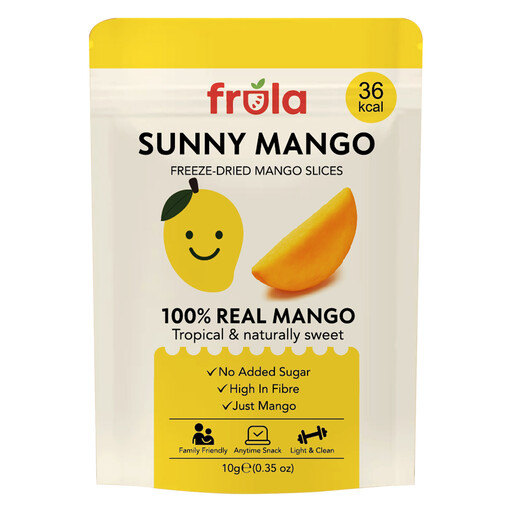 No image available
Frula Freeze-Dried Mango 10g
The 10g pack is a small, defined amount of freeze-dried mango to carry. It is below the NHS’s 30g dried-fruit 5 A Day portion; read its nutrition panel if fat and sugars are part of your choice.
View on Joybuy
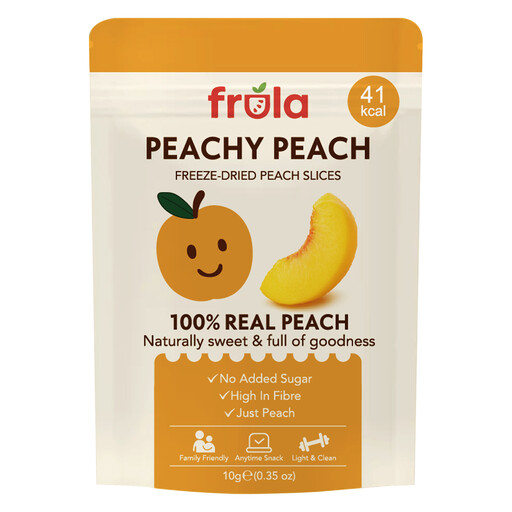 No image available
Frula Freeze-Dried Peach 10g
This 10g freeze-dried peach pack provides a defined amount for a journey, though it is smaller than the NHS’s 30g dried-fruit 5 A Day portion. Check its fat, sugars and ingredients on the current label.
View on Joybuy
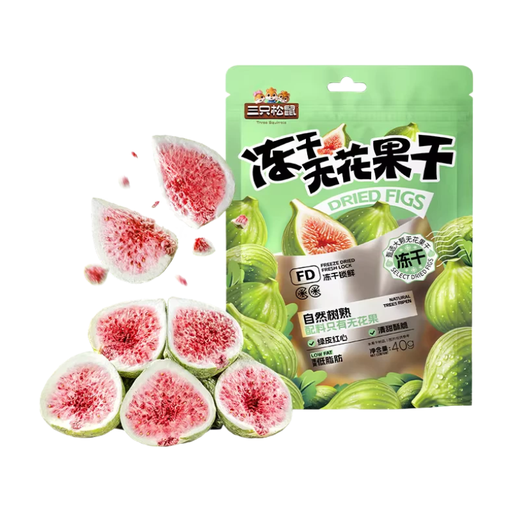 No image available
Three Squirrels Freeze-Dried Figs 40g
The 40g pack of freeze-dried figs is larger than the NHS’s 30g dried-fruit 5 A Day portion. Decide how much to take before opening it, and compare the pack’s fat and sugars with other options.
View on Joybuy
 No image available
J.ZAO Pitted Chilean Prunes 500g, individually wrapped
Individual wrappers let you take some prunes from the 500g bag rather than carry the whole bag. The product information also identifies low-polymer isomaltose alongside the prunes, so check the current ingredients rather than assuming this is a fruit-only option.
View on Joybuy
Frequently asked questions
Does “reduced fat” mean every dried-fruit snack is low in fat?
No. A reduced-fat phrase and a low-fat claim are not interchangeable. Under the UK nutrition-claim condition published on legislation.gov.uk, solid food labelled low fat must contain no more than 3g fat per 100g; Marks & Spencer lists 29.5g per 100g for its Fruit and Nuts mix. Check the exact pack’s nutrition panel rather than relying on its snack category.
How much dried fruit should I pack for the train?
The NHS counts 30g of dried fruit as one 5 A Day portion. You can measure an amount from a larger bag before leaving or choose a fixed-size pack, while remembering that a 10g or 14g pack is smaller than that reference portion.
Is dried fruit suitable for grazing throughout a journey?
The NHS advises eating dried fruit at mealtimes rather than as a between-meal snack to reduce the risk of tooth decay. If you are taking it on a train, plan when to eat it instead of repeatedly reaching into a large bag.
Which ingredients and allergens should I check?
Read the particular pack for nuts, sulphites, preservatives and sweetening ingredients that matter to you. The Food Standards Agency notes that sulphites are often used in dried fruit, and Marks & Spencer lists both tree nuts and sulphites in its Fruit and Nuts mix.
Can I choose using a retailer page alone?
Use the page to narrow your options, then read the current pack before buying or eating it. Tesco notes that food products can be reformulated, so confirm the ingredients, allergens, serving size and nutrition on the item you receive.


