Eating dessert on your own
An individual portion lets you decide how much to serve after dinner without opening a large tub. Compare its nutrition per 100 g as well as the amount you intend to eat.


For a low-fat frozen dessert, compare total fat per 100 g rather than relying on words such as “light”: NHS food-label guidance describes 3 g of fat or less per 100 g as low. A small portion can be convenient after a TV dinner, but portion size does not change the per-100-g figure; check saturates and sugars separately if they matter to your choice.
The useful distinction is whether you need a low-fat product, an easy-to-serve portion, or both.
An individual portion lets you decide how much to serve after dinner without opening a large tub. Compare its nutrition per 100 g as well as the amount you intend to eat.
Check the total-fat line rather than assuming that “light” means low fat. NHS food-label guidance describes 3 g of fat or less per 100 g as low for foods.
Read these lines separately from total fat. A dessert can have a low total-fat figure while its sugar figure still matters to your decision.
Start with the per-100-g panel to compare products on the same basis, then decide what portion suits your evening meal.
| Priority | What to check | Your needs |
|---|---|---|
| Total fat | Read fat per 100 g. NHS food-label guidance describes 3 g or less per 100 g as low for foods; a relative “light” or “less fat” claim answers a different question. | “Low fat” is my main requirement, so I want the nutrition figure rather than a comparison with another ice cream. |
| Saturates | Read saturates per 100 g alongside total fat. NHS guidance describes 1.5 g or less per 100 g as low. | I also want to compare saturated fat, not assume a low total-fat figure tells me everything. |
| Sugars and energy | Compare sugars and energy per 100 g, then check the figures for the serving you plan to eat. Where shown, traffic-light labelling gives a separate indication for fat, saturates, sugars and salt. | A low-fat label alone does not answer my question about sugars or the amount in my bowl. |
| Portion format | Check the pack size and number of servings. For a sharing tub, decide on a serving before taking it to the sofa. | For dinner on my own, a pre-portioned dessert may be simpler; when sharing, a tub may suit the way we serve dessert. |
A reduction is measured against another product, so it does not by itself establish a low per-100-g fat figure. Tesco lists Carte D'Or Vanilla Light at 4.5 g fat per 100 g, above the 3 g level described as low in NHS food-label guidance.
Check total fat per 100 g on the exact dessert before treating it as a low-fat option.
Figures for two manufacturers’ stated servings may describe different amounts of dessert.
Compare products per 100 g first. Then use the serving information to work out what you intend to put in your bowl.
Marks & Spencer lists 1.1 g fat and 18.1 g sugars per 100 g for its Low Fat Birthday Cake Ice Cream. The fat figure does not describe its sugar content.
If sugars matter to your choice, compare that line on each product’s nutrition panel.
A large tub does not set out an individual serving for a solo TV dinner.
Choose a pre-portioned dessert if that format suits you, or serve an amount from the tub into a bowl before sitting down.
These named products illustrate why the wording on the front of a pack and the figures on its nutrition panel need to be read together.
Marks & Spencer lists a Low Fat Birthday Cake Ice Cream and also features frozen-yoghurt products.
Tesco’s Carte D'Or Vanilla Light listing provides an example of a relative fat-reduction claim alongside per-100-g nutrition figures.
Waitrose lists Carte D'Or Madagascan Vanilla Light Ice Cream Dessert as a reduced-fat comparison option.
Wall's Soft Scoop Vanilla Light appears in Tesco’s range as a 1.8 L sharing tub.
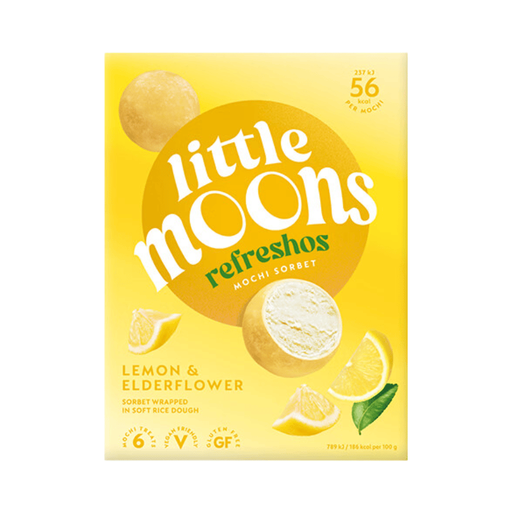
This six-piece mochi sorbet pack offers individual pieces for dessert after a TV dinner. Check the exact pack’s nutrition panel if meeting a low-fat target is essential to your choice.
 No image available
The six 30 g pieces let you serve one piece after dinner. Compare fat, saturates and sugars per 100 g on the exact pack before choosing it for a particular nutrition requirement, and check its allergen information if relevant.
For foods, NHS food-label guidance describes 3 g of fat or less per 100 g as low. Read the total-fat figure per 100 g when comparing a tub with an individual dessert; the size of the serving does not change that figure.
No. “Light” may describe a reduction against another product rather than a low total-fat figure. Tesco’s Carte D'Or Vanilla Light listing gives 4.5 g fat per 100 g, so check the nutrition panel of the particular ice cream you are considering.
Read the saturates line per 100 g, separately from total fat. NHS food-label guidance describes 1.5 g of saturates or less per 100 g as low; use the same per-100-g basis when comparing desserts.
Yes. Marks & Spencer lists 1.1 g fat and 18.1 g sugars per 100 g for its Low Fat Birthday Cake Ice Cream. Check sugars on the exact product as a separate part of your decision.
Check the ingredients list on the exact pack and flavour. Food Standards Agency guidance says allergens present in prepacked food must be emphasised in that list; do not assume different flavours have the same ingredients.