Parents weaning a baby under 12 months
The choice between a milk feed and milk used in food matters here. NHS guidance allows pasteurised whole cow’s milk in cooking or mixed with food from around 6 months, but not as a drink until 12 months.


Low-fat lactose-free cow’s milk is not a main drink for a baby under 12 months: breast milk or age-appropriate infant formula remains the main milk feed. NHS guidance allows pasteurised whole cow’s milk in food from around 6 months; if an infant needs lactose restriction, ask a healthcare professional about lactose-free infant formula rather than substituting supermarket milk. After 12 months, a lactose-free whole milk drink may be considered when lactose restriction is needed, but it still contains cow’s-milk proteins and is not an option for cow’s-milk allergy.
The choice between a milk feed and milk used in food matters here. NHS guidance allows pasteurised whole cow’s milk in cooking or mixed with food from around 6 months, but not as a drink until 12 months.
If a baby has symptoms after a stomach illness, seek professional advice before changing feeds. Frimley Healthier Together’s NHS-linked guidance describes lactose-free infant formula, rather than supermarket cow’s milk, as the main-drink route under age 1 when lactose restriction is advised.
If lactose restriction is needed, a lactose-free whole milk drink can be considered. First establish whether the concern is lactose intolerance or cow’s-milk allergy: lactose-free dairy still contains milk proteins.
Start with the child’s age and whether the milk is for a drink or for food; then check why lactose restriction is being considered.
| Priority | What to check | Your needs |
|---|---|---|
| Main milk feed | For a baby under 12 months, distinguish infant formula from supermarket cow’s milk. If lactose restriction is advised, confirm the appropriate infant formula with a healthcare professional. | I need a milk feed suitable for a baby under 1, not a supermarket drink to replace breast milk or infant formula. |
| Milk in food | NHS weaning guidance specifies pasteurised whole cow’s milk for cooking or mixing with food from around 6 months. It is not a main drink before 12 months. | For meals during weaning, I want to know which milk can go into food without treating it as a replacement feed. |
| Whole or low-fat | Read the whole or semi-skimmed designation. NHS guidance recommends full-fat dairy products up to age 2; a lactose-free label does not make a low-fat variant the default for early weaning. | Once my child is over 12 months, I want to choose the right lactose-free variant rather than assuming semi-skimmed is the usual choice. |
| Milk allergy | Check the ingredient and allergen declaration for cow’s milk. Allergy UK distinguishes lactose intolerance from cow’s-milk allergy; removing lactose does not remove milk proteins. | If cow’s-milk allergy is suspected, I need advice on a cow’s-milk-free feeding option, not another cow’s-milk product. |
For babies under 12 months, NHS guidance does not treat cow’s milk as a main drink, even when it is lactose-free.
Keep breast milk or appropriate infant formula as the main milk feed. From around 6 months, pasteurised whole cow’s milk may instead be used in food.
Lactose-free cow’s milk can still contain the milk proteins involved in cow’s-milk allergy.
If allergy is suspected or diagnosed, do not use lactose-free cow’s milk as a substitute; ask a healthcare professional about an appropriate feeding plan.
NHS weaning guidance specifies whole milk for use in food from around 6 months and recommends full-fat dairy products up to age 2.
Check the fat designation as well as the lactose-free label. For a child over 12 months who needs lactose restriction, consider a whole variant unless a clinician or dietitian has advised otherwise.
Infant lactose intolerance after gastroenteritis can be temporary. Continuing to change products without review may leave persistent symptoms unaddressed.
Follow the plan given by a healthcare professional and seek further advice if symptoms do not improve.
These milk and retailer references help distinguish whole, semi-skimmed and infant-formula listings; their inclusion does not make every product suitable for a baby.
A lactose-free cow’s-milk range with whole and semi-skimmed drinks listed by UK retailers.
Its lactose-free whole dairy drink is a whole-milk option to consider after 12 months when lactose restriction is needed.
M&S lists whole and semi-skimmed lactose-free milk varieties.
Tesco lists Arla Lactofree semi-skimmed milk; Tesco is the retailer, not a separate milk formula in this example.
Waitrose lists Arla Lactofree whole milk and, separately, Aptamil Lactose Free First Infant Milk.
This infant-formula option relates to a baby under 12 months whose lactose restriction has been discussed with a healthcare professional. It is not a low-fat cow’s-milk drink for use in weaning food.
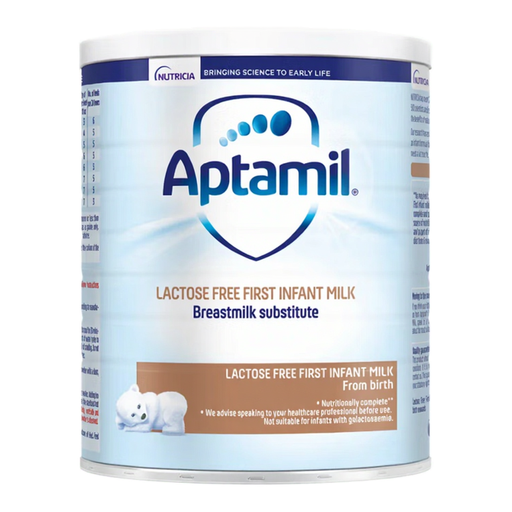 No image available
This lactose-free, from-birth powdered infant formula is relevant when a healthcare professional has advised an infant-formula route for lactose restriction. Use it only under medical supervision and follow the current pack’s preparation instructions. It contains milk-derived ingredients, so lactose-free does not mean suitable for cow’s-milk allergy.
No, not before 12 months. NHS guidance says breast milk or infant formula remains the main milk feed; pasteurised whole cow’s milk can be used in cooking or mixed with food from around 6 months, but not given as a drink until 12 months.
Speak to a healthcare professional before changing feeds. Frimley Healthier Together’s NHS-linked guidance describes lactose-free infant formula, rather than supermarket cow’s milk, as the main-drink option under age 1 when lactose restriction is needed.
No. Lactose-free cow’s milk still contains milk proteins. Allergy UK distinguishes cow’s-milk allergy from lactose intolerance, and M&S and Waitrose product information warns that their listed lactose-free milk drinks are unsuitable for milk allergy.
After 12 months, a lactose-free whole milk drink may be considered if lactose restriction is needed and cow’s-milk allergy is not the concern. NHS guidance recommends full-fat dairy products up to age 2; check the particular drink’s ingredients and whole-milk designation.
Check whether it is infant formula or a cow’s-milk drink, whether the drink is whole or semi-skimmed, and which milk allergens its ingredients declare. Read the current pack’s preparation or storage instructions before use.