TV snackers comparing fat
If you want a ready-to-drink milkshake for the evening, compare fat per 100ml across flavours and bottle sizes rather than assuming every flavoured milk drink is low fat.


Start with fat per 100ml: the Food and Allergy Information Association lists no more than 1.5g per 100ml as the threshold for a low-fat claim on liquids. For a TV-night snack, compare sugars and energy for the amount you expect to drink as well as the bottle size; a no-added-sugar label does not mean a drink is sugar-free or low fat.
If you want a ready-to-drink milkshake for the evening, compare fat per 100ml across flavours and bottle sizes rather than assuming every flavoured milk drink is low fat.
A protein shake may appeal if protein content matters alongside fat. Check whether its bottle size suits the amount you plan to drink.
If sugars, sweeteners or milk ingredients affect your choice, read the nutrition panel and ingredients on the exact flavour. Low fat and no added sugar describe different things.
Compare drinks on the same per-100ml basis, then look at the amount you would actually drink during a TV night.
| Priority | What to check | Your needs |
|---|---|---|
| Fat content | Compare fat per 100ml across flavours and pack sizes. The Food and Allergy Information Association lists thresholds of 1.5g per 100ml for low-fat claims on liquids and 0.5g per 100ml for fat-free claims. | I want to compare a conventional milkshake with a protein-style drink without confusing a larger bottle with a higher-fat drink. |
| Sugars and portion | Read sugars and energy per 100ml, then use the label to work out the figures for the amount you intend to drink. Check total sugars even when the pack says no added sugar; NHS food-label guidance explains the distinction between per-portion and per-100ml information. | A bottle might last me one sitting or be shared, so I want the figures for my portion rather than just the figures on the front of the pack. |
| Ingredients | Check the exact flavour’s milk-allergen declaration and ingredients, including any sweeteners. A lactose-free description does not mean a milk-based drink contains no milk proteins. | If milk allergy or avoiding a particular sweetener matters to me, the ingredient and allergen statements need checking before I choose. |
These are separate attributes. Tesco Groceries lists 2.2g fat and 6.5g sugars per 100ml for Mars Chocolate Flavoured Milk Drink No Added Sugar; its fat figure exceeds the Food and Allergy Information Association’s 1.5g-per-100ml threshold for a low-fat liquid claim.
Compare the fat, total sugars and energy lines for the amount you expect to drink.
A 330ml bottle and a 500ml bottle represent different amounts to drink, so full-bottle totals do not give a like-for-like comparison of their contents.
Compare per-100ml figures first, then calculate the totals for your intended portion.
ASDA Groceries describes Arla Protein Chocolate as containing milk and unsuitable for people with a milk allergy, despite its lactose-free description.
For a milk allergy, check the exact product’s allergen declaration rather than relying on a lactose-free label.
ASDA Groceries lists 50g protein for the full 500ml Optimum Nutrition Vanilla bottle and 26g for the 482ml Arla Protein Chocolate bottle. Those full-bottle figures matter if you plan to drink the whole shake during one TV session.
Decide whether you want one bottle now or intend to save part of it, and follow the pack’s storage instructions after opening.
Conventional flavoured milk drinks in different pack sizes; the Banana product is not presented here as a protein shake.
Conventional thick milkshakes, represented here by Müller FRijj Chocolate.
Chocolate-bar-inspired milk drinks; the cited product carries a no-added-sugar description.
Protein-focused dairy shakes, including a 482ml Chocolate bottle.
Protein shakes, represented here by the 500ml Vanilla High Protein Shake.
These options include strawberry and chocolate protein shakes alongside a smaller avocado-and-kale yoghurt drink. Compare the pack label for the exact flavour and decide whether you want a conventional milkshake texture or a yoghurt-style drink.
 Image unavailable
The 330ml bottle may suit someone planning a single-bottle TV snack rather than a larger shake. Compare its fat, sugars and energy for the amount you will drink; check the label for milk and sucralose if relevant.
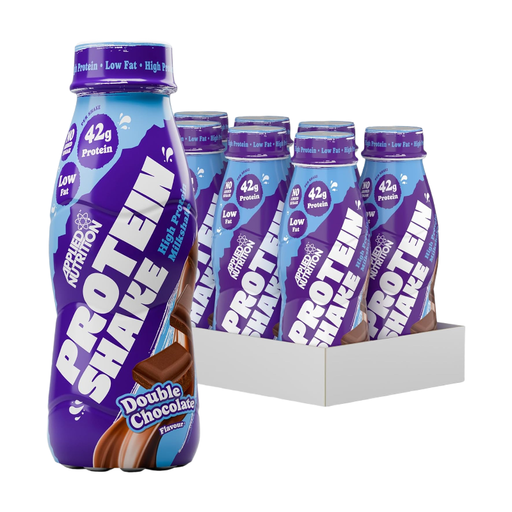 Image unavailable
The 500ml bottle is a larger portion to consider for a TV snack. Check the full-bottle nutrition figures if you expect to finish it, and check the label for milk and sucralose if relevant.
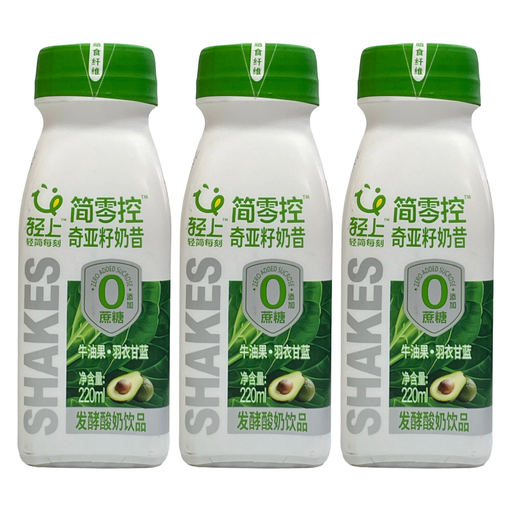 Image unavailable
The 220ml bottle offers a smaller stated portion, but its yoghurt-drink style differs from a conventional flavoured milkshake. Check the nutrition panel and the label for milk and sucralose before choosing it.
For liquids, the Food and Allergy Information Association lists no more than 1.5g fat per 100ml for a low-fat claim and no more than 0.5g per 100ml for a fat-free claim. Compare the figure on the exact bottle, not just the drink’s name.
No. Tesco Groceries lists 2.2g fat and 6.5g total sugars per 100ml for Mars Chocolate Flavoured Milk Drink No Added Sugar. Its fat figure is above the Food and Allergy Information Association’s 1.5g-per-100ml threshold for a low-fat liquid claim, so check both lines separately.
Compare fat, sugars and energy per 100ml first, then work out the figures for the amount you intend to drink. NHS food-label guidance notes that labels can show information per portion as well as per 100ml.
Do not assume so: ASDA Groceries identifies Arla Protein Chocolate as containing milk and unsuitable for people with a milk allergy. Read the allergen declaration on the exact product.
Follow the storage and consume-within instructions on its bottle. The product information for Arla Protein, For Goodness Shakes, Mars and Optimum Nutrition calls for refrigeration after opening, but the stated time limits differ.