Cold-breakfast shoppers
If oat drink is going over cereal or muesli, compare the fat figure on the carton rather than choosing by how rich a drink sounds. GOV.UK’s liquid low-fat threshold gives you a consistent per-100ml check.


For a continental breakfast, start with fat per 100ml: GOV.UK states that a UK low-fat claim on a liquid requires no more than 1.5g per 100ml. Tesco Oat Drink, Sainsbury’s Oat Drink and Alpro Oat No Sugars Drink list 1.2g, 1.3g and 1.5g respectively on their UK product pages. If oat drink regularly replaces dairy at breakfast, compare calcium and iodine too; if coffee is the main use, check the particular drink’s preparation guidance rather than assuming every low-fat option will froth alike.
If oat drink is going over cereal or muesli, compare the fat figure on the carton rather than choosing by how rich a drink sounds. GOV.UK’s liquid low-fat threshold gives you a consistent per-100ml check.
If oat drink frequently replaces dairy at breakfast, check whether that particular carton has added calcium and iodine. The British Dietetic Association recommends looking for iodine fortification when choosing a plant-based milk alternative.
If breakfast includes a latte or cappuccino, check hot-drink instructions and the fat figure separately. A coffee-focused name alone tells you neither whether the drink meets the low-fat threshold nor how to prepare it.
Choose the fat range you want first, then compare the features that matter for your breakfast: fortification, sugars, allergen information and coffee use.
| Priority | What to check | Your needs |
|---|---|---|
| Fat | For a UK low-fat claim on a liquid, GOV.UK gives a limit of 1.5g fat per 100ml. Compare cartons on that basis; do not treat a per-100g figure as the same measurement. | I want oat drink on cereal without relying on words such as “light” or “barista” to judge its fat content. |
| Fortification | Read the calcium and iodine entries for the exact product. Tesco, Sainsbury’s and Alpro list both for the drinks described on their UK product pages; Marks & Spencer says its Only 3 Ingredients drink is not fortified. | Oat drink is a regular dairy replacement at my breakfast, so added calcium and iodine matter alongside fat. |
| Sugars | Compare sugars per 100ml and the ingredient list separately from fat. Alpro UK lists 0.0g sugars and 1.5g fat per 100ml for its Oat No Sugars Drink. | I specifically want a no-sugars drink with my breakfast, rather than assuming the lowest-fat carton will also have the least sugar. |
| Allergens | Check the current carton’s oat, wheat and other allergen statements and any explicit gluten-free claim. The Food Standards Agency notes that oats remain an allergen even in a food labelled gluten-free. | With coeliac disease or an allergy to consider, I need suitability information for the exact drink I will use. |
| Coffee use | Read the preparation advice if serving the drink hot. Sainsbury’s advises letting hot-drink water cool slightly to avoid separation; compare a coffee formulation’s fat figure independently. | My continental breakfast includes coffee, and I care about how the drink behaves in the cup as well as what goes on cereal. |
A coffee formulation and a low-fat liquid claim answer different questions. Marks & Spencer lists 3.3g fat per 100g for its Barista Oat Drink, while Minor Figures lists 4.3g per 200ml for Everyday Oat; their stated serving bases also differ.
Check fat per 100ml when applying GOV.UK’s liquid threshold, and assess frothing or coffee-use claims separately.
Marks & Spencer says its Only 3 Ingredients Oat Drink is not fortified. A short ingredient list therefore does not establish whether the drink supplies added calcium or iodine.
If oat drink regularly replaces dairy at breakfast, inspect those nutrients on each carton rather than judging by ingredient count.
Vegan labelling does not establish gluten-free status or suitability for a particular allergy. Marks & Spencer says its Only 3 Ingredients drink is not suitable for coeliacs or people with a wheat allergy; Sainsbury’s flags a soya-allergy restriction for its oat drink.
Use the current label and explicit suitability statement for the exact product, especially when avoiding gluten or an allergen.
Sainsbury’s advises letting hot-drink water cool slightly because its oat drink can separate. Suitability for cold cereal does not tell you how a particular drink should be added to coffee or tea.
Follow the carton’s preparation advice; if frothing is important, compare coffee-specific products and their fat figures separately.
These examples show why the individual carton matters more than the brand name: fat figures and fortification differ between products, including products from the same brand.
Oatly offers oat drinks with different formulations, including Whole and Fibre Low-Cal Edition.
Alpro has shelf-stable and chilled Oat No Sugars drinks with different fat declarations.
Minor Figures presents Everyday Oat for uses including cereal and tea.
Tesco Oat Drink is an own-label option with added calcium, iodine and vitamins listed on its product page.
Sainsbury’s Oat Drink lists added calcium, iodine and vitamins.
Marks & Spencer offers a three-ingredient oat drink and a separate Barista Oat Drink.
These Joybuy options include no-sugars and original oat drinks, plus a coffee-focused barista drink. Compare each current carton’s per-100ml fat declaration, fortification and allergen information against your breakfast priorities.
 No image available
A no-sugars long-life option to consider for cereal or drinks at breakfast. Check the current carton’s fat and nutrient declarations for this pack, and read its oat allergen statement if suitability matters.
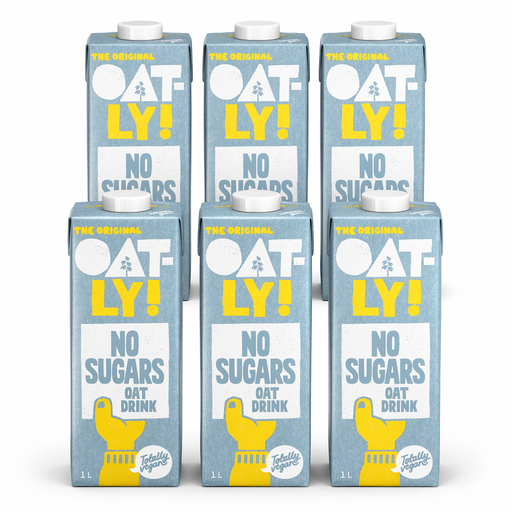 No image available
A no-sugars oat drink to compare if unopened-carton storage is useful for your breakfast routine. Check the current nutrition panel against the per-100ml fat threshold, and follow the carton’s allergen and after-opening instructions.
 No image available
An original oat drink to consider for cereal or hot drinks. Compare its sugars with a no-sugars variant, and check the current carton for iodine if that fortification is important to you.
 No image available
A coffee-focused option if breakfast includes a latte or cappuccino. A barista name does not settle the low-fat question: check this carton’s fat per 100ml, sugars, iodine declaration and oat allergen information separately.
GOV.UK states that a low-fat claim on a liquid requires no more than 1.5g fat per 100ml. Read the carton’s per-100ml declaration when applying that threshold; a value stated per 100g is a different measurement basis.
If oat drink regularly replaces dairy for you, check the particular carton for added calcium and iodine. The British Dietetic Association recommends choosing an iodine-fortified plant-based milk alternative; Tesco, Sainsbury’s and Alpro list both nutrients for the products described on their UK pages, while Marks & Spencer says its Only 3 Ingredients drink is not fortified.
No: suitability depends on the exact product and the allergy. The Food Standards Agency says a gluten-free label means no more than 20mg/kg gluten, but oats remain an allergen in their own right. Marks & Spencer specifically says its Only 3 Ingredients Oat Drink is not suitable for coeliacs or people with a wheat allergy; check the current carton for any drink you are considering.
You can use a drink in coffee where its pack instructions allow it, but follow that product’s preparation guidance rather than assuming it will froth or stay mixed like a barista formulation. Sainsbury’s advises letting hot-drink water cool slightly to avoid separation. Check a barista drink’s own fat declaration before treating it as a low-fat option.