For a child aged 1 or over, the NHS says an unsweetened, calcium-fortified oat drink can be offered as part of a balanced diet; a low-fat label alone does not establish suitability. Check the exact carton for other fortification, sugars, allergens and any warning about use as a main milk drink. Before age 1, an oat drink must not replace breast milk or first infant formula.
Who is this for?
Parents choosing a drink for a child aged 1 or over
If oat drink will go in a cup or on cereal at snack time, start with the NHS advice to choose an unsweetened, calcium-fortified alternative. Then consider the child’s diet and the carton’s age guidance rather than selecting by fat content alone.
Families avoiding dairy milk
A plant-based description does not settle whether a particular carton meets a child’s allergy needs. Read its ingredients and allergy statement, especially where milk, wheat, oats or coeliac disease are a concern.
Parents comparing fat and sugar labels
Compare the nutrition information per 100ml and the fortification on each carton. A no-sugars name or lower fat figure does not, by itself, establish whether the drink is appropriate as a toddler’s main milk alternative.
What should you check first?
For toddler snack time, establish how the drink will be used and whether its age guidance fits before comparing nutrition panels.
| Priority | What to check | Your needs |
|---|
| Age and use |
Check the child’s age; read any warning about use as a main milk drink. The NHS advises continuing breast milk or first infant formula until at least age 1. |
I’m choosing a drink alongside a snack, not replacing an infant’s usual milk. If it could become my under-3’s main milk alternative, I need to check the exact carton’s guidance. |
| Fortification |
Look for added calcium, then compare listed iodine and vitamins. GOV.UK’s 2025 assessment notes that the nutrient content of plant-based drinks varies considerably. |
Where dairy milk is not being used, I want to know what this particular oat drink contains rather than assuming all cartons are fortified alike. |
| Sugars |
Check whether the drink is unsweetened and read sugars per 100ml. Do not treat a no-added-sugars claim as a zero-sugars declaration. |
For a drink served regularly at snack time, I’d compare the actual sugar figures instead of relying on the front-of-pack wording. |
| Fat |
Compare fat on the same per-100ml basis, after age guidance and fortification. A fat figure is not a toddler-suitability threshold. |
I may prefer a lower-fat option, but I don’t want that one figure to decide which drink my child uses. |
| Allergens |
Read the exact ingredients and allergy statement for milk, wheat and oats; check any coeliac-related warning. Recheck the pack when buying again. |
My child’s particular allergy or dietary restriction matters more than a general plant-based description. |
What can a label lead you to overlook?
-
Choosing solely by a low-fat claim
A lower fat figure does not show whether an oat drink is suitable for the child’s age or intended use. The NHS guidance for children aged 1 or over specifies unsweetened, calcium-fortified milk alternatives as part of a balanced diet.
Check age guidance and fortification first, then compare sugar and fat figures on the same per-100ml basis. Do not replace breast milk or first infant formula with oat drink before age 1.
-
Reading “no added sugars” as “zero sugars”
Those phrases do not mean the same thing. Alpro UK lists 0g sugars per 100ml for Oat No Sugars, while Oatly lists 3.5g per 100ml for its 250ml Oat Drink; these are different products, not interchangeable descriptions.
If zero sugars is the requirement, read the figure on the exact carton’s nutrition panel.
-
Using a short ingredient list as a fortification check
M&S describes its Only 3 Ingredients Oat Drink as unfortified and does not recommend it as a dairy replacement for children under 36 months.
Check added nutrients and the child-age statement rather than judging an oat drink by ingredient count.
-
Assuming every plant-based carton meets allergy needs
Warnings can differ by product. M&S states that its Semi Oat Drink is not suitable for people with milk allergy, wheat allergy or coeliac disease.
Read the exact pack’s ingredients and allergy advice. For a child with a diagnosed allergy or restricted diet, seek individual advice from the relevant healthcare professional.
Which brand ranges are relevant?
These product-line examples show why the nutrition panel and age statement matter more than the brand name alone.
Alpro
Alpro Oat No Sugars is one option for comparing an unsweetened oat drink with added nutrients.
- Alpro UK lists 0g sugars, 1.5g fat, 120mg calcium and 22.6µg iodine per 100ml for its 1L Oat No Sugars drink.
- Those figures describe that product; they do not establish that it is suitable as every toddler’s main milk drink.
Oatly
Oatly’s 250ml Oat Drink provides a smaller-carton example for comparing snack-time formats.
- Oatly lists 1.5g fat, 120mg calcium and 22.5µg iodine per 100ml for this drink.
- It also lists 3.5g sugars per 100ml, so the small carton should not be mistaken for a no-sugars option.
Minor Figures
Minor Figures Everyday Oat is an oat-drink example with listed fortification.
- Its ingredient list includes calcium and added vitamin D, riboflavin, B12 and iodine.
- Minor Figures lists 4.3g fat per 200ml serving; compare products on the same serving basis before making a fat comparison.
Sainsbury's
Sainsbury's Oat Drink illustrates why a fortified product’s age wording still matters.
- Sainsbury's lists added calcium, iodine, vitamin D and B12 for this drink.
- Its product page says it can form part of a balanced diet from age 1 but is not suitable as a main milk-drink alternative for children under 3.
M&S
M&S has oat drinks with different fortification and suitability statements.
- M&S lists added calcium, iodine, B12 and vitamin D in Semi Oat Drink.
- M&S says Semi Oat Drink is unsuitable for people with milk allergy, wheat allergy or coeliac disease. Its separate Only 3 Ingredients Oat Drink is unfortified and is not recommended by M&S as a dairy replacement for children under 36 months.
Oat drinks on Joybuy
These oat-drink packs offer different label and format choices for a household considering toddler snack time. Check the exact carton before deciding whether any is suitable as a child’s main milk alternative.
 No image available
Alpro Oat No Sugars Long Life Drink, 8 x 1L
For a snack-time drink, check the carton’s fortification and child-age guidance as well as its no-sugars name. Joybuy’s per-100ml nutrition panel lists 1.2g fat and 0.0g sugars, but other product wording about sugars differs; confirm the declaration on the carton if zero sugars matters. The product information identifies oats as an allergen.
View on Joybuy
 No image available
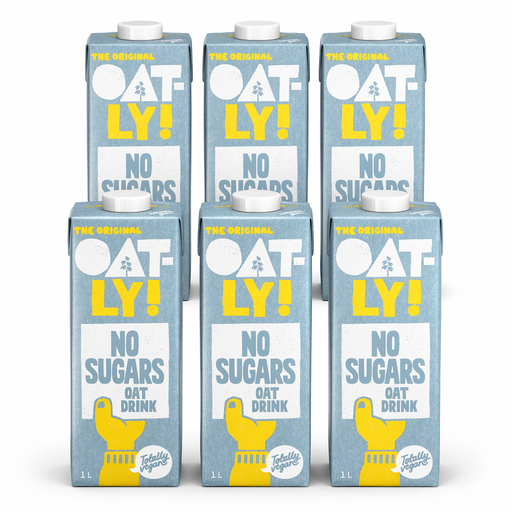
Oatly No Sugars Oat Drink, six 1L cartons
If the no-sugars wording appeals for snack time, check the exact carton’s per-100ml sugar declaration and fortification. Read its child-age and allergen statements before using it for a toddler, particularly as a main milk drink, and confirm the pack quantity when ordering.
View on Joybuy
 No image available
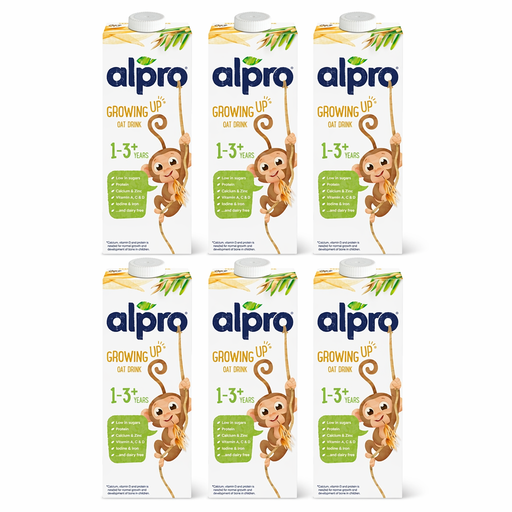
Alpro Oat Growing Up Drink, six-pack
The growing-up range is described for children aged 1–3, but its name is not a substitute for checking the exact pack. Compare its sugars, fat and fortification with an unsweetened calcium-fortified oat drink, and read the allergen and main-drink guidance.
View on Joybuy
 No image available
Alpro Barista Oat Long Life Drink, 8 x 1L
This barista drink is presented for coffee use rather than specifically for toddler snacks. If considering it for a child aged 1 or over, check the carton’s sugars per 100ml, calcium fortification, allergens and any guidance about use as a main milk drink.
View on Joybuy
Questions about toddler snack-time drinks
Can oat drink replace a baby’s usual milk before age 1?
No. The NHS advises continuing breast milk or first infant formula until at least age 1; oat drink is not a replacement for either during that period.
Does a low-fat oat drink suit every toddler?
No. For children aged 1 or over, the NHS recommends choosing unsweetened, calcium-fortified milk alternatives as part of a balanced diet. Check the exact drink’s age guidance and intended use before comparing fat figures.
Which oat-drink label details matter for a child aged 1 or over?
Start with unsweetened status and calcium fortification, then check listed iodine and vitamins, sugars per 100ml, allergens and child-age wording. GOV.UK’s 2025 assessment notes considerable variation in plant-based drinks’ nutrient content, so one product’s panel cannot stand in for another’s.
Is a plant-based oat drink necessarily suitable for a child with allergies?
No. Check the individual pack’s ingredients and allergy statement against the child’s specific needs. For example, M&S states that its plant-based Semi Oat Drink is not suitable for people with milk allergy, wheat allergy or coeliac disease.


