For a first food shop, start with total fat per 100 ml: the Annex to Regulation (EC) No 1924/2006 on legislation.gov.uk sets the low-fat claim condition for liquids at no more than 1.5 g per 100 ml. Then compare sugars, calcium fortification, storage and allergens on the exact carton. A barista label does not settle the fat question: Minor Figures Barista Oat, for example, declares 4.3 g fat per 200 ml, above that threshold.
Who is this choice for?
First-time buyers looking for an everyday carton
If the oat drink is for cereal, tea or cooking, check total fat per 100 ml before comparing fortification and where the unopened carton needs to be kept. Plant-based and low-fat describe different things.
Shoppers comparing fat and sugars
Look at both figures on the same per-100-ml basis. Oatly’s Chilled Oat Drink No Sugars lists 1.5 g fat and 0 g sugars per 100 ml; check the precise variant, as oat drinks from the same brand need not share a nutrition panel.
Coffee drinkers weighing up a barista drink
If foam matters, compare the coffee-oriented carton with your fat requirement rather than relying on its name. Minor Figures declares 4.3 g fat per 200 ml for Barista Oat, which works out at 2.15 g per 100 ml.
What should you check on the carton?
Use the fat figure to narrow the choice, then check the features that matter for how you will store and use the drink.
| Priority |
What to check |
Your needs |
| Total fat |
Read total fat per 100 ml, not just saturated fat. The Annex to Regulation (EC) No 1924/2006 on legislation.gov.uk specifies no more than 1.5 g per 100 ml for a low-fat claim on liquids. |
I want a carton that meets the low-fat condition, whether it is called original, semi, no sugars or barista. |
| Fortification |
Check the exact nutrition panel for calcium, then compare any listed iodine and vitamins. The NHS identifies unsweetened, calcium-fortified oat alternatives as part of the dairy-and-alternatives food group. |
If this will be my regular dairy alternative, I want to know which nutrients this particular carton lists. |
| Sugars and use |
Compare sugars per 100 ml separately from fat. For hot drinks, follow any preparation guidance on the carton; the products are not interchangeable simply because both are oat drinks. |
For cereal or tea, I may prefer no sugars; for coffee, I also care how the drink behaves when added to a hot cup. |
| Storage |
Check whether the unopened carton needs chilling or permits ambient storage, then read its after-opening instructions. The ASDA listing for Alpro Oat No Sugar Long Life says to refrigerate after opening and use within 5 days. |
Fridge space may be limited during my first shop, so I need a storage format I can manage before and after opening. |
| Allergens |
Read the exact pack’s allergen statement and any gluten-free claim. The Food Standards Agency notes that oats remain an allergen even when a food is labelled gluten-free. |
If someone in my household needs to avoid an ingredient, I cannot decide from the words “oat drink” alone. |
| Coffee texture |
Compare the barista carton’s total fat per 100 ml with your requirement. Minor Figures lists 4.3 g per 200 ml for Barista Oat and describes a dense foam texture. |
I make lattes, but I still want to know whether the coffee-focused option meets my low-fat condition. |
Common shopping mistakes
-
Assuming “barista” means low fat
A coffee-focused formula can prioritise foam while exceeding the fat level you had in mind. Minor Figures declares 4.3 g fat per 200 ml for its Barista Oat.
If low fat is a requirement, read or calculate total fat per 100 ml for the exact barista drink before choosing it.
-
Reading saturated fat instead of total fat
The low-fat claim condition for liquids in the Annex to Regulation (EC) No 1924/2006 concerns total fat. Tesco lists 1.6 g total fat per 100 ml for its Long Life Oat Original, above the Annex’s 1.5 g per 100 ml condition.
Check total fat first, then compare saturated fat, sugars and fortification as separate details.
-
Expecting every oat drink to have the same fortification
Oatly, Sainsbury’s and M&S list different nutrients on the cited products. Allergen suitability can differ too: Marks & Spencer states that its Semi Oat Drink is not suitable for coeliacs.
Read the nutrition and allergen information again whenever you change product or variant.
-
Overlooking unopened storage
Oatly describes its cited No Sugars product as chilled, whereas the ASDA listing for Alpro Oat No Sugar Long Life permits ambient storage before opening. That difference matters when fridge space is limited.
Check the storage instructions on the carton you are buying, including what to do after opening.
Brand and product-line references
These details refer to the named products, not to every oat drink made by each brand.
Oatly
Its Chilled Oat Drink No Sugars is a reference point for comparing fat, sugars and fortification.
- Oatly lists 1.5 g fat and 0 g sugars per 100 ml, alongside calcium, iodine, vitamins D2 and B12, and riboflavin.
- The cited product is chilled; check storage on any other Oatly No Sugars variant separately.
Alpro
Its Oat No Sugar Long Life carton offers an unopened ambient-storage format.
- The ASDA product listing gives 0 g sugars per 100 g and lists calcium and iodine.
- The cited listing reports fat per 100 g, rather than per 100 ml; use the exact carton’s per-100-ml figure when checking the low-fat condition. Refrigerate after opening and use within 5 days, according to that listing.
Sainsbury’s
Its Oat Drink 1L provides an own-brand example with a per-100-ml nutrition panel.
- Sainsbury’s lists 1.3 g fat per 100 ml and declares calcium, iodine, vitamin D and vitamin B12.
- The same panel lists 4.2 g sugars per 100 ml, so it is not a no-sugars option.
M&S
M&S Plant Kitchen Semi Oat Drink is another fortified product to compare on its own label.
- Marks & Spencer lists calcium, iodine, vitamin B12 and vitamin D for this product.
- Its cited fat figure is per 100 g, not per 100 ml, and Marks & Spencer says this product is not suitable for coeliacs.
Tesco
Tesco Long Life Oat Original illustrates why an original oat drink still needs a total-fat check.
- Tesco lists calcium, iodine and vitamins for this product.
- It lists 1.6 g total fat per 100 ml, above the low-fat claim condition for liquids stated in the Annex to Regulation (EC) No 1924/2006. Tesco also gives a may-contain peanuts-and-nuts statement.
Minor Figures
Barista Oat is a coffee-focused comparison when foam is part of the decision.
- Minor Figures describes a dense foam texture and labels this product gluten-free.
- Its declared 4.3 g fat per 200 ml is equivalent to 2.15 g per 100 ml, above the low-fat claim condition for liquids stated in the Annex to Regulation (EC) No 1924/2006.
Oat-drink options on Joybuy
These oat-drink multipacks include original, no-sugars and coffee-focused formats. For your first shop, compare the nutrition and storage instructions on the exact cartons rather than treating the format name as a low-fat claim.
 No image available
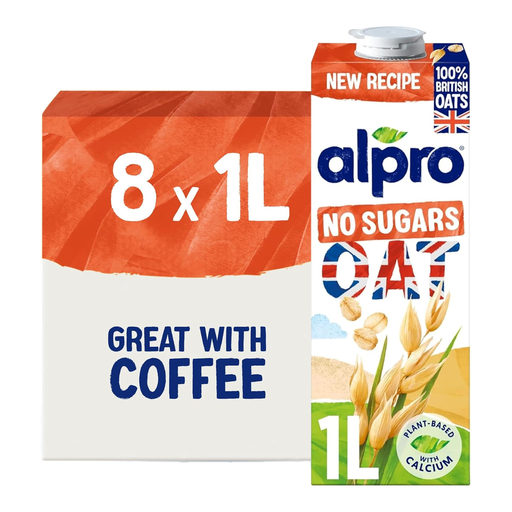
Alpro Oat No Sugars Long Life Drink, 8 × 1 L
Consider this long-life multipack if you want no-sugars cartons for an everyday first shop. Check total fat per 100 ml, allergens and after-opening storage on the exact pack.
View on Joybuy
 No image available
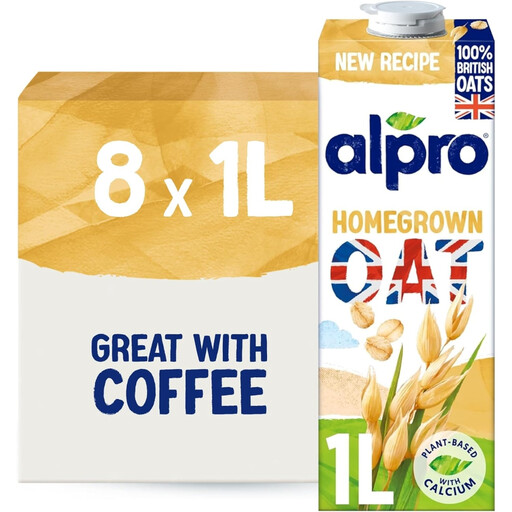
Alpro Oat Original Long Life Drink, 8 × 1 L
For cereal or hot drinks, compare this original long-life variant’s total fat and sugars per 100 ml with the no-sugars option. Check its fortification, allergens and storage directions on the carton.
View on Joybuy
 No image available
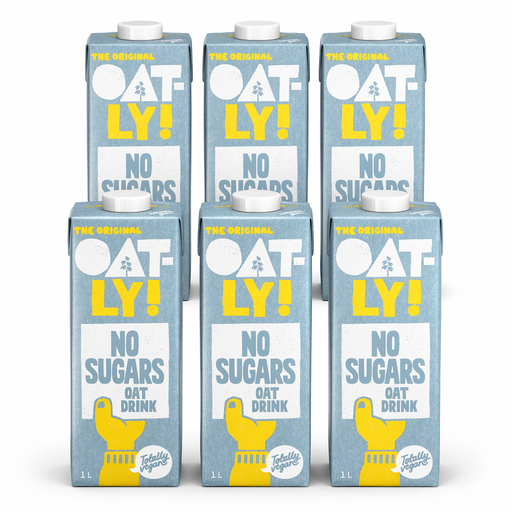
Oatly No Sugars Oat Drink, 6 × 1 L
If this no-sugars multipack appeals for everyday use, check its per-100-ml panel and unopened storage instructions. Do not assume its storage format is the same as Oatly’s separately described chilled No Sugars drink.
View on Joybuy
 No image available
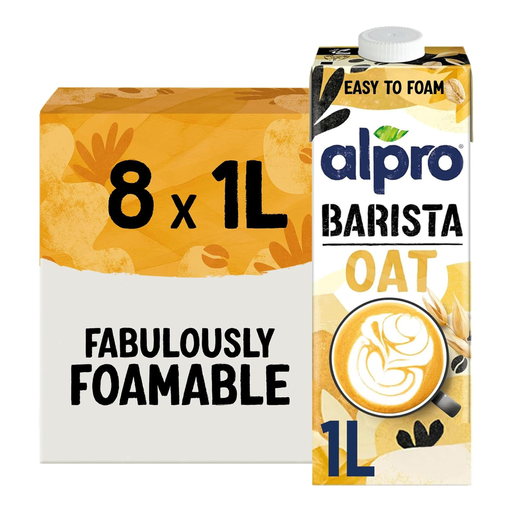
Alpro Barista Oat Long Life Drink, 8 × 1 L
This long-life barista variant is relevant if coffee is a regular use, but its name alone does not establish whether it meets your low-fat requirement. Compare total fat per 100 ml and check the exact carton’s allergens and fortification.
View on Joybuy
Questions about choosing oat milk
What counts as low-fat oat milk in the UK?
Check total fat per 100 ml: the Annex to Regulation (EC) No 1924/2006 on legislation.gov.uk sets the low-fat claim condition for liquids at no more than 1.5 g fat per 100 ml. A low saturated-fat figure is a separate measure and does not answer that question.
Should I check whether an everyday oat drink is fortified?
Yes, if you are choosing it as a dairy alternative. The NHS identifies unsweetened, calcium-fortified plant drinks, including oat drinks, as part of the dairy-and-alternatives food group. Read the exact carton for calcium and any listed iodine or vitamins, as declarations differ between products.
Can I use a low-fat oat drink in tea or coffee?
You can choose one for hot drinks, but check the product’s preparation guidance and fat figure separately. A barista name is not a low-fat guarantee: Minor Figures Barista Oat declares 4.3 g fat per 200 ml, above the low-fat claim condition for liquids set out in the Annex to Regulation (EC) No 1924/2006.
Are all oat drinks suitable for someone avoiding gluten or oats?
No. The Food Standards Agency notes that oats remain an allergen even on a food labelled gluten-free. Check the exact pack for the relevant allergen and gluten information; Marks & Spencer specifically says its Semi Oat Drink is not suitable for coeliacs.


