Coeliac shoppers looking for a low-fat plain snack
Check the pack’s gluten-free information, then use fat per 100 g to compare plain or lightly salted rice cakes. If you add toppings, assess those separately from the rice cake.


For coeliac shopping, check the current pack for gluten-free suitability before comparing fat per 100 g. The legislation.gov.uk text of Regulation (EC) No 1924/2006 sets the low-fat condition for solid foods at no more than 3 g fat per 100 g; plain products can meet that figure, while gluten-free flavoured varieties may not. A low-fat figure alone does not establish that a product is reduced fat compared with another version.
Check the pack’s gluten-free information, then use fat per 100 g to compare plain or lightly salted rice cakes. If you add toppings, assess those separately from the rice cake.
A gluten-free chocolate-coated or seasoned cake is not necessarily a low-fat alternative to a plain one. Compare the full product’s nutrition panel rather than judging it by its light texture.
Check the allergen statement as well as the gluten-free information. Listed plain rice cakes include warnings that they may contain milk, sesame or soya.
Check gluten-free suitability on the current pack first, compare fat per 100 g next, and then assess flavour and any other allergen requirements.
| Priority | What to check | Your needs |
|---|---|---|
| Gluten-free suitability | Read the current gluten-free statement and ingredients list. Coeliac UK advises checking for emphasised cereals containing gluten; the Food Standards Agency defines a gluten-free claim as no more than 20 mg/kg in the food as sold. | I need to check the rice cake I am buying, rather than assume it is suitable because rice is an ingredient. |
| Fat content | Compare fat per 100 g, not just per cake. The legislation.gov.uk text of Regulation (EC) No 1924/2006 sets a maximum of 3 g fat per 100 g for a low-fat claim on solid foods. | If low fat matters to me, I can compare packs of different sizes using the same per-100 g measure. |
| Plain or flavoured | Check the nutrition panel for the exact variant. Sainsbury’s lists Kallo Organic Lightly Salted at 2.7 g fat per 100 g and Kallo Dark Chocolate Minis at 23 g per 100 g; both listings describe the products as gluten-free. | I may want a flavoured cake, but I would not treat its gluten-free label as a statement about fat content. |
| Other allergens | Read may-contain statements for allergens relevant to you. Sainsbury’s lists milk, sesame and soya warnings for Kallo Organic Lightly Salted; Tesco lists sesame and soya warnings for Nature’s Store Wholegrain. | When I also need to avoid another allergen, the gluten-free statement is only part of my label check. |
| Reduced-fat wording | Look for the product used as the comparison and the stated reduction. A fat value that meets the low-fat condition does not, by itself, establish a reduction from another product. | If I specifically want a reduced-fat version, I need more than a light texture or a low-fat figure to make that comparison. |
Gluten-free information does not describe fat content. M&S lists its gluten-free Lightly Salted Rice Cakes at 2.5 g fat per 100 g, but its gluten-free Sweet Chilli Rice Cakes at 16.2 g per 100 g.
For a low-fat choice, check both the gluten-free information and the fat figure on the exact variant.
A product can meet the stated low-fat condition without that figure showing how it compares with another version.
Use the per-100 g figure for a low-fat check. If a reduction is the deciding factor, check what product the claim compares it with.
Ingredients and allergen information can change, which matters when checking gluten-free suitability or other allergens.
Read the physical pack you are buying, especially after a packaging or recipe change.
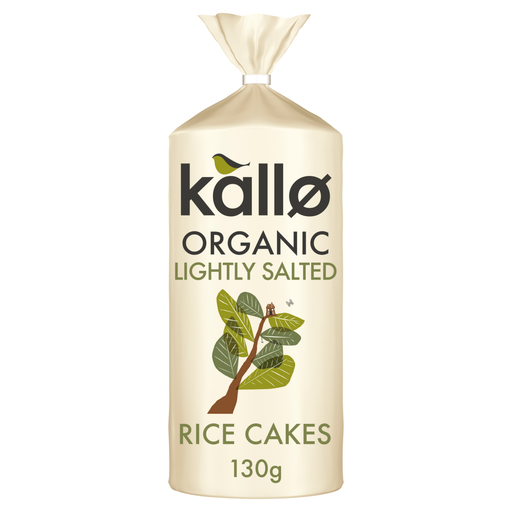
The Organic Lightly Salted rice cakes provide a plain option to compare with Kallo’s chocolate-coated minis.
Its listed gluten-free rice cakes include lightly salted, sweet chilli and milk chocolate mini variants.
Its No Added Salt Rice Cakes are a plain own-label option to check when available locally.
Its Wholegrain Rice Cakes are listed with explicit gluten-free and wheat-free information.
Tesco Free From Wholegrain Rice Cakes offer an explicitly wheat- and gluten-free option.
This option is a lightly salted rice cake for shoppers checking both gluten-free information and fat per 100 g.
 No image available
For a plain low-fat option, Sainsbury’s lists this Kallo product as gluten-free and low fat, with 2.7 g fat per 100 g. Its listing says the rice cakes may contain milk, sesame and soya; check the current pack if these allergens matter to you.
No. Check the current pack’s gluten-free information and ingredients rather than relying on rice being an ingredient. Coeliac UK advises looking for emphasised cereals containing gluten in the ingredients list.
Compare fat per 100 g. The legislation.gov.uk text of Regulation (EC) No 1924/2006 sets the low-fat condition for solid foods at no more than 3 g fat per 100 g; a per-cake figure may reflect a different cake size.
Check the exact variant rather than assuming either way. M&S lists its gluten-free Sweet Chilli Rice Cakes at 16.2 g fat per 100 g, while its gluten-free Lightly Salted Rice Cakes list 2.5 g per 100 g.
Check which allergen the warning names against your own requirements; gluten-free does not mean free of milk, sesame or soya. Sainsbury’s lists may-contain warnings for all three on Kallo Organic Lightly Salted Rice Cakes. If suitability is unclear, contact the manufacturer before choosing the product.