Commuters wanting a plain snack with coffee
If you would rather carry a plain rice cake than a sweet-flavoured one, compare the nutrition per cake as well as per 100g. Consider how you will protect an opened pack in your bag.


For a plain rice cake with coffee, compare fat per 100g first, then check sugars, salt and the number of cakes you expect to eat. Kallo lists 27 kcal per Lightly Salted cake, while Sainsbury’s lists less than 0.01g salt per No Added Salt cake; the latter is worth considering when salt is your priority. Flavoured and higher-protein cakes have different nutrition profiles, so compare their exact labels rather than treating them as interchangeable with plain low-fat cakes.
If you would rather carry a plain rice cake than a sweet-flavoured one, compare the nutrition per cake as well as per 100g. Consider how you will protect an opened pack in your bag.
A low-fat description does not tell you how much salt or sugar a particular cake contains. Compare the lightly salted, no-added-salt and flavoured variants you are considering on the same label basis.
Read the current pack even if a familiar product is labelled gluten free or vegan-friendly. Kallo says its Lightly Salted cakes may contain milk, sesame seeds and soya.
Start with the per-100g label to compare recipes, then use the per-cake figures and your intended portion to judge a coffee-break snack.
| Priority | What to check | Your needs |
|---|---|---|
| Fat and portion | The NHS defines low fat for foods as 3g or less of total fat per 100g. Compare that figure, then check fat and calories per cake and how many cakes you plan to eat. | I want a low-fat cake alongside coffee, but the per-cake figure matters if I take more than one. |
| Salt and sugars | Compare the exact variants. Sainsbury’s lists less than 0.01g salt per No Added Salt cake; Snack a Jacks lists 3.6g sugars per Caramel Jumbo cake. | If salt matters to me, I will look at no-added-salt options. If I choose a sweet flavour, I want to know its sugars per cake. |
| Ingredients and allergens | Read the current ingredients and may-contain statement. Kallo says its Lightly Salted cakes may contain milk, sesame seeds and soya. | A gluten-free or vegan-friendly description alone does not answer my allergy-related questions. |
| Carrying and storage | Check the pack’s storage instructions and whether you can close or transfer an opened pack for later commutes. | I may take cakes from the same pack on several journeys, so keeping the opened pack protected matters. |
| Higher-protein alternatives | Compare protein and fat on the same per-100g basis. Marks & Spencer lists 24.8g protein and 16.2g fat per 100g for its Barbecue High Protein Rice Cakes. | If I am considering a higher-protein cake instead of a plain low-fat one, I want to see the change in fat too. |
Flavour and recipe make a difference: Snack a Jacks lists 51 kcal and 3.6g sugars per Caramel Jumbo cake, while Kallo lists 27 kcal and 0.1g sugars per Lightly Salted cake.
Compare the precise flavour and variant, using both per-cake and per-100g figures where available.
The NHS low-fat threshold concerns total fat per 100g; it does not describe a product’s salt, sugars or the portion you will eat.
Check those figures separately, including any topping you plan to bring.
Kallo describes its Lightly Salted cakes as gluten free, but states that they may contain milk, sesame seeds and soya.
Read the current physical pack’s ingredients and allergen statement, particularly when buying for someone with an allergy.
Marks & Spencer lists 24.8g protein and 16.2g fat per 100g for its Barbecue High Protein Rice Cakes. The NHS low-fat threshold for foods is 3g fat or less per 100g.
Compare fat per 100g before choosing a higher-protein variant for a low-fat snack.
These examples show why the exact product variant matters; a brand name alone does not establish its nutrition or allergen details.
Its plain wholegrain range includes lightly salted and unsalted rice cakes.
Its No Added Salt Rice Cakes offer a plain option when salt is a particular consideration.
Tesco lists own-label Lightly Salted Rice Cakes alongside branded and flavoured options.
Its Lightly Salted cakes and Barbecue High Protein cakes serve different label priorities.
Its Caramel Jumbo cakes are a sweet-flavoured option for a coffee break.
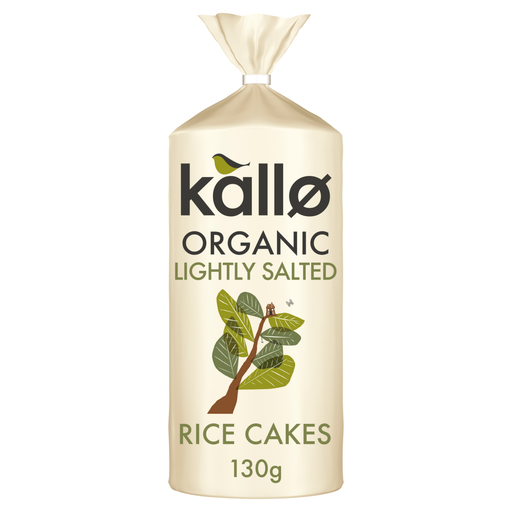
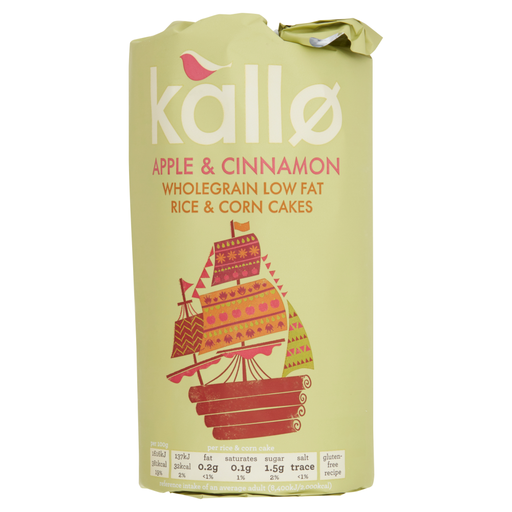
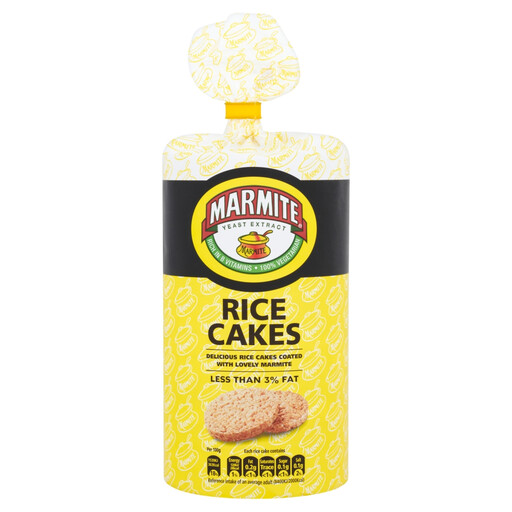
These Joybuy options include an organic lightly salted cake, a sweet apple-and-cinnamon cake and a Marmite-flavoured cake. Compare each variant’s label against your priorities for a coffee-break snack.
 No image available
A lightly salted option to consider if you prefer a savoury cake with coffee. This is the 130g organic variant; check its own nutrition and allergen label rather than applying figures from another Kallo product.
 No image available
Consider this 127g apple-and-cinnamon variant if you want a sweet flavour with coffee. Compare its fat and sugars on the pack with those of a plain cake before choosing.
 No image available
This 110g Marmite-flavoured option suits a preference for a savoury taste rather than a plain cake. Check the pack’s fat, salt, ingredients and allergen statement against your needs.
The NHS defines low fat for foods as 3g or less of total fat per 100g. Use the per-100g figure to compare products, then check the per-cake amount and how many cakes you intend to eat.
If salt is your priority, compare the current labels for the exact cakes. Sainsbury’s lists less than 0.01g salt per No Added Salt cake; a lightly salted name alone does not tell you the comparable amount.
No: check the particular recipe rather than relying on the rice-cake format. Snack a Jacks lists 51 kcal and 3.6g sugars per Caramel Jumbo cake, compared with Kallo’s 27 kcal and 0.1g sugars per Lightly Salted cake.
No. Read the current ingredients and allergen statement: Kallo describes its Lightly Salted cakes as gluten free but says they may contain milk, sesame seeds and soya.
Compare fat, sugars, salt and calories for the exact variant, using per-100g figures for a consistent comparison and per-cake figures for the portion you plan to take. NHS food-label guidance distinguishes these nutrients, so a low-fat description does not replace the other checks.