Hosts looking for a low-fat rice-cake base
If rice cakes will sit alongside Easter treats, compare plain or lightly salted options by their fat values per 100g before choosing toppings.


For a low-fat rice-cake base at an Easter egg hunt, start with plain or lightly salted varieties and compare total fat per 100g on the current pack. M&S lists 2.5g per 100g for its Lightly Salted Rice Cakes, while Kallo lists 2.7g per 100g for its Organic Lightly Salted Rice Cakes; both fall within the NHS guide figure of 3g or less per 100g for foods. Check coatings and toppings separately, along with ingredients and allergens before serving guests.
If rice cakes will sit alongside Easter treats, compare plain or lightly salted options by their fat values per 100g before choosing toppings.
Check the pack that will be served rather than assuming a plain-looking rice cake suits everyone. Tesco’s listing for Kallo Lightly Salted Rice Cakes says they may contain milk, sesame and soya.
A chocolate-coated rice cake is a different choice from an uncoated base. M&S lists substantially different fat values per 100g for its lightly salted and milk chocolate mini rice cakes.
Choose the rice cake by its per-100g label first, then assess anything added to it and check the pack before serving.
| Priority | What to check | Your needs |
|---|---|---|
| Fat in the base | Compare total fat per 100g on plain or lightly salted packs. The NHS guide describes 3g or less per 100g as low for foods; Kallo lists 2.7g per 100g for its Organic Lightly Salted Rice Cakes. | I want a rice-cake base that meets the low-fat guide figure, rather than choosing by calories per cake alone. |
| Coatings and toppings | Check the finished product’s fat and saturates per 100g. M&S lists 22.7g fat and 13.7g saturates per 100g for its Milk Chocolate Mini Rice Cakes, compared with 2.5g and 0.5g for its Lightly Salted Rice Cakes. | If I add a coating or topping, I need to consider it separately from the uncoated base. |
| Ingredients and allergens | Read the current pack’s ingredients and allergen statement before serving. Tesco’s Kallo lightly salted listing states that the product may contain milk, sesame and soya. | Guests may need to inspect the packaging themselves, so I want to keep it available with the snacks. |
The name does not distinguish an uncoated cake from a chocolate-coated one. M&S lists 22.7g fat per 100g for its Milk Chocolate Mini Rice Cakes and 2.5g per 100g for its Lightly Salted Rice Cakes.
Compare total fat per 100g on the exact product, then check saturates and the other label details relevant to your choice.
The fat value for a plain rice cake describes the base, not a finished snack with a coating or topping.
Choose the base first and assess added ingredients separately before describing the whole serving as low in fat.
For a group snack table, the pack being served is the practical reference. Tesco’s listing says Kallo Lightly Salted Rice Cakes may contain milk, sesame and soya.
Read the physical pack before serving and keep it available for guests or carers who need to check it.
Kallo’s Organic Lightly Salted Rice Cakes 130g are a named option for comparing an uncoated base.
M&S provides a useful product-specific contrast between lightly salted rice cakes and chocolate-coated mini rice cakes.
Snack a Jacks is another rice-cake brand to consider when choosing a format and flavour.
Tesco’s rice-cake category separates plain and salted products from flavoured and chocolate or sweet products.
These options include a lightly salted rice-cake base and a Marmite-flavoured rice cake. If you want a base for toppings, check the distinction between the two before choosing.
 No image available
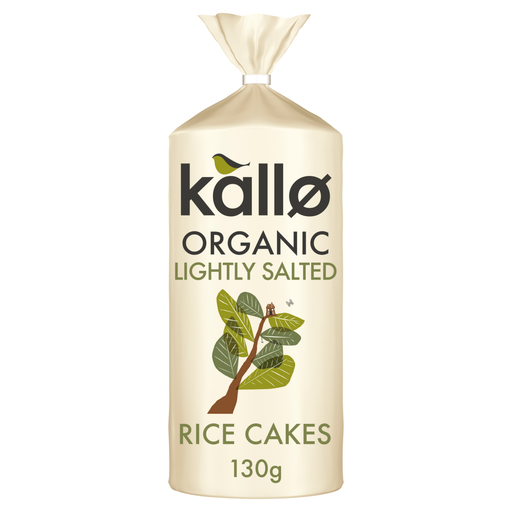
A lightly salted option to consider as the rice-cake base for an Easter egg hunt. Kallo lists 2.7g fat and 0.7g saturates per 100g for this product. Tesco’s listing says it may contain milk, sesame and soya, so check the pack before serving.
 No image available
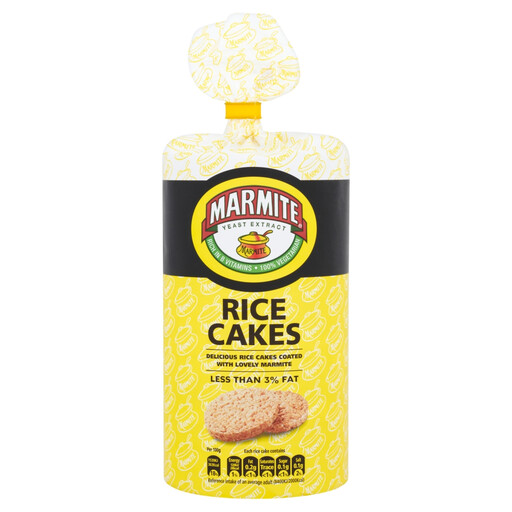
A Marmite-flavoured option rather than a plain base for toppings. If the low-fat criterion matters, compare the current pack’s total fat per 100g with other options, and check its ingredients and allergen statement before serving guests.
The NHS food-label guide describes 3g or less total fat per 100g as low for foods. Use the per-100g figure on the exact rice-cake pack so that different pack or serving sizes do not obscure the comparison.
Not on the basis of the product name alone. M&S lists 22.7g fat per 100g for its Milk Chocolate Mini Rice Cakes, compared with 2.5g per 100g for its Lightly Salted Rice Cakes. Check the exact coating and nutrition label when choosing for a low-fat snack table.
Read the physical pack you plan to serve and keep it available for guests or carers to inspect. Tesco’s listing for Kallo Lightly Salted Rice Cakes says they may contain milk, sesame and soya; do not assume that a plain-looking rice cake is suitable for everyone.