Runners planning a pre-run snack
A plain rice cake is easy to portion and pair with other food. Count its carbohydrate rather than assuming a low-fat label tells you how much fuel the snack provides.


Plain or lightly salted low-fat rice cakes can be a convenient carbohydrate base before an easier run or alongside other food after training, but reduced fat alone does not make them sufficient fuel for a long run. Compare carbohydrate in the portion you will actually eat, and practise a fuelling plan that fits the session; drinks, gels or other portable carbohydrate foods may be easier to use while running.
A plain rice cake is easy to portion and pair with other food. Count its carbohydrate rather than assuming a low-fat label tells you how much fuel the snack provides.
If you need to take in carbohydrate during a long run, consider how much you can carry, eat and drink comfortably. A few rice cakes may not fit the amount or format your plan calls for.
Gluten-free or vegan wording does not replace a check of the current ingredients and precautionary allergen statement. This matters when choosing both the cakes and anything served with them.
Start with the carbohydrate in your planned portion, then check whether the food and its packaging suit when you intend to eat it.
| Priority | What to check | Your needs |
|---|---|---|
| Carbohydrate per portion | Read carbohydrate per cake as well as per 100 g. Count the cakes you plan to eat and compare the total with your fuelling plan. | One cake might be a useful part of my snack, but I do not want to mistake it for my entire long-run fuel supply. |
| Food during a run | Check how you will carry, eat and drink with your chosen food. World Athletics lists 30–60 g carbohydrate per hour for endurance events lasting 1–2.5 hours and up to 90 g per hour beyond 2.5 hours. | For a longer session, I need a practised combination I can use while moving; drinks, gels or confectionery may be easier to portion than dry cakes. |
| Fat and the full snack | Compare plain products on the same per-100 g basis, then check the nutrition and ingredients of any topping. A low-fat cake does not determine the composition of the finished snack. | I want a straightforward pre-run option and need to know what changes when I add a topping. |
| Ingredients and allergens | Read the current pack’s ingredients and allergen statement, including any precautionary wording. Check toppings separately. | If I avoid an ingredient or allergen, the wording on this particular pack matters more than assumptions about rice cakes as a category. |
The plain cakes in the supplied product information provide about 5.5–5.6 g carbohydrate each. A small serving could fall well short of the carbohydrate in a long-run plan.
Calculate the total for the portion you will eat and consider the run’s duration, your other food and your access to fluids.
Carbohydrate, fibre and salt vary between plain products, while toppings change the composition of the whole snack. The cake’s fat figure cannot answer every fuelling question.
Compare nutrition panels on a like-for-like basis, then trial the complete snack during training rather than introducing it on race day.
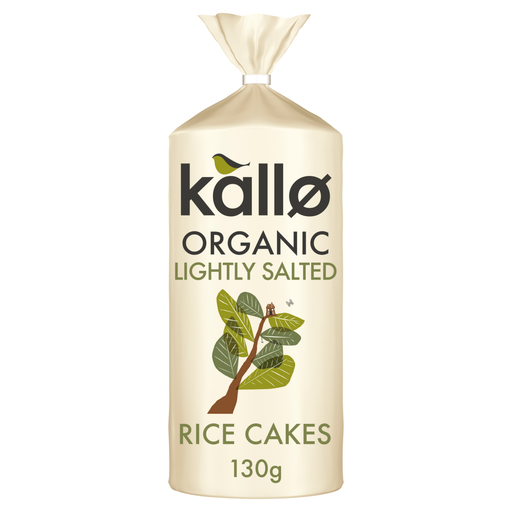
Kallo’s organic lightly salted rice cakes carry a precautionary statement for milk, sesame and soya despite their gluten-free and vegan-friendly positioning.
If an allergen matters to you, read the current pack and check any accompanying food before using the snack.
Kallo lists standard and organic lightly salted rice cakes in 130 g packs. The organic version contains organic wholegrain brown rice and sea salt.
Tesco’s lightly salted rice cakes provide a plain own-label option with nutrition stated per cake and per 100 g.
M&S lists lightly salted wholegrain brown-rice cakes in a 112 g pack.
This lightly salted rice cake is an option for building a portioned snack around training. Plan food for a long run separately rather than relying on its low-fat description.
 No image available
A plain base to portion for a pre-run snack or pair with other food after training. Kallo lists organic wholegrain brown rice and sea salt, 82.3 g carbohydrate and 2.7 g fat per 100 g, and 5.6 g carbohydrate per cake. Count the cakes in your planned serving; the product carries a precautionary statement for milk, sesame and soya.
Yes, its carbohydrate counts, but a cake is only one part of a fuelling plan. The plain products described here provide about 5.5–5.6 g carbohydrate per cake; World Athletics lists 30–60 g per hour for endurance events lasting 1–2.5 hours and up to 90 g per hour beyond 2.5 hours. Work from the portions you can practise eating, not the low-fat wording.
No. Fat is one part of the nutrition panel, while carbohydrate per serving and whether you can comfortably eat the complete snack matter to the plan. Compare plain cakes per 100 g, then include any toppings when assessing what you will actually eat.
Only use them during the event if you have practised carrying, eating and drinking with them on long runs and can fit them into your carbohydrate plan. Dry cakes may be less convenient to consume while moving than drinks, gels or other portable carbohydrate foods.
If rice cakes form part of a post-run snack, pair them with a protein-containing food and fluids. The UK Sports Institute advises a carbohydrate- and protein-rich snack with fluids after intense or prolonged exercise; a plain rice cake on its own does not provide that combination.
Read the current pack’s ingredient list and allergen statement, then check any topping separately. For example, Kallo’s organic lightly salted rice cakes carry a precautionary statement for milk, sesame and soya, so a gluten-free or vegan description is not a substitute for that check.