Busy new parents looking for a quick snack base
Plain rice cakes are convenient to keep in the cupboard. Compare the fat figure per 100g, ingredients and storage directions if you expect to eat a pack over several occasions.


For a quick snack base with a short ingredient list, start by comparing plain or lightly salted rice cakes on the nutrition panel. A flavoured cake may suit you when you want something ready to eat without a topping, but check fat, sugars, salt and allergens for that exact flavour rather than assuming all rice cakes have similar values. If you are breastfeeding, the NHS says you do not need a special diet; rice cakes can be one part of a varied diet, not a replacement for a meal.
Plain rice cakes are convenient to keep in the cupboard. Compare the fat figure per 100g, ingredients and storage directions if you expect to eat a pack over several occasions.
The NHS says breastfeeding does not require a special diet and advises choosing wholegrain starchy foods where possible. A wholegrain rice cake can be one component of a snack alongside other foods you enjoy.
Check the exact pack before choosing: plain and flavoured rice cakes can have different ingredients and precautionary allergen statements. A gluten-free label does not answer questions about milk, sesame or soya.
Choose between a plain base and a flavoured snack first, then compare the exact packs using per-100g figures and their ingredient lists.
Consider this when: You want a rice cake with a short ingredient list that you can eat plain or add a topping to.
Bear in mind: A plain rice cake is a snack base rather than a complete meal, and its pack may still carry allergen warnings.
Consider this when: You want a ready-flavoured snack without preparing a topping.
Bear in mind: Sugars, salt and ingredients vary by flavour, so a plain cake's label is not a substitute for checking this pack.
| Priority | What to check | Your needs |
|---|---|---|
| Fat | Compare total fat per 100g, not just the figure per cake. For reference, M&S lists 2.5g per 100g for its Lightly Salted Rice Cakes, Asda lists 2.7g for Kallo Organic Lightly Salted Wholegrain Rice Cakes, and Tesco lists 3.1g for its Lightly Salted Rice Cakes. | I want to compare the same measure across packs rather than assume a rice-based snack is low in fat. |
| Salt and sugars | Read both figures per 100g for the exact flavour. Tesco lists 1.0g salt per 100g for Snack a Jacks Sour Cream & Chive Jumbo Rice Cakes; Asda lists 19g sugars per 100g for the Jumbo Caramel variant. | A flavoured cake would be convenient, but I also want to know what is in that particular flavour. |
| Ingredients | Check whether the cake is wholegrain and read its ingredient list. Check the current pack's allergen and precautionary statements separately from any gluten-free wording. | I would prefer a simple wholegrain base, or I need to establish whether a particular pack suits my household's exclusions. |
| Role in a snack | Consider what else you will eat with the rice cake. The NHS advises a varied diet while breastfeeding and says no special breastfeeding diet is needed. | On a busy day, I want a quick snack component without treating a plain rice cake as a whole meal. |
| After opening | Read the pack's storage instructions and any stated period for eating it after opening. Check whether it calls for an airtight container. | I may return to the same pack across several snack breaks, so the opening instructions matter. |
The figures differ even among lightly salted products: M&S lists 2.5g fat per 100g for its rice cakes, while Tesco lists 3.1g per 100g for its own-label version.
Compare the nutrition panels per 100g before deciding which pack meets your preferred cut-off.
Tesco lists 1.0g salt per 100g and milk in the ingredients of Snack a Jacks Sour Cream & Chive Jumbo Rice Cakes. Asda lists 19g sugars per 100g for the Jumbo Caramel variant.
Read the nutrition and ingredient information for the exact flavour you plan to buy.
Kallo's Lightly Salted Wholegrain Rice Cakes carry a may-contain statement for milk, sesame and soya; Asda's Slightly Salted Rice Cakes list possible soya.
If an allergen matters to your household, use the current pack's statement to decide whether that specific product is suitable.
A rice cake can provide a quick base, but it does not take the place of the variety of foods the NHS advises while breastfeeding.
Think about what else belongs in your snack or meal rather than relying on the rice cake alone.
These examples show why it is worth comparing exact products rather than assuming every cake from a brand has the same nutrition or ingredients.
Its plain, lightly salted wholegrain range is worth comparing if you want a short ingredient list.
Its own-label Slightly Salted Rice Cakes offer another plain option to compare by nutrition panel.
Its Lightly Salted Rice Cakes are a wholegrain brown-rice option with published per-100g nutrition figures.
Its own-label Lightly Salted Rice Cakes illustrate why similar product descriptions still call for a nutrition check.
Its flavoured cakes are relevant if you want a snack that needs no topping, with figures that differ by flavour.
These options include a plain, lightly salted cake and two ready-flavoured cakes. Compare their exact packs according to whether you want a simple base or a flavour that needs no topping.
 No image available
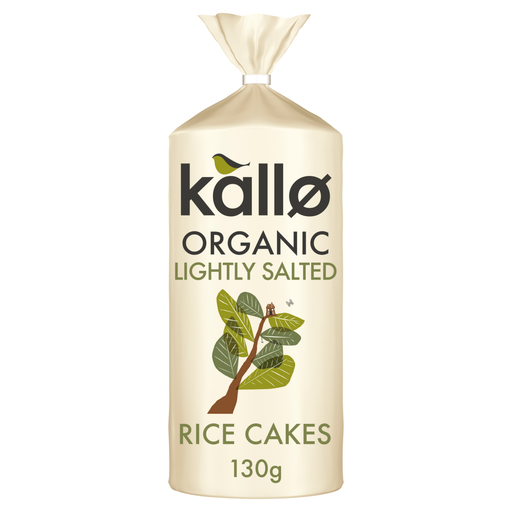
A lightly salted option to consider when you want a plain snack base. Asda lists 2.7g fat per 100g for its Kallo Organic Lightly Salted Wholegrain Rice Cakes 130g; confirm the nutrition and precautionary allergen statement on the pack you receive.
 No image available
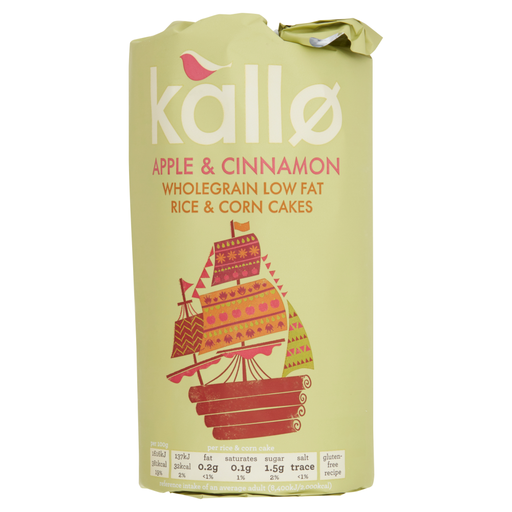
An apple-and-cinnamon-flavoured option if you would rather not add a topping. Compare its per-100g fat, sugars and salt with a plain cake, and check the pack's milk, sesame and soya precautionary statements if those allergens matter to you.
 No image available
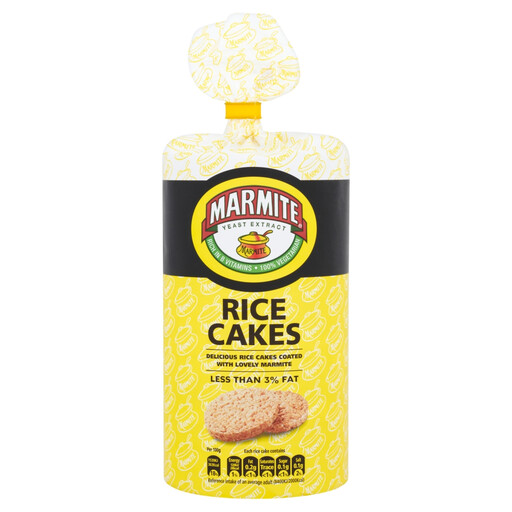
A savoury-flavoured option for a snack without a topping. Check the full per-100g nutrition panel on the pack, particularly salt and sugars, and read the ingredients carefully if you need to avoid wheat, barley, oats, rye or celery.
No. The NHS says you do not need a special diet while breastfeeding. Choose a rice cake according to its ingredients and your preferences, and treat it as one component of a varied diet rather than a meal replacement.
No. Check total fat per 100g so that packs with different cake sizes can be compared on the same basis. For example, M&S lists 2.5g fat per 100g for its Lightly Salted Rice Cakes, while Tesco lists 3.1g per 100g for its own-label Lightly Salted Rice Cakes.
Not necessarily. Kallo's Lightly Salted Wholegrain Rice Cakes list possible milk, sesame and soya, while Asda's Slightly Salted Rice Cakes list possible soya. Check the current statement on the exact pack, even if another dietary label appears on it.
Follow that pack's storage instructions. Check whether it specifies an airtight container or a period for eating the cakes after opening, particularly if you plan to use the pack over several snack breaks.