Plain-base snackers
If you want to add your own topping at an afternoon break, a plain or lightly salted rice cake lets you assess the base and topping separately. Compare the number of cakes you intend to eat, not just the figures for one.


For a plain afternoon snack base, compare rice cakes by fat, saturates and salt per 100g as well as per cake, then consider the toppings you plan to add. Kallo Organic Lightly Salted, Kallo Lightly Salted and Tesco Lightly Salted each list 27 kcal and 0.2g fat per cake, but their salt figures and allergen information differ. A reduced-fat claim compares a product with a similar one; it does not, by itself, tell you its absolute fat content.
If you want to add your own topping at an afternoon break, a plain or lightly salted rice cake lets you assess the base and topping separately. Compare the number of cakes you intend to eat, not just the figures for one.
Kallo Organic Lightly Salted is listed as organic and vegan-friendly. Tesco’s listing also says it may contain milk, sesame and soya, so check the current pack if you need to avoid those allergens.
A flavoured rice cake may suit a break without added toppings. Check that flavour’s nutrition panel rather than treating calorie messaging for a brand’s range as a low-fat or reduced-fat claim for the individual product.
Start with comparable plain products, then check whether the portion, flavouring and any toppings change the choice.
| Priority | What to check | Your needs |
|---|---|---|
| Fat and saturates | Compare fat and saturates per 100g on equivalent products, then read the per-cake figures. Tesco lists Kallo Organic Lightly Salted at 2.7g fat per 100g, while Kallo lists its Lightly Salted variety at 2.8g and Tesco lists its own Lightly Salted variety at 2.9g. | I want to compare plain rice cakes on the same basis rather than judge fat content from the front of the pack. |
| Salt | Read salt per 100g and per cake, especially when comparing lightly salted varieties. Tesco lists 0.23g salt per 100g for its Lightly Salted cakes; Kallo lists 0.3g per 100g for its Lightly Salted cakes. | If I eat several cakes or add a salty topping, I want to account for more than the fat in the base. |
| Ingredients and allergens | Check the exact pack’s ingredients, dietary statements and precautionary allergen wording. Kallo’s Lightly Salted information and Tesco’s Organic Lightly Salted listing both carry may-contain warnings for milk, sesame and soya. | I need the allergen wording for the product I am buying; a vegan-friendly description does not replace that check. |
| Portion and toppings | Check the per-cake serving figures and decide how many cakes and what toppings make up the snack. The three plain products compared here each list 27 kcal and 0.2g fat per cake before toppings. | For an afternoon break, I want to assess the whole snack, not apply the rice cake’s figures to a topped portion. |
Calorie messaging does not establish the fat content of an individual flavour. The British Nutrition Foundation describes ‘reduced fat’ as at least 30% less fat than a similar product.
Read the claim on the specific pack and compare its fat and saturates per 100g with a suitable alternative.
The listed per-cake figures for the plain Kallo and Tesco products apply before butter, cheese, spreads or other additions.
Choose the number of cakes and topping first, then use the relevant labels to assess the combined snack.
Kallo’s Lightly Salted information and Tesco’s Organic Lightly Salted listing include may-contain warnings for milk, sesame and soya.
If you must avoid one of these allergens, check the current pack’s allergen information rather than relying on vegan-friendly wording.
Its Lightly Salted and Organic Lightly Salted rice cakes are relevant when you want a plainly flavoured base with product-specific fat figures.
Tesco Lightly Salted Rice Cakes provide another plain option for comparing fat, saturates and salt on the nutrition label.
The range is a reference point if you are considering a flavoured rice cake rather than a plain base for toppings.
These options cover an organic lightly salted rice cake for a plain base and a Marmite-flavoured rice cake for a break without adding your own flavouring. Compare the exact packs if lower fat or salt is your deciding factor.
 No image available
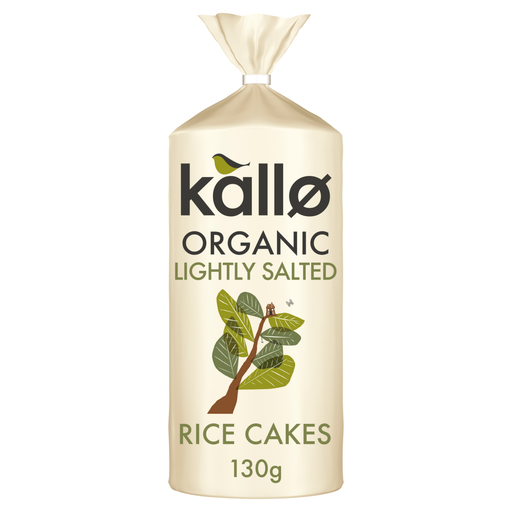
A lightly salted option if you want a plain base for your own topping. Tesco lists this organic variety at 2.7g fat per 100g and 0.2g per cake. Its listing carries a may-contain warning for milk, sesame and soya; check the current pack, particularly if you need to avoid these allergens.
 No image available
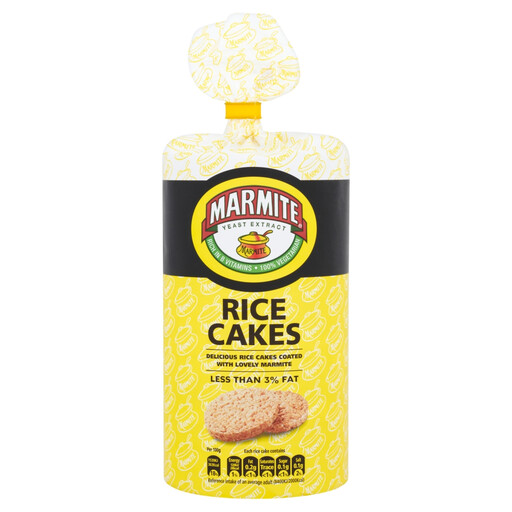
A Marmite-flavoured option if you would rather choose a flavoured rice cake than add a topping to a plain one. Check the pack’s fat, salt, ingredients and allergen information before deciding whether it meets your needs.
No. The British Nutrition Foundation describes ‘reduced fat’ as a comparison with a similar product containing at least 30% more fat. It does not establish that the rice cake is low in fat in absolute terms, so read the specific claim and nutrition panel.
Among the three plain or lightly salted products compared here, Tesco lists Kallo Organic Lightly Salted at 2.7g fat per 100g. Kallo lists its Lightly Salted variety at 2.8g, and Tesco lists its own at 2.9g per 100g. Also compare salt and allergen information before choosing.
Yes. The plain Kallo and Tesco products discussed here each list 27 kcal and 0.2g fat per cake before toppings. Use the topping’s own label and the number of cakes you plan to eat when assessing the complete snack.
No. Kallo’s Lightly Salted information and Tesco’s listing for Organic Lightly Salted say the products may contain milk, sesame and soya. If you need to avoid any of them, check the current pack’s allergen wording.