Older shoppers choosing a dairy-free everyday drink
If soya drink is going into tea, cereal or cooking, compare the fat and sugars figures alongside the nutrients added to the particular carton.


An unsweetened soya drink can suit an older shopper who wants an everyday dairy-free option and is eating adequately, but check the individual carton for fat, sugars and added nutrients rather than choosing on the words “soya” or “unsweetened” alone. Do not make low fat the default for someone with poor appetite, unplanned weight loss or an assessed higher-energy diet; follow their individual nutrition plan.
If soya drink is going into tea, cereal or cooking, compare the fat and sugars figures alongside the nutrients added to the particular carton.
If dairy is excluded from the diet, look for declared calcium and check whether vitamin D, vitamin B12 and iodine are listed. The NHS recommends fortified dairy alternatives, including soya drinks, in its vegan-diet guidance.
A low-fat choice may conflict with an assessed plan to increase energy intake. East Suffolk and North Essex NHS Foundation Trust’s guidance for older adults at risk of malnutrition includes full-fat and full-sugar foods in that care context.
Start with the shopper’s appetite and any individual nutrition plan, then compare the nutrition table and added nutrients on the exact drink being bought.
| Priority | What to check | Your needs |
|---|---|---|
| Fat and sugars | Compare fat and sugars using the same quantity, such as per 100 ml. Check whether the drink is unsweetened; the name alone does not give its fat value. | I want a dairy-free drink for everyday use and am eating adequately, so the carton’s fat and sugars figures matter to my choice. |
| Added nutrients | Look for declared calcium, vitamin D, vitamin B12 and iodine on the individual pack. The UK Scientific Advisory Committee on Nutrition and Committee on Toxicity’s 2025 assessment notes considerable variation in plant-based drinks’ nutrient content. | If dairy is off the menu, I want to know which nutrients this particular drink contributes, rather than assuming every soya drink is fortified alike. |
| Appetite and diet plan | Check for an assessed higher-energy diet or advice from a dietitian before choosing low fat. East Suffolk and North Essex NHS Foundation Trust’s older-adult malnutrition guidance discusses full-fat and full-sugar choices in that specific setting. | When appetite is poor or weight is falling, keeping to an individual nutrition plan matters more than applying a blanket low-fat rule. |
| Current pack | Read the ingredients, soya allergen declaration and nutrition table on the carton being purchased. | I need to check the current label, especially if the drink is for someone with a soya allergy or a specific nutrient requirement. |
The UK Scientific Advisory Committee on Nutrition and Committee on Toxicity’s 2025 assessment notes that nutrient content varies considerably between plant-based drinks. The word “soya” does not establish what has been added.
Compare calcium and vitamin declarations on the exact carton, as well as its fat and sugars figures.
For an older person with poor appetite or unplanned weight loss, a general low-fat shopping preference may conflict with an assessed higher-energy diet. East Suffolk and North Essex NHS Foundation Trust’s malnutrition guidance addresses full-fat and full-sugar choices in that care context.
Check for an individual nutrition plan or dietitian advice before making the switch.
A calcium declaration does not tell you whether vitamin D has also been added. The NHS states that adults need 10 micrograms of vitamin D a day.
Read the vitamin D declaration separately and follow any advice already given to the shopper about supplements.
The pack in hand is the practical place to check the current ingredients, allergen declaration and nutrition figures.
Read it before purchase, particularly when shopping for someone with a soya allergy.
These examples show why the exact variant matters: a brand name alone does not establish a drink’s fat value or fortification.
M&S lists an Unsweetened Soya Drink with a nutrition declaration and named added nutrients.
Alpro has distinct soya-drink variants, so compare the full product name and label.
Tesco’s soya-drink range includes own-label unsweetened and sweetened long-life choices.
Waitrose lists an Essential Unsweetened Soya Drink as a long-life option.
These Alpro soya drinks are options to examine when shopping for an everyday dairy-free drink. Compare each current pack with the shopper’s fat, sugars and fortification needs before choosing.
 No image available
The named No Sugars long-life variant is listed as 8 x 1L. For an older shopper choosing an everyday drink, check the current pack’s fat figure and declarations for calcium, vitamin D, vitamin B12 and iodine; follow any individual nutrition plan if appetite or weight is a concern.
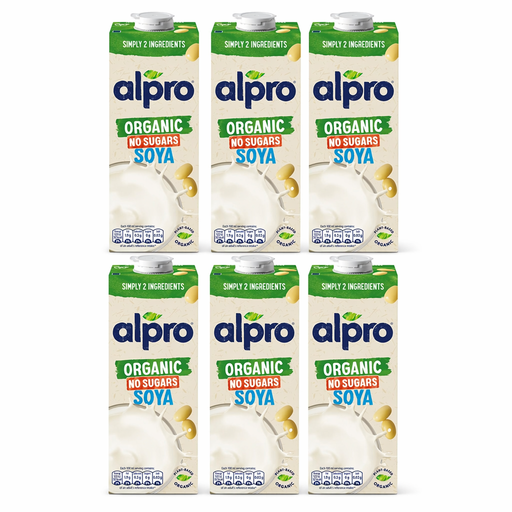 No image available
For this Alpro soya-drink variant, compare the current pack’s fat and sugars per 100 ml with other drinks, and check its added-nutrient and soya allergen declarations. Confirm the pack details before ordering.
No. An older shopper who is eating adequately may choose a lower-fat dairy-free drink, but low fat should not override an assessed nutrition plan for poor appetite or unplanned weight loss. East Suffolk and North Essex NHS Foundation Trust’s guidance for older adults at risk of malnutrition discusses full-fat and full-sugar choices in that specific care context.
Check the fat and sugars figures and look for declared calcium, vitamin D, vitamin B12 and iodine where these matter to the shopper’s diet. The UK Scientific Advisory Committee on Nutrition and Committee on Toxicity’s 2025 assessment notes considerable variation in plant-based drinks’ nutrient content, so compare individual products.
Not necessarily: check whether vitamin D is listed on that product’s label. The NHS states that adults need 10 micrograms of vitamin D a day; a calcium declaration alone cannot tell you how a drink fits with that guidance.
Soya milk contains the soya allergen, so it is not a suitable choice for someone with a soya allergy. Read the current allergen declaration and choose an appropriate alternative.
The carton lets you check the ingredients, allergen declaration and nutrition figures for the product being purchased. Read it when a particular nutrient value or allergen matters to the shopper.