For familiar meals, start with an unsweetened, fortified soya drink whose flavour and texture the eater accepts. Alpro Soya Light has a stated fat value of 1.2g per 100ml, but the lowest-fat carton is not automatically suitable as a young child’s regular milk replacement: compare energy, protein and fortification, and check age and allergy advice for the exact product.
Who is this for?
Carers making meals for a fussy toddler or preschooler
If porridge, cereal or sauces are already familiar, a soya drink can be tried as an ingredient without making the whole meal unfamiliar. The NHS advises offering a variety of foods repeatedly rather than expecting one change to resolve fussy eating. Check the carton’s age advice before using it for a young child.
Households choosing a dairy-free meal ingredient
If lower fat or an unsweetened flavour matters for everyday recipes, compare the nutrition panels alongside the ingredients. Products differ in energy, protein and added nutrients as well as fat.
Carers managing a milk allergy or restricted diet
When a soya drink could take the place of cow’s milk regularly, check for soya allergy, age suitability and fortification. Seek advice from a GP or dietitian if a child’s growth or limited range of foods is a concern.
What should you check?
Begin with a recipe the eater knows, then read the exact carton’s label. Fat is only one part of the decision, particularly if the drink will be used regularly instead of milk.
| Priority |
What to check |
Your needs |
| Familiar meals |
Check whether the carton is unsweetened and whether its flavour and texture work in the recipe you plan to make. The NHS advises offering foods repeatedly without pressure. |
I want to try a soya drink in a familiar meal, rather than expect a new drink to change which foods are accepted. |
| Fat and energy |
Compare fat, energy and protein on the same per-100ml basis. Sainsbury’s lists Alpro Soya Light at 1.2g fat, 22kcal and 2.0g protein per 100ml; its own Unsweetened Soya Drink lists 1.3g fat, 26kcal and 2.2g protein per 100ml. |
If the drink is just an ingredient, I may focus on fat and taste. If a young child will rely on it regularly instead of milk, I need to consider the wider diet too. |
| Fortification |
Look for calcium, vitamin D, B12 and iodine on the current pack, particularly when dairy is being replaced. The listed nutrients vary between drinks. |
I want to know what the carton provides, rather than assume that every unsweetened soya drink has the same added nutrients. |
| Age suitability |
Read the exact product’s age wording. Sainsbury’s says its Unsweetened Soya Drink is not suitable as a main milk-drink alternative for children under two; Waitrose labels its Essential Unsweetened Soya Drink unsuitable for children under two. |
Before using a drink regularly for a child under two, I need advice that fits that child and the product I am buying. |
| Allergens |
Check the current ingredients and allergen label. NHS clinical guidance says to avoid soya milk if a child is also allergic to soya. |
For an allergy-managed meal, I need to check the carton each time rather than rely on its plant-based description. |
Buying pitfalls
-
Choosing the lowest fat value for every child
A lower-fat drink may work as a recipe ingredient, but that value alone cannot establish whether it suits a young child who needs a regular non-dairy milk alternative. Hertfordshire and West Essex NHS clinical guidance advises looking for an unsweetened, fortified alternative with around 40kcal or more and at least 1g protein per 100ml for young children who cannot tolerate cow’s milk.
Compare energy, protein and fortification as well as fat. Ask a GP or dietitian for advice if growth or a restricted diet is a concern.
-
Assuming unsweetened means fortified
An unsweetened description tells you about sweetness, not which nutrients have been added. Product ingredient and nutrition panels can differ.
If the drink will regularly replace dairy, check the current carton for calcium, vitamin D, B12 and iodine rather than choosing by the front-of-pack wording alone.
-
Overlooking age and soya-allergy advice
A plant-based drink can still contain an allergen, and age warnings differ by product. Waitrose labels its Essential Unsweetened Soya Drink unsuitable for children under two, while Sainsbury’s warns against using its Unsweetened Soya Drink as their main milk-drink alternative.
Read the exact carton’s age and allergen information. Do not use soya milk for a child who is allergic to soya; discuss a suitable alternative with their healthcare professional.
Relevant brand references
These product lines illustrate different label details to compare; a brand name alone does not establish suitability for a particular child or recipe.
Alpro
Soya Light is the Alpro drink in this comparison with a stated fat value of 1.2g per 100ml, according to product information published by Sainsbury’s.
- The Soya Light listing states 22kcal, 2.0g protein and 120mg calcium per 100ml.
- That energy value needs consideration if a young child would rely on the drink as a regular milk alternative rather than use it in a meal.
Sainsbury's
Its own-label Unsweetened Soya Drink is another option to compare for familiar meals.
- Sainsbury’s lists 1.3g fat and 2.2g protein per 100ml, with added calcium, vitamin D, B12 and iodine.
- Sainsbury’s says it is not suitable as a main milk-drink alternative for children under two.
M&S
M&S lists an unsweetened soya drink for shoppers comparing fortified options.
- Its product information states 1.4g fat, 2.8g protein and 30kcal per 100g, with added calcium, iodine, vitamin D and B12.
- Those values are stated per 100g, so do not treat them as per-100ml figures when comparing cartons.
Waitrose Essential
The Essential Unsweetened Soya Drink is a long-life option listed by Waitrose.
- Waitrose lists added calcium, vitamin D, B12, B2 and iodine.
- Waitrose labels this product unsuitable for children under two.
Joybuy soya drink options
These soya drinks offer different starting points for familiar meals: one is labelled No Sugars, while the other calls for a closer look at the sugar label if you want an unsweetened ingredient. Check the current pack before choosing either as a regular milk replacement for a young child.
 No image available
Alpro Soya No Sugars Long Life Drink, 8 x 1L
For a familiar cereal or porridge recipe, consider this No Sugars drink if its flavour is accepted. The bundle contains eight 1L long-life cartons. It contains soya; check the current pack for fortification and age suitability before using it regularly as a young child’s milk alternative.
View on Joybuy
 No image available
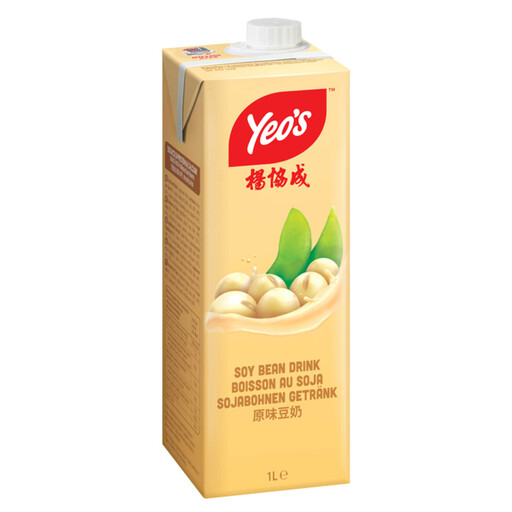
Yeo's Soy Bean Drink, 1L
For a smoothie or another familiar recipe, compare this 1L soya drink’s sugar content with an unsweetened carton if flavour matters. It contains soya. Check the current pack for fortification and age suitability before using it regularly as a young child’s milk alternative.
View on Joybuy
Common questions
Is the lowest-fat soya drink the right choice for a fussy child?
Not necessarily. Fat is useful to compare for a meal ingredient, but a young child relying on a non-dairy drink instead of cow’s milk also needs its energy, protein and fortification considered. Hertfordshire and West Essex NHS clinical guidance advises looking for around 40kcal or more and at least 1g protein per 100ml for young children who cannot tolerate cow’s milk; seek individual advice if growth or a restricted diet is a concern.
Can a child under two have these soya drinks as their main milk drink?
Do not assume a soya drink is suitable as a main replacement. Sainsbury’s specifically rules out that use for its Unsweetened Soya Drink in children under two, and Waitrose labels its Essential Unsweetened Soya Drink unsuitable for that age group. Check the exact product and discuss a child’s needs with a healthcare professional.
What if the eater has allergies?
Check the current carton’s ingredients and allergen information before use. A soya drink is not suitable for someone allergic to soya; NHS clinical guidance explicitly warns against soya milk when a child has that allergy. Ask the child’s healthcare professional about an appropriate alternative.
Will switching to soya milk resolve fussy eating?
A change of drink alone should not be expected to do that. The NHS advises continuing to offer a variety of foods, giving small portions and avoiding pressure at mealtimes. If a soya drink works in an accepted recipe, it can be one ingredient while you continue offering other foods.


