Families planning a lighter convenience lunch
If soup is replacing a richer lunch, compare the fat in the portion served and check whether one tin provides enough for everyone eating.


For a family meal with less fat, compare tinned soups per 100g and for the portion each person will eat. A 400g vegetable or lentil soup can suit two smaller servings, but check salt and allergens separately, and plan more tins or suitable sides if soup is the main meal for a larger household.
If soup is replacing a richer lunch, compare the fat in the portion served and check whether one tin provides enough for everyone eating.
Vegetable and lentil recipes offer different textures, but vegetarian does not mean allergen-free. Check the exact tin for ingredients such as milk, wheat and celery.
A low-fat description does not tell you how much salt is in a bowl. Compare the per-100g figure and the amount in the portion your household will eat.
Start with comparable nutrition figures, then work out portions and check the ingredients and storage directions on the tin you choose.
| Priority | What to check | Your needs |
|---|---|---|
| Total fat and saturates | Compare both figures per 100g, then use the label to assess the portion you will serve. Check the exact recipe rather than judging by its flavour name. | I want to choose a lower-fat soup without assuming that every tomato, vegetable or creamy recipe has similar nutrition values. |
| Salt | Compare salt per 100g and per stated serving. If your bowl differs from that serving, account for the amount you will actually eat. | Low fat is only part of my decision; I also want to know how much salt is in each bowl. |
| Portions | Check the tin size and stated number of servings. Decide whether soup is a starter, lunch or the main part of dinner before counting tins or sides. | Will a 400g tin provide enough for the people eating, or do I need more tins or other meal components? |
| Ingredients and allergens | Read the allergen declaration on the exact product. Check ingredients alongside nutrition values when comparing smooth, lentil and condensed recipes. | Everyone eating needs a suitable option; I cannot assume that a vegetarian or vegetable-named soup meets our allergen requirements. |
| Leftovers | Follow that product’s directions for transferring, refrigerating and using opened soup. Tesco’s listed soups specify use within four days; Sainsbury’s Tomato & Spicy Lentil Soup specifies two days. | If we will not finish a tin, I need a plan for storing the remainder according to its label. |
Fat and salt are separate measures. In its 2026 audit of 481 chilled and ambient soups sold in major UK retailers, Action on Salt found that 23% exceeded the Government’s voluntary maximum salt target and 11% contained more than 2g salt in a suggested serving. Those figures describe products assessed, not shoppers’ preferences.
Compare fat, saturates and salt per 100g, then check the values for the amount you intend to serve.
Campbell’s lists 6.7g fat per 100g for its condensed cream of mushroom soup before preparation, while Tesco lists 0.3g per 100g for its Low Fat Lentil & Vegetable Soup. The recipes serve different purposes and should not be treated as interchangeable.
Use the nutrition table for the exact soup, particularly when comparing a condensed cooking ingredient with a ready-to-eat recipe.
Several listed Tesco and Sainsbury’s 400g soups state two servings. One tin may therefore cover fewer bowls than a household has planned for.
Count the intended eaters against the stated servings, then decide how many tins or suitable sides the meal needs.
Some tomato recipes contain milk, while Tesco Low Fat Lentil & Vegetable Soup contains wheat and celery. Directions for using opened soup also differ between products.
Check the exact tin’s allergen declaration and follow its instructions for storing any remainder.
These examples show why the recipe and nutrition panel matter more than a brand name alone; they do not indicate which products Joybuy stocks.
Its listed 400g Low Fat Tomato and Low Fat Lentil & Vegetable soups provide smooth and lentil-based options.
Its listed 400g soups include Tomato & Spicy Lentil in the Be Good To Yourself range and a standard Cream of Tomato recipe.
Its listed 400g Cream of Tomato Soup is described as providing two servings.
Its Chunky Vegetable Soup offers visible vegetables and yellow split peas rather than a smooth tomato texture.
Its Cream of Tomato Soup is a separate recipe from the chicken noodle option shown below.
Its condensed cream of mushroom soup can be served as soup or used in cooking.
This chicken noodle soup is a 400g tinned option to consider when planning portions for a family meal; assess its own label rather than using the tomato or vegetable figures above.
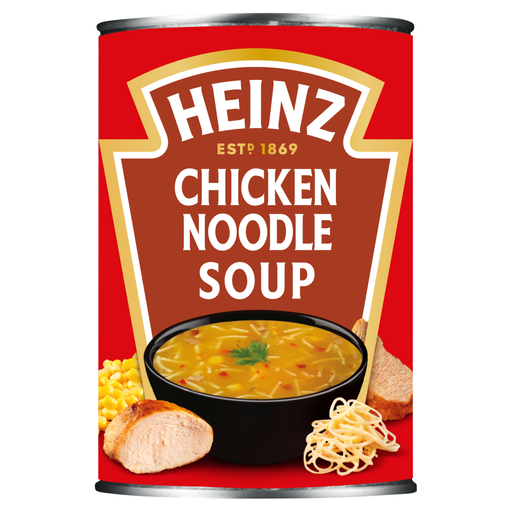 No image available
The 400g tin gives a starting point for planning how much soup the household needs. Check the salt in the portion you will serve, the declared celery, egg and wheat allergens, and how many portions you intend to make from the tin.
No. Check salt separately per 100g and for the portion you will eat. Action on Salt’s 2026 audit of 481 chilled and ambient soups sold in major UK retailers found that 23% exceeded the Government’s voluntary maximum salt target; that is a finding about the assessed products, not a measure of shopper preferences.
Do not assume so. The listed 400g Tesco and Sainsbury’s soups state two servings, which may be fewer than your household needs. Check the servings on your chosen tin and plan additional tins or suitable sides if required.
Choose by the texture, ingredients and nutrition values that suit your meal, rather than by flavour alone. Tesco lists 0.4g fat per 100g for its smooth Low Fat Tomato Soup and 0.3g for its Low Fat Lentil & Vegetable Soup; the latter lists 2.0g protein and 1.3g fibre per 100g. Check salt and allergens on either tin.
Follow the directions on that product. Tesco’s listed soups instruct shoppers to transfer unused contents to a non-metallic container, refrigerate and use within four days; Sainsbury’s Tomato & Spicy Lentil Soup specifies two days after opening.
Not automatically. Some listed tomato soups contain milk, while Tesco Low Fat Lentil & Vegetable Soup contains wheat and celery. Read the ingredients and allergen declaration on the exact tin before serving it to someone who needs to avoid an ingredient.