Households using yoghurt in several ways
A natural pot can serve breakfasts, fruit toppings and cooking. Choose a size you expect to use within the instructions on the pack.


Choose a large natural low-fat pot if your household will use yoghurt for several meals during the week; choose individual flavoured portions if ready-to-eat convenience matters more. Check the exact product’s fat, saturates and sugars per 100g, as well as its pack size and storage instructions: fat-free does not mean sugar-free.
A natural pot can serve breakfasts, fruit toppings and cooking. Choose a size you expect to use within the instructions on the pack.
Look beyond a low-fat or fat-free claim. Compare total fat, saturates and sugars on the nutrition panel of each flavour you are considering.
Single pots and multipacks suit lunches or snacks when individual portions and flavour variety are more useful than a pot for several meals.
Start with how you will use the yoghurt during the week, then compare the labels of products in a format you are likely to finish.
| Priority | What to check | Your needs |
|---|---|---|
| Nutrition | Compare fat, saturates and sugars per 100g on the exact variant. Onken lists 0.4g fat and 11.1g sugars per 100g for its 0% Fat Vanilla yoghurt. | I want to compare flavoured and natural yoghurts without treating a fat-free label as a statement about sugars. |
| Pack size | Check the amount in the pack, its use-by date and its labelled storage instructions against your expected weekly use. | A larger pot makes sense for several meals only if we are likely to use it in time. |
| Flavour and texture | Check whether the recipe is natural or flavoured and whether a Greek-style texture suits the intended use. Compare exact variants rather than assuming their nutrition is the same. | For cooking, I want a neutral yoghurt; for a ready-to-eat snack, flavour or a thicker texture may matter more. |
| Individual portions | Check the number and size of portions, then read the nutrition panel for the chosen flavour. | Separate portions are useful for packed lunches when a shared pot would be less convenient. |
| Milk ingredients | Read the ingredients and highlighted allergens. A low-fat claim does not establish that a dairy yoghurt is lactose-free or milk-free. | If I need to avoid lactose or milk, I need to check the specific product rather than rely on its fat claim. |
Onken’s 0% Fat Vanilla yoghurt lists 0.4g fat but 11.1g sugars per 100g, according to Onken’s product information.
Compare fat, saturates and sugars per 100g on the flavours you are considering.
A larger pot may leave unused yoghurt if it does not fit your household’s meals or the instructions on its label.
Match the pack size to likely use and check its use-by date and storage instructions before choosing it.
Low-fat dairy yoghurt can still contain milk. The NHS distinguishes lactose intolerance from milk allergy; a lactose-free dairy product is not necessarily milk-free.
Check the ingredients and highlighted allergens of every variant, including products labelled lactose-free.
These ranges offer different formats and recipes; the nutrition and ingredients of the particular product remain the useful comparison.
Müller Light includes flavoured individual portions and multipacks.
Onken offers flavoured yoghurt in larger pots, including a 450g 0% Fat Vanilla variant.
Rachel’s Organic has natural and Greek-style low-fat yoghurt options in 450g pots.
Tesco lists Activia no-added-sugar, fat-free flavoured yoghurt multipacks for shoppers wanting individual portions.
Yeo Valley Organic sells yoghurt and kefir, but the two should not be treated as interchangeable low-fat choices.
Tesco’s low-fat and fat-free yoghurt listings include own-label and branded large pots and multipacks.
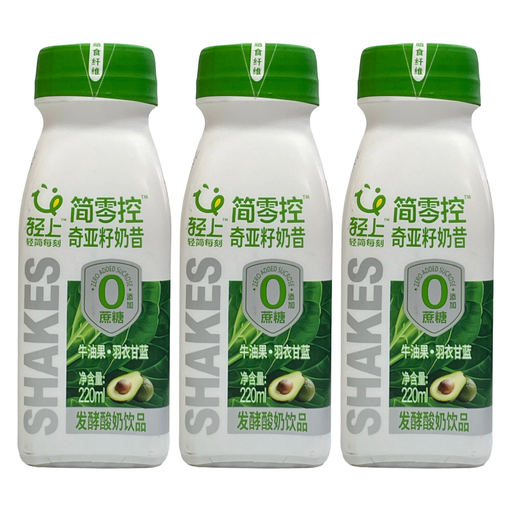
This ready-to-drink multipack is an option for portable snacks, rather than a spoonable natural yoghurt for breakfasts or cooking.
 No image available
The three-bottle drink format suits someone looking for individual portable portions. It is not a spoonable natural yoghurt pot; check the pack’s ingredients and nutrition information if a low-fat or particular sugar content matters to your choice.
For solid foods, Business Companion’s February 2025 guidance gives a maximum of 3g fat per 100g for a low-fat claim and 0.5g per 100g for a fat-free claim. GOV.UK notes that nutrition claims are subject to rules; the claim does not describe a yoghurt’s sugars or saturated fat, so check those values separately.
Not necessarily. Onken lists 0.4g fat and 11.1g sugars per 100g for its 0% Fat Vanilla yoghurt. Compare both values on the specific flavours you are choosing.
A large natural pot suits repeated use across meals if you expect to finish it within the labelled instructions. A multipack suits individual ready-to-eat portions; check its portion sizes and each flavour’s nutrition information before deciding.
No: a low-fat claim describes fat content, not whether the product contains lactose or milk. The NHS distinguishes lactose intolerance from milk allergy. Check the exact yoghurt’s ingredients, allergen statement and any lactose-free labelling; lactose-free dairy should not be assumed to be milk-free.