For a dairy-free everyday drink, choose an unsweetened coconut carton and check its calcium content; choose coconut milk sold for cooking when a recipe calls for a richer ingredient. Monash University rates a ¾-cup serving of unsweetened UHT coconut milk as low FODMAP, but that finding does not establish the status of every carton, tin or larger serving. If you need to avoid lactose rather than dairy itself, lactose-free dairy milk is another option when you can consume dairy.
Who is choosing coconut milk?
Shoppers replacing an everyday milk drink
If you use a dairy-free carton on cereal or in drinks, both the amount you pour and the ingredients matter on a low FODMAP diet. Monash University’s ¾-cup finding applies to unsweetened UHT coconut milk, not automatically to every coconut product.
Home cooks using coconut milk in recipes
A curry, soup or dessert may call for coconut milk sold as a cooking ingredient rather than a drink carton. Check the ingredients and consider how much coconut milk ends up in each serving of the finished dish.
Shoppers with additional allergy requirements
Plant-based wording cannot settle whether a particular pack meets your allergy requirements. The cited Sainsbury’s coconut drink carries a soya-allergy manufacturing warning, while M&S says its creamy coconut drink is unsuitable for people with a milk allergy.
What should you check before buying?
Everyday coconut drink
Choose it when: You need a dairy-free carton for cereal or drinks.
Trade-off: A drinking carton is not a like-for-like substitute for richer coconut milk in a recipe.
Coconut milk for cooking
Choose it when: A curry, soup or dessert calls for a coconut cooking ingredient.
Trade-off: A tin or cooking carton does not serve the same purpose as an everyday fortified drink.
Lactose-free dairy milk
Consider it when: You are avoiding lactose but can consume dairy.
Limit: It does not meet a dairy-free requirement.
| Priority |
What to check |
When it matters to me |
| Serving size |
Check the product type and the amount you will use. Monash University’s low-FODMAP finding is for ¾ cup of unsweetened UHT coconut milk; it is not a tested serving for each product on this page. |
I want to know whether the amount I pour into a drink or use in a meal fits the portion guidance I follow. |
| Ingredients |
Read the current ingredient list. Monash University identifies added inulin, fructooligosaccharides (FOS) and galactooligosaccharides (GOS) as ingredients to watch for when reading FODMAP labels. |
A dairy-free label alone does not answer my low-FODMAP question, so I need to check the particular recipe. |
| Purpose |
Distinguish a drink carton from coconut milk intended for cooking. If replacing a regular milk drink, check whether the carton is calcium-fortified and compare calcium values per 100 ml. |
For cereal or drinks, I need a pourable alternative; for a curry, I may need a cooking ingredient instead. |
| Sweetening |
Check whether the carton is unsweetened and read its sugars value per 100 ml. Tesco describes Alpro Coconut No Sugar as containing no sugars or sweeteners, while its own Coconut Original is labelled sweetened. |
I would choose an unsweetened carton if I do not want added sugar in my everyday drink. |
| Allergens |
Read the exact pack’s ingredients and warnings, including any manufacturing warning. A vegan or dairy-free description does not replace product-specific allergy information. |
If I must avoid soya or milk because of an allergy, I need to check the current pack rather than rely on the coconut category. |
Common buying mistakes
-
Treating “dairy-free” as a low-FODMAP rating
Dairy-free describes one aspect of a product; it does not establish its FODMAP content or a suitable serving. Monash University’s ¾-cup finding is specific to unsweetened UHT coconut milk.
Check the ingredients and the serving guidance relevant to the product you intend to use. Do not treat vegan or lactose-free wording as low-FODMAP certification.
-
Choosing a cooking milk as an everyday drink
Coconut milk sold for cooking and a pourable coconut drink answer different needs. For example, Waitrose lists 60% coconut extract in its Essential Coconut Milk tin; that description does not make it equivalent to a fortified drink carton.
Choose by use: check fortification when replacing an everyday milk drink, and check the ingredients and amount used when buying coconut milk for a recipe.
-
Assuming every plant-based pack meets the same allergy requirements
Warnings differ between products. Sainsbury’s says its cited coconut drink is unsuitable for customers with a soya allergy because of manufacturing methods; M&S gives a milk-allergy warning for its creamy coconut drink.
Read the current physical pack for the exact product before use, even if you have bought that brand before.
Brand and retailer label examples
These examples describe particular listed products, not every coconut product sold under each name.
Koko
Tesco lists a 1 L Koko Dairy Free Unsweetened coconut drink for everyday use.
- The listed drink contains coconut milk and added calcium.
- Check the current pack for ingredient and allergy information rather than applying one listing’s wording to every Koko product.
Alpro
Tesco lists Alpro Coconut No Sugar as a long-life coconut drink.
- The cited listing says it contains no sugars or sweeteners and identifies calcium and vitamins B12 and D.
- Its drink format does not establish how it will work in a recipe calling for coconut cooking milk.
Tesco
Tesco Long Life Coconut Original is a sweetened coconut drink, rather than an unsweetened option.
- Its listing identifies added calcium, iodine and vitamins B12 and D2.
- Check its sweetening and current allergen information if either affects your choice.
Sainsbury’s
Sainsbury’s lists a sweetened long-life coconut drink.
- It offers a coconut drink format for shoppers seeking a dairy alternative.
- Sainsbury’s states that the cited product is unsuitable for customers with a soya allergy because of manufacturing methods.
M&S
M&S describes its Creamy Coconut Drink as a plant-based milk alternative.
- It is a drink product rather than a tin of coconut milk for cooking.
- The M&S product page says it is unsuitable for people with a milk allergy.
Waitrose
Essential Waitrose Coconut Milk represents the tinned cooking-milk option, not an everyday drink carton.
- Waitrose lists coconut extract (60%), water and guar gum as its ingredients.
- A recipe using this tin still needs its own ingredient and serving-size check for low-FODMAP use.
Joybuy coconut milk for cooking
These Joybuy options are coconut milk for recipes, including one cooking product packaged in a carton. They are not the everyday fortified coconut drinks discussed above; check each current pack and the amount you plan to use.
 No image available
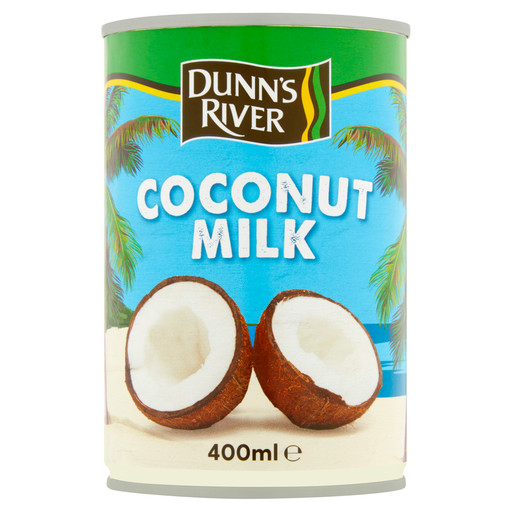
Dunns River Coconut Milk 400 ml
A 400 ml coconut milk option for cooking. Check the current ingredients and the amount used per serving rather than assuming the pack has the same low-FODMAP rating as Monash University’s tested unsweetened UHT coconut milk serving.
View on Joybuy
 No image available
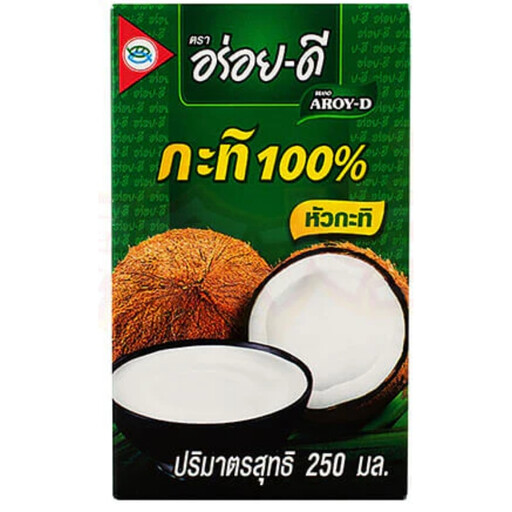
AROY-D Coconut Milk Carton 250 ml
This 250 ml carton is coconut milk selected for cooking uses, not an everyday fortified coconut drink. Check its current ingredients and the quantity your recipe uses when planning a low-FODMAP meal.
View on Joybuy
 No image available
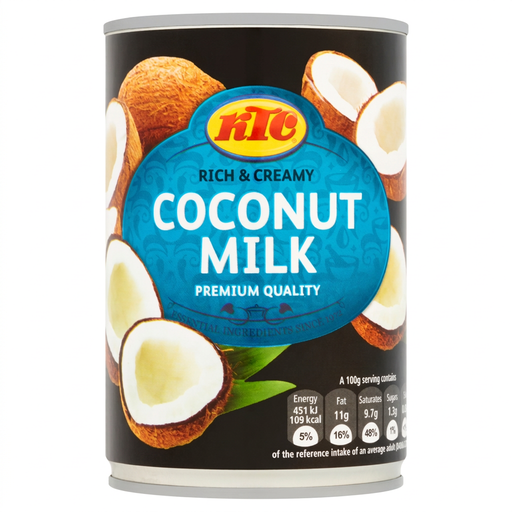
KTC Coconut Milk 400 g
A 400 g coconut milk option for recipes rather than a routine milk-replacement drink. Review the current pack’s ingredients and consider the coconut milk in each serving of the finished dish.
View on Joybuy
Frequently asked questions
Is every dairy-free coconut milk low FODMAP?
No. Dairy-free wording does not establish a product’s FODMAP rating. Monash University rates ¾ cup of unsweetened UHT coconut milk as low FODMAP; check the ingredients of the product you buy, particularly for added inulin, FOS or GOS, and do not extend that serving finding to every carton or tin.
Should I buy a coconut drink carton or coconut milk for cooking?
Choose a drink carton for cereal or beverages, checking its calcium information if it regularly replaces milk. Choose coconut milk sold for cooking when a recipe calls for that ingredient. Packaging alone is not decisive: the AROY-D cooking milk in this selection also comes in a carton.
Do I have to choose dairy-free milk to follow a low FODMAP diet?
Not solely because a product is dairy. If lactose is the issue and you can consume dairy, lactose-free dairy milk is another option to consider; it is not suitable when you need to avoid dairy itself.
Can I rely on “plant-based” wording if I have a food allergy?
No. Read the current physical pack for the exact product. Sainsbury’s flags a soya-allergy manufacturing concern for its cited coconut drink, and M&S says its cited coconut drink is unsuitable for people with a milk allergy.


