For regular breakfasts, a large plain-oat sachet pack can be practical when everyone can use the same portion and tailor their own milk and toppings. Quaker Oat So Simple Original Big Pack is a documented larger option at 22 x 27g sachets, but Monash FODMAP advises checking serving guidance for the exact oat form, as rolled oats and quick oats can have different FODMAP content.
Who these packs may suit
Low-FODMAP households wanting plain instant breakfasts
People in a low-FODMAP elimination or personalised phase may prefer a quick oat breakfast where the oat form, portion and toppings can be considered separately. NHS notes that a dietitian may recommend a low-FODMAP diet for IBS, while Monash FODMAP distinguishes between oat forms when considering servings.
Families sharing portioned porridge sachets
Households wanting repeatable breakfasts may value a countable sachet pack. Reviewed examples range from 8 portions to Quaker’s 22 x 27g Big Pack, according to Tesco Groceries, ASDA Groceries and Flahavan’s product information.
Oat buyers with an additional gluten-related requirement
People with coeliac disease, non-coeliac gluten sensitivity or a medical need to avoid cross-contact need a separately verified gluten-free product. Monash FODMAP explains that low-FODMAP eating and gluten avoidance are not the same consideration.
What to check before buying
Large plain-oat sachet pack
Choose it when: several people use the same plain porridge and pre-measured portions simplify the breakfast routine.
Keep in mind: a 27g sachet is not automatically the applicable low-FODMAP serving, and allergen statements still need checking.
Smaller plain-oat sachet pack
Choose it when: you are trialling oats, feeding fewer people or want fewer sachets to store.
Keep in mind: sachet weights vary, so a 27g portion and a 35g portion should not be treated as interchangeable.
Gluten-free oats
Choose it when: a clinician’s advice requires gluten-free oats or controls for wheat and gluten cross-contact.
Keep in mind: a gluten-free label does not determine the appropriate FODMAP serving, and the M&S example is traditional oats rather than instant sachets.
Start with the oat form and serving, then compare portion count, ingredient information and any separate allergen requirement.
| Priority |
What to check |
Your needs |
| Oat form and whole-bowl assessment |
Check whether the product uses rolled or quick oats; check the applicable serving guidance; assess milk, fruit, sweeteners and toppings separately. |
I want a plain oat base that lets me assess the sachet and the rest of my breakfast separately. |
| Pack size and portion count |
Compare sachet count and total weight together; check the gram weight of each sachet; choose a quantity likely to be used before its best-before date. |
A repeat breakfast routine needs enough portions, but I do not want a large cupboard supply before I know the portion works for us. |
| Allergen and gluten-related needs |
Read the current ingredient and may-contain statement; use a specifically labelled gluten-free product only when that separate requirement applies; recheck labels after reformulation. |
I need to distinguish a simple oat ingredient list from cross-contact information and a gluten-free claim. |
Common buying pitfalls
-
Assuming plain oats are automatically low FODMAP
The relevant serving can differ by oat form, and milk, sweeteners, fruit and toppings can change how the full bowl fits an individual plan.
Use an oat-only product as a straightforward base, then check current Monash FODMAP serving guidance for that oat form and assess additions separately.
-
Buying the biggest pack before confirming household use
Reviewed packs range from 8 to 22 portions, with sachets from 27g to 35g. A larger pack only makes sense when its portion and preparation routine are already established.
Start with a smaller oat-only pack when testing oats or feeding one person, then move to a larger pack if it suits the household routine.
Unused sachets can become a practical burden if the pack is not finished before its best-before date.
-
Ignoring may-contain statements
Quaker Big Pack lists possible wheat, barley and soya, while Tesco Easy Oats lists possible milk, peanuts, nuts and wheat. These details matter where there is an additional allergy or coeliac-related requirement.
Read the current on-pack ingredient and allergen declaration each time you buy, and select a specifically labelled gluten-free product where that separate requirement applies.
Relevant brand references
Quaker
Quaker Oat So Simple Original Big Pack is a 22 x 27g sachet pack, totalling 594g, for households seeking individually portioned microwave oats.
- ASDA Groceries and Tesco Groceries list Quaker wholegrain rolled oats as the ingredient for this Original Big Pack.
- Tesco Groceries lists possible wheat, barley and soya, so it needs an allergen check for anyone with a related requirement.
Tesco
Tesco Easy Oats Original is a smaller individually portioned comparison point at 10 x 27g, or 270g in total.
- Tesco Groceries lists oat flakes as the ingredient and provides microwave preparation information.
- The listing includes possible milk, peanuts, nuts and wheat, so check the label where allergens or gluten cross-contact matter.
M&S
M&S has a 10-pack, 360g microwave traditional porridge sachet product and a separate 500g gluten-free traditional oat product.
- The 10-pack provides individually portioned sachets with a stated three-minute microwave method.
- The gluten-free 500g product is traditional oats, not an instant sachet family pack.
Flahavan's
Flahavan's natural organic oat sachets contain 8 x 35g portions and use organic wholegrain rolled oats.
- Flahavan's lists 100% organic wholegrain rolled oats for its natural sachet pack.
- The pack has fewer portions than Quaker’s 22-sachet format and may contain traces of milk.
Joybuy product options
Joybuy options for instant oat breakfasts, including a smaller plain-oat sachet pack and a larger flavoured family pack.
 No image available
Quaker Oat So Simple Big Bowl Original 6 Pack 231g
A six-sachet option for a smaller household breakfast routine or an initial oat trial.
231g pack. Check the applicable serving guidance and the current allergen statement if gluten cross-contact or another allergen is a concern.
Joybuy
 No image available
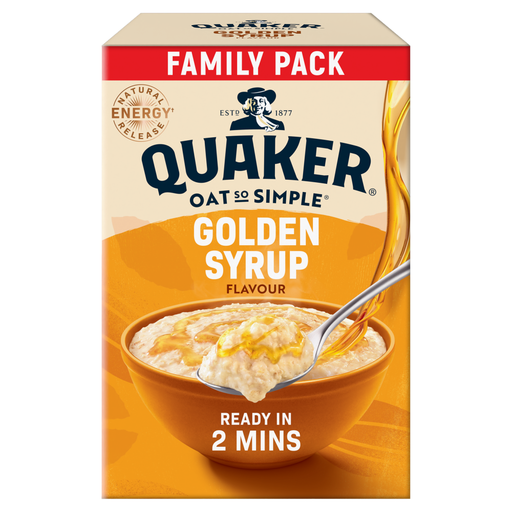
Quaker Oat So Simple Family Pack Golden Syrup 20 Sachets 720g
A 20-sachet option for households preparing porridge regularly.
Golden syrup flavour; assess the full ingredient list, portion and additions against your individual low-FODMAP plan. The listing also states possible barley, wheat and soya cross-contact.
Joybuy
Frequently asked questions
Can I assume that any plain instant oat sachet is low FODMAP?
No. Monash FODMAP lists oats among low-FODMAP grocery staples, but says that groats, rolled oats and quick oats have different FODMAP content. Check the applicable serving for the exact oat form, then assess the milk and toppings in the same bowl.
Which researched pack is most practical for a family eating porridge most days?
Quaker Oat So Simple Original Big Pack is the larger documented option, with 22 x 27g sachets and a 594g total pack weight. It suits the routine only if the 27g sachet and its possible wheat, barley and soya statement fit the eater’s individual dietary and allergen requirements.
Does a gluten-free oat product automatically suit a low-FODMAP diet?
No. Monash FODMAP distinguishes low-FODMAP eating from gluten avoidance. A gluten-free label can matter for coeliac disease or another gluten-related requirement, but it does not establish the appropriate FODMAP serving or the suitability of other ingredients.
Should a low-FODMAP diet be self-managed indefinitely?
NHS says that a dietitian may recommend a low-FODMAP diet for IBS. If you are using this approach for IBS, discuss ongoing dietary management with a dietitian so that portions and food choices can be personalised.


