Shoppers in the restriction phase
A bakery-style or gluten-free label is not a low-FODMAP serving assessment. Check the exact recipe and look for testing or certification that applies to the amount you intend to eat, as Monash FODMAP advises.


During the restriction phase of a low-FODMAP diet, choose a naan only if evidence applies to the exact product and serving: premium, plain and gluten-free labels do not establish that. Monash FODMAP publishes a portioned homemade flatbread recipe as a naan-style alternative. After reintroduction, compare packaged recipes with your identified tolerances rather than transferring a serving for sliced bread to naan.
A bakery-style or gluten-free label is not a low-FODMAP serving assessment. Check the exact recipe and look for testing or certification that applies to the amount you intend to eat, as Monash FODMAP advises.
After reintroduction, compare plain and flavoured recipes against your identified tolerances. Cambridge University Hospitals describes restriction as temporary, followed by reintroduction rather than permanent avoidance of every initially restricted ingredient.
Start with evidence for the exact naan and serving, then compare its ingredients with the stage of your diet and any separate allergen requirements.
| Priority | What to check | Your needs |
|---|---|---|
| Product evidence | Look for low-FODMAP testing or certification for the exact product and an applicable serving. Monash FODMAP says its certification applies to products independently tested by its laboratory; a gluten-free or premium description is different evidence. | During restriction, I want a naan-style accompaniment without relying on its bakery description as a dietary assessment. |
| Recipe additions | Read the current ingredients for wheat, garlic and other additions. Cambridge University Hospitals identifies wheat products and garlic as fructan sources; Monash FODMAP also flags chickpea flour and apple juice concentrate for label scrutiny, without treating their presence as a test of the finished food. | If I have reintroduced foods, I can compare a plain recipe with a garlic-flavoured one according to my identified tolerances. |
| Serving size | Check that any low-FODMAP serving applies to this naan, not another bread. Monash FODMAP explains that its listed servings are per meal and that changing the amount can change an assessment. | A pack's suggested portion does not tell me whether that amount has been assessed for FODMAPs. |
| Allergens | Check the current pack's ingredients and allergen declaration for requirements separate from FODMAPs. Food Standards Scotland says UK allergen-information requirements depend on how food is packaged. | If I need to avoid an allergen, I must check that requirement separately; a low-FODMAP assessment would not answer it. |
The published ingredient lists for Waitrose Plain Naan and M&S Plain Naans include wheat ingredients. Cambridge University Hospitals identifies wheat products as a fructan source, so the absence of garlic does not settle the serving question.
Check for evidence applicable to the exact product and amount you intend to eat.
Ocado's listing for BFree Naan Bread includes chickpea flour and apple juice concentrates. Monash FODMAP flags these ingredients for scrutiny, but the list alone does not establish the finished naan's FODMAP content.
Keep a gluten-avoidance requirement separate, and check for product-specific low-FODMAP evidence if you need it.
Monash FODMAP's example of a serving changing a bread assessment concerns that bread, not a supermarket naan.
Use a serving assessment for the exact food rather than assuming half a naan or one small naan meets the same threshold.
These product examples show why the recipe matters more than a plain, flavoured or bakery-style description.
Waitrose Plain Naan provides a published plain-recipe example.
M&S Plain Naans are another plain-recipe example listed by Ocado.
Taste the Difference Aromatic Garlic & Coriander Naans illustrate a premium flavoured recipe.
Tesco Garlic & Coriander Naan offers another published flavoured-recipe example.
Asda 2 Garlic & Coriander Naans provide a further wheat-and-garlic recipe to compare.
For a Lidl bakery product, assess the ingredients of the particular naan rather than the supermarket name.
These Humza plain naan packs are options to assess when choosing naan after reintroduction. A plain product name does not establish an appropriate low-FODMAP serving.
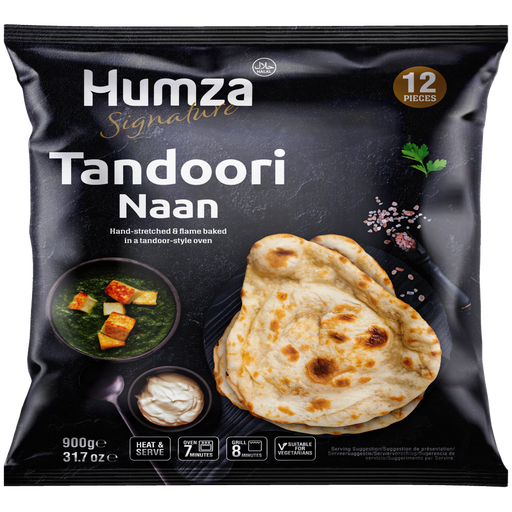 No image available
If you are comparing naan after reintroduction, check this pack's current ingredients against your identified tolerances and consider the amount you plan to eat. Its plain name does not establish a low-FODMAP serving.
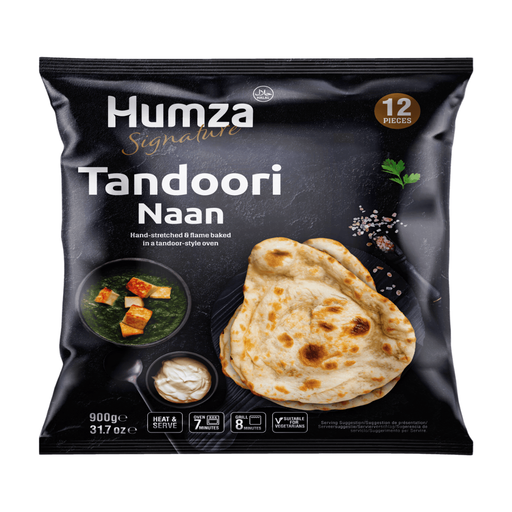 No image available
For a personalised diet after reintroduction, assess the current ingredients and your intended portion. One of the pack's four pieces should not be treated as an established low-FODMAP serving.
No. Gluten-free and low-FODMAP describe different considerations. Ocado's BFree Naan Bread listing includes chickpea flour and apple juice concentrates, which Monash FODMAP flags for label scrutiny; their presence alone does not measure the finished product's FODMAP content or establish a suitable serving.
No. Monash FODMAP's serving-size example concerns a specified bread, not a naan recipe. Look for evidence that applies to the exact naan and amount you intend to eat.
Monash FODMAP publishes a flatbread recipe using 350 g gluten-free plain flour and 350 g lactose-free yoghurt, divided into 12 flatbreads; it suggests garlic-infused olive oil for garlic flavour. Check the ingredients you use. The recipe does not establish a serving for packaged naan.
Yes, according to your identified tolerances and the particular recipe and portion. Cambridge University Hospitals describes low-FODMAP restriction as temporary, followed by gradual reintroduction with dietitian guidance, rather than permanent exclusion of every initially restricted food.
No. Check the current ingredients and allergen information separately. Food Standards Scotland says UK food businesses must tell consumers when food contains any of the 14 allergens that must be declared; how that information is supplied depends on the food's packaging.