Shoppers following a low-FODMAP diet
If you want naan alongside a curry, check the ingredients and guidance for the portion you intend to eat. Monash FODMAP’s small-serving example for sliced wholemeal bread does not establish a serving for naan.


Choose by the ingredients and a serving appropriate to the specific bread and your stage of a low-FODMAP diet, not by a wholemeal, mini or gluten-free description alone. During initial restriction, look for guidance covering the bread and portion you plan to eat, or consider Monash FODMAP’s flatbread recipe with ingredients that fit your plan. When personalising your diet, whether a portion of wheat-based bread works depends on your individual tolerance.
If you want naan alongside a curry, check the ingredients and guidance for the portion you intend to eat. Monash FODMAP’s small-serving example for sliced wholemeal bread does not establish a serving for naan.
If roti would work in place of naan, compare the flour breakdown rather than relying on a whole-wheat description. Tesco lists fortified wheat flour as well as 13.5% whole wheat flour in Nishaan Chakki Roti.
Check gluten requirements separately from FODMAP considerations. If you are being tested for suspected coeliac disease, the NHS advises continuing to eat gluten while testing is under way so the tests can be accurate.
Start with the bread type, then compare its full ingredients and the amount you would actually serve.
| Priority | What to check | Your needs |
|---|---|---|
| Serving and dietary stage | Check guidance for the specific bread and intended portion. Tesco Groceries lists its plain mini naan at 47 g each; that weight alone does not establish a low-FODMAP serving. Monash FODMAP’s 24 g example concerns sliced wholemeal wheat bread, not naan. | I want a portion that fits my current restriction, reintroduction or personalisation stage, without treating a smaller naan as automatically suitable. |
| Full ingredients | Read the current pack for wheat and other ingredients relevant to your requirements. Monash FODMAP identifies garlic, onion products, chickpea flour, inulin and fructooligosaccharides among ingredients to examine when reading labels; an ingredient list is not a product-specific serving test. | A plain flavour or gluten-free label is not enough for me: I need to assess the complete formulation and check any separate allergen requirements. |
| Bread and flour type | Confirm whether the product is naan or a substitute such as roti, and compare the listed flours. Tesco Groceries lists fortified wheat flour and 13.5% whole wheat flour in Nishaan Chakki Roti. | If wholemeal-style bread matters more to me than naan specifically, I can consider a roti while checking whether its flour mix meets what I wanted. |
Cambridge University Hospitals NHS Foundation Trust identifies wheat products as a source of fructans. Serving size also matters, but Monash FODMAP’s small-serving example for sliced wholemeal bread cannot be transferred to naan.
Check guidance applicable to the actual flatbread and the portion you intend to eat.
BFree’s UK naan is described as wheat free and gluten free by Ocado, while BFree Foods lists chickpea flour and apple juice concentrates among its ingredients. Gluten-free status does not establish a low-FODMAP serving.
Check gluten and FODMAP requirements separately, particularly during initial restriction.
Nishaan Chakki Roti is a chapatti rather than naan. Tesco Groceries lists fortified wheat flour alongside 13.5% whole wheat flour.
Check both the bread description and flour breakdown before choosing it as a substitute.
These listings illustrate differences between mini naan, plain naan, roti and gluten-free naan; a listing alone does not establish a low-FODMAP serving.
Tesco Groceries lists its own-label plain mini naan and a separate Nishaan Chakki Roti.
Asda Groceries lists an own-label pack of four mini plain naans with ingredients and per-piece nutrition.
Ocado lists M&S Plain Naans as a conventional wheat-naan option.
Waitrose & Partners lists two own-label plain naans in a 220 g pack.
BFree’s UK naan is a wheat-free, gluten-free formulation, according to its manufacturer and Ocado listings.
This plain naan is an option to examine if you want naan rather than roti or a homemade flatbread. Check its ingredients and an applicable serving before deciding whether it fits your dietary stage.
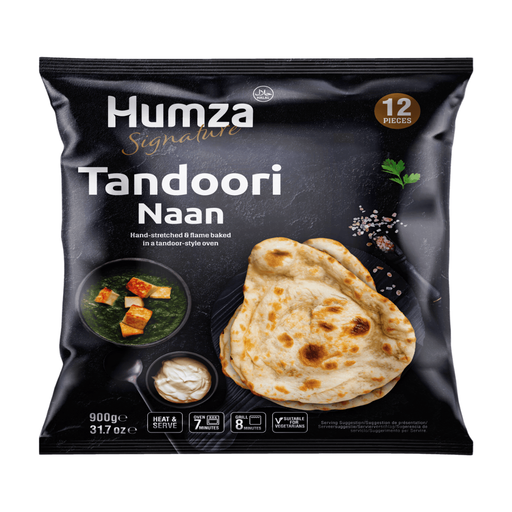 No image available
For a meal where you want plain naan, compare the portion you would eat with guidance applicable to this bread. The pack is labelled 300g for four pieces; check the current ingredients and flour description if wholemeal content matters to you.
No. Monash FODMAP’s 24 g example concerns one slice of wholemeal wheat bread, not a tested serving for naan or roti. Check guidance for the food you plan to eat and your dietary stage.
Not automatically. Gluten avoidance and FODMAP restriction are different considerations, and a gluten-free naan may contain ingredients relevant to a FODMAP assessment. If you are being tested for suspected coeliac disease, the NHS advises continuing to eat gluten while testing is under way.
No. UK-wide guidance from the Department for Environment, Food & Rural Affairs and the Food Standards Agency addresses bread composition and naming, not low-FODMAP servings. Check guidance applicable to the particular bread and portion.
You can choose roti if that different bread suits your meal, but check its flour breakdown rather than assuming it is wholly wholemeal. Tesco Groceries lists fortified wheat flour and 13.5% whole wheat flour in Nishaan Chakki Roti; that description does not establish a low-FODMAP serving.
Follow the instructions on the pack you buy. For example, Ocado’s M&S Plain Naans listing gives oven and grill directions and says that product is suitable for freezing; those directions should not be assumed to apply to a different naan.