What matters when buying?
Check the ingredients before choosing a piece size or pack format. A steak-style tin changes the presentation, while a no-drain tin changes the preparation; neither replaces the ingredient check.
| Concern |
What to check |
Who this matters to |
| Plain ingredients |
Read the current ingredient list. Check flavoured tins for sauces, marinades and seasonings rather than relying on the flavour name. |
When keeping added flavours separate during a low-FODMAP restriction, I want to assess the tuna without also assessing a sauce; about 36% of consumers put plain ingredients first. |
| Piece size |
Compare chunks with steak-style pieces, and check whether the tin needs draining. |
For a salad or jacket potato, I want pieces that remain more intact instead of fine flakes. Larger-piece texture is the primary concern for about 22% of consumers. |
| Salt and packing liquid |
Check the packing liquid and compare salt figures on the same basis, such as per 100 g drained. |
If I am comparing two plain-looking tins, I want their nutrition panels to use the same weight basis before choosing. About 21% of consumers mainly prioritise that comparison. |
| Portions and storage |
Check the number of tins, net and drained weights, and the instructions for leftovers after opening. |
A no-drain tin could simplify my lunch, while a larger pack must fit the meals I have planned. Portion and preparation needs come first for about 21% of consumers. |
Tinned tuna selections on Joybuy
These selections are tinned tuna chunks in spring water, including a no-drain format. Use the ingredient and pack checks above when choosing among them; chunks are not a substitute for fresh raw fillets.
 Image unavailable
John West Tuna Chunks in Springwater, 4 × 125 g
A four-tin chunk format for planned cupboard meals when you intend to flake the tuna. Check the current can label for ingredients and the instructions for any leftovers.
View on Joybuy
 Image unavailable
Morrisons Fad Free Tuna Chunks in Spring Water, 145 g
A single chunk-style tin for a meal where a multipack is unnecessary. Read its current ingredient list and check how the nutrition values and drained weight are stated.
View on Joybuy
 Image unavailable
Morrisons Fad Free Tuna Chunks in Spring Water, multipack
A chunk-style multipack to consider when stocking several meals. Confirm the number of cans and total pack weight before ordering: the product title indicates six packs, while the listed net quantity is 145 g.
View on Joybuy
 Image unavailable
John West No Drain Tuna Chunks in Springwater, 3 × 100 g
The no-drain chunk format suits a quick meal when draining a tin would be inconvenient. Check the current ingredients and the basis of any salt figure on the can before comparing it with drainable tuna.
View on Joybuy
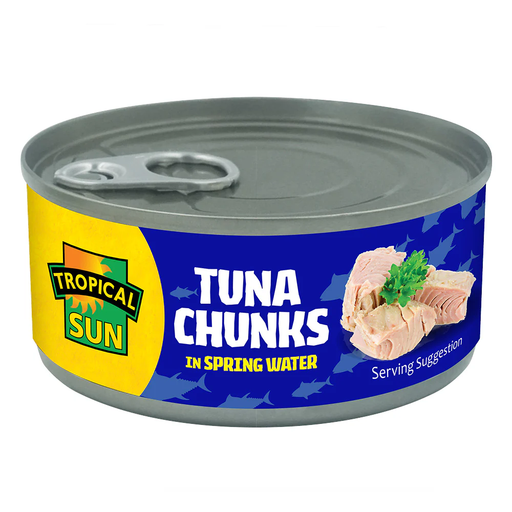 Image unavailable
Topical Sun Tuna Chunks in Springwater, 160 g
A single chunk-style tin for a cupboard meal. Confirm the brand on the physical label before buying: the product title says Topical Sun, while its description says Tropical Sun. Check the can’s ingredients and nutrition basis too.
View on Joybuy
Questions about tinned tuna
Can plain tinned tuna fit a low-FODMAP diet?
Monash FODMAP identifies unflavoured canned tuna as an option. Check the specific tin’s ingredients, because a flavoured recipe or sauce may contain additions that need separate assessment.
Does “tuna steak” or “fillet” on a tin mean fresh fish?
No. On a shelf-stable tin, steak or fillet wording is a cue to the product’s pieces and presentation, not a guarantee of fresh raw fish. Choose the chilled fresh-fish category if that is what your recipe requires.
What should I do with tuna left after opening a tin?
Follow the instructions on that can. Tesco’s multipack listing, for example, says to transfer unused tuna to a non-metallic container, cover and refrigerate it, then consume it within two days.
Are there tuna limits during pregnancy or when trying for a baby?
Yes. The NHS advises people who are pregnant or trying for a baby to have no more than four cans of tuna a week or two tuna steaks a week. This guidance is separate from whether a product’s ingredients fit a low-FODMAP meal.
Is the low-FODMAP restriction phase meant to continue indefinitely?
No. Cambridge University Hospitals NHS Foundation Trust describes restriction as temporary, and Gloucestershire Hospitals NHS Foundation Trust explains the importance of reintroducing FODMAP-containing foods afterwards. Follow the plan advised for your circumstances rather than treating a short ingredient list as a complete diet plan.


