Parents choosing a small lunchbox extra
Compare the portion that will actually go into the packed lunch. Kcal per bar matters, but bar weight, sugars and fibre help explain the choice.


For a small packed-lunch extra, compare kcal per bar first, then check the same bar’s sugars, fibre, ingredients and allergens. Weetabix Cereals lists Alpen Light Summer Fruit at 65 kcal per 19g bar, while Tesco lists Eat Natural Apple Soft Fruit Bar at 86 kcal per 25g bar; neither figure alone establishes suitability for a pupil or their school’s lunch policy.
Compare the portion that will actually go into the packed lunch. Kcal per bar matters, but bar weight, sugars and fibre help explain the choice.
Check the pupil’s relevant allergens against the current pack, then check the school’s packed-lunch policy before choosing a nut-containing bar.
A protein bar or flapjack may be worth comparing when protein or fibre matters more than the lowest kcal-per-bar figure. Check its portion size and ingredients rather than assuming the format is lower in calories.
Start with the portion the pupil will eat. The NHS explains that per-100g nutrition figures also let you compare products of different sizes.
| Priority | What to check | Your needs |
|---|---|---|
| Portion and energy | Read kcal per bar and the weight of that bar. Use kcal per 100g to compare bars of different sizes. | I’m putting one bar in the lunchbox, so its stated portion needs to match what will be eaten. |
| Sugars and other label values | Compare sugars per bar and per 100g, alongside saturated fat and salt. A fruit or no-added-sugar description does not replace the nutrition table. | A lower kcal figure is useful to me, but I also want to know how much sugar is in the packed portion. |
| Fibre and protein | Read the grams per bar alongside its kcal and weight. For context, Weetabix Cereals lists 3.8g fibre in a 19g Alpen Light Summer Fruit bar; Nature Valley UK lists around 10g protein in its 40g Chocolate & Coffee Protein Bar, at 197 kcal. | If this is just a small extra, I may choose differently than if I’m comparing bars for a more substantial between-meal snack. |
| Allergens and school policy | Read the exact variant’s ingredients and precautionary allergen wording. Check the school’s current packed-lunch rules, particularly before packing nuts or peanuts. | The bar has to work for the pupil’s dietary restrictions and the rules at their school, whatever its nutrition figures say. |
Fruit, protein and no-added-sugar descriptions do not show the full nutrition profile. In its November 2025 review of 458 snack bars from 10 UK retailers, Action on Salt & Sugar classified 37% as high in sugars and 55% as high in saturated fat under UK front-of-pack thresholds; those findings do not describe every individual bar.
Compare the exact product’s kcal and sugars per bar, then use its per-100g values to compare similarly sized alternatives.
A low kcal-per-bar figure describes the bar, not the packed lunch as a whole. A small portion may have a different role from the main lunch items.
Decide whether the bar is an extra or a between-meal snack, and compare its portion, fibre and protein with that intended role.
Snack bars can contain nuts or peanuts, and the rules that matter are those of the pupil’s school. Ingredient differences between variants also matter.
Check the school’s current policy and the precise pack’s ingredients and allergen statement before putting it in a lunchbox.
Nature Valley UK lists 197 kcal for its 40g Chocolate & Coffee Protein Bar, compared with the 65 kcal per 19g Alpen Light Summer Fruit bar listed by Weetabix Cereals. These are different products and portion sizes.
Choose between those formats by the intended portion and the pupil’s needs, while checking sugars and allergens as well as protein.
Alpen Light Summer Fruit provides a small cereal-bar example: Weetabix Cereals lists 65 kcal and 3.8g fibre per 19g bar.
Tesco lists Eat Natural Apple Soft Fruit Bar at 86 kcal and 2.2g fibre per 25g bar.
Graze offers oat-based snack formats and describes its approach to fibre and plant protein on its own website.
Nakd describes its fruit-and-nut bars as containing no added sugar or syrups.
Nature Valley makes cereal and protein-bar formats. Its Chocolate & Coffee Protein Bar is a protein-focused example, not a lower-kcal default.
TREK describes Original Oat as a vegan, gluten-free protein flapjack.
These cereal, oat, fruit-and-nut and protein bar listings offer different packed-lunch portions to consider. Compare the exact pack’s nutrition and allergens before deciding which, if any, suits the pupil and their school.
 No image available
For a small lunchbox extra, compare the nutrition per 21.5g bar with other portions. Check the current ingredients and allergens before packing it.
 No image available
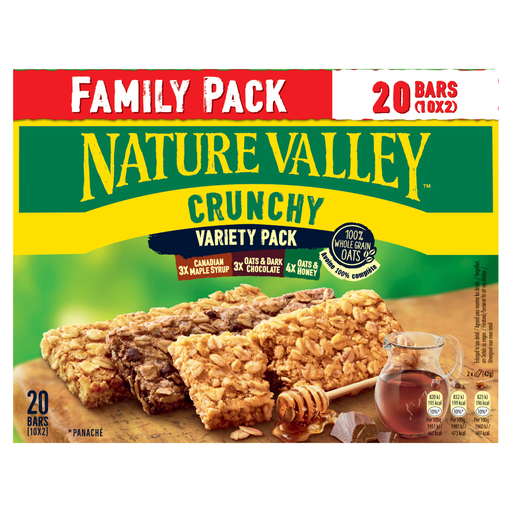
The 42g pack size makes the amount actually eaten important when comparing lunchbox portions. Read the nutrition panel for the relevant portion and check each variety’s allergens.
 No image available
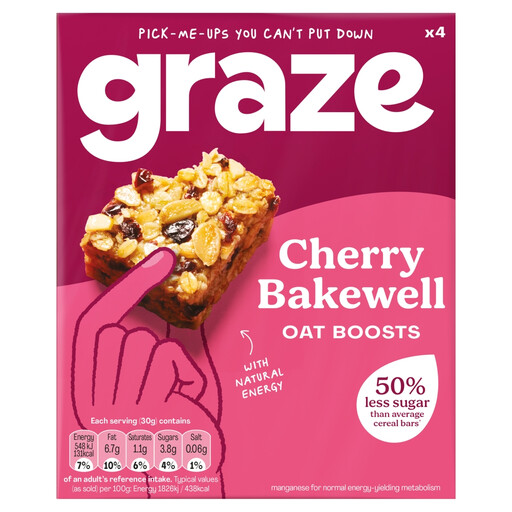
If an oat bar appeals, compare the nutrition per 30g bar with smaller cereal-bar portions. Check the exact pack’s ingredients against the pupil’s allergens and school rules.
 No image available
For this fruit-and-nut format, compare total sugars and kcal per 35g bar rather than relying on its fruit description. Check nut ingredients and the school’s packed-lunch policy.
 No image available
Consider this protein-bar format when comparing a more substantial snack rather than assuming it has fewer calories. Check kcal per 40g bar, peanut ingredients, other allergens and school rules.
No. Kcal per bar describes one part of the lunch, not the suitability of the whole meal. Compare sugars, fibre and protein on the pack, then check allergens and the school’s own packed-lunch rules.
Use both: per bar shows the amount in the portion being packed, while per 100g helps compare bars of different sizes. The NHS explains that nutrition information is provided per 100g and sometimes per portion.
No. A no-added-sugar description does not give the total sugars in a bar. Nakd describes its fruit-and-nut bars as having no added sugar, while Tesco lists 13.8g sugars per 25g Eat Natural Apple Soft Fruit Bar; read the nutrition table for the exact product you are considering.
Check the ingredients and allergen wording for each variant, as well as the school’s current policy. The Food Standards Agency says the 14 regulated allergens must be emphasised in the ingredients list of pre-packed food; a familiar brand name is not a substitute for checking the precise pack.