
24/7 Customer Support

Free returns

Same-day & Next-day Delivery

Quality Guaranteed

Unlock Your Welcome Offers: FREE Delivery | Up to 80% OFF | Free 30-day JoyPlus trial
Download the APP
Whether you're performing routine maintenance, changing a tyre on the roadside or working on a cherished project car, a reliable car jack is an essential piece of kit. However, standard jacks often fall short, literally, when faced with modern vehicles that have lower ground clearance. A jack that's too tall simply won't fit underneath, leaving you stranded. This is where a low profile car jack becomes indispensable.
This guide is designed to help you understand the key features to look for when choosing a jack. We will explore different types and highlight a few carefully selected options to suit various needs, from the home garage enthusiast to the driver preparing for any eventuality.
Before selecting a jack, it's important to consider a few key factors to ensure it's the right tool for your vehicle and your intended use.
The most critical specification is the jack's lifting capacity, typically measured in tonnes. For safety, the jack's rated capacity should comfortably exceed the gross vehicle weight (GVW) of your car. Remember, you are usually only lifting one corner or one end of the vehicle, not its entire weight. However, a higher capacity provides a greater safety margin. A 1.5-ton jack may be sufficient for many saloons, while a 3-ton model offers more versatility for heavier vehicles like an SUV or a light commercial van.
This is the defining feature of a low profile car jack. The minimum clearance (or saddle height) is the jack's height at its lowest point. For a car jack for a sports car or a modified vehicle, you'll need a clearance of 100mm or less. The maximum lifting height is equally important, as it determines how high you can raise the vehicle. A wide lifting range offers greater flexibility for tasks ranging from a simple tyre change to more involved underbody work.
There are two primary types of jacks suitable for most car owners:
Here are our recommendations for low profile car jacks, selected to cover a range of common user needs.
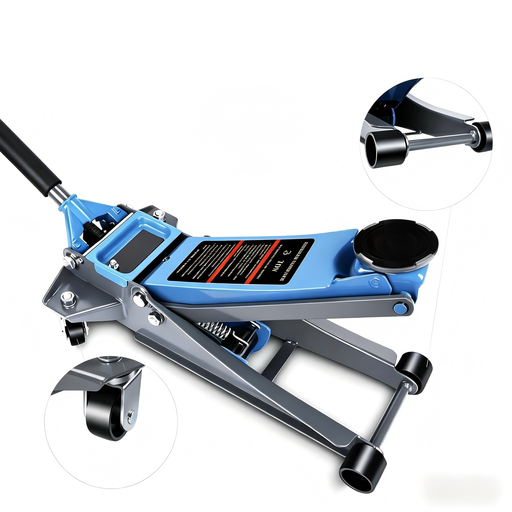
Why It Stands Out: This trolley jack combines a high lifting capacity with an impressively low starting height, making it a versatile workhorse for almost any home garage. Its dual-piston pump allows for rapid lifting, saving you time and effort.
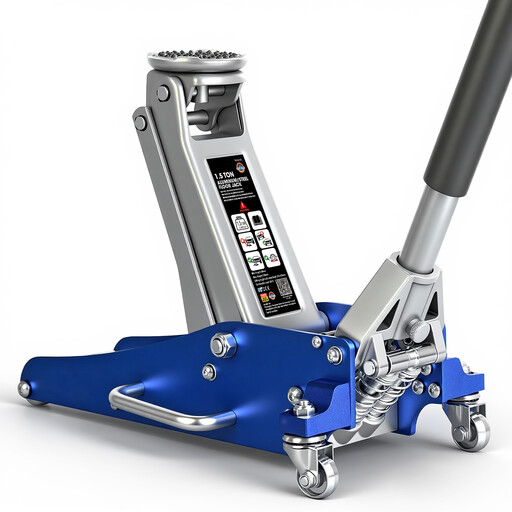
Why It Stands Out: Constructed from aluminium alloy, this floor jack is exceptionally lightweight at just 14.3kg, making it easy to transport. It's an ideal companion for track days or for those who need a high-performance jack that isn't a chore to move around.
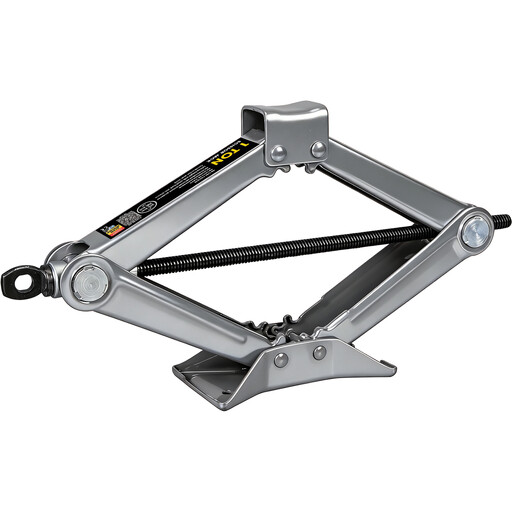
Why It Stands Out: This scissor jack is the definition of a practical, space-saving tool. Its foldable design allows it to be stored neatly in a car's boot, while its ultra-low starting height ensures it can be used with almost any vehicle in an emergency.
If the models above don't quite fit your specific requirements, or if you're searching for axle stands, creepers and other workshop equipment, there is a wider selection available.
? Explore our full range of Repair Tools and Parts
A car jack is generally considered "low profile" if its minimum saddle height (the point that contacts the vehicle) is 100mm (approx. 4 inches) or less. Some ultra-low models can go down to 75mm or even lower, making them suitable for vehicles that have been significantly lowered.
Not all cars require one, but many modern saloons, estates and virtually all sports cars have lower ground clearance than older vehicles. The best way to check is to measure the distance from the ground to your vehicle's designated jacking points. If this distance is less than the minimum height of a standard jack (often around 130-150mm), you will need a low profile car jack.
A jack rated for 3 tons (approximately 3,000 kg) is certified to safely lift that amount of weight. However, it's crucial to understand that you are almost never lifting the entire weight of the vehicle. When you lift one corner to change a tyre, you are only lifting a fraction of the total vehicle weight. Using a 3-ton jack for a 2-ton vehicle provides a substantial safety margin, which is always recommended. Always use correctly rated axle stands to support the vehicle before working underneath it.