Care-home caterers planning routine meals
Teams choosing a repeatable pasta sauce need its salt figure per 100g and for the portion they intend to serve. A low-fat description is not a substitute for either figure.


For care-home pasta meals, compare salt per 100g and per portion actually served, then assess the finished dish against each resident's care plan. A low-fat label or a smaller salt figure does not establish a reduced-salt claim; check the current pack, ingredients and allergens, and assess the final meal wherever texture requirements apply.
Teams choosing a repeatable pasta sauce need its salt figure per 100g and for the portion they intend to serve. A low-fat description is not a substitute for either figure.
Residents may have different nutritional, allergy or texture requirements. The Care Quality Commission's guidance for regulated services in England calls for individual nutritional needs to be met, so a standard sauce choice cannot replace a resident's assessed plan.
Staff need current ingredients, allergen information and preparation and storage instructions for the product they receive. Check the pack when it arrives and update records if its information changes.
For a care-home pasta meal, start with the served portion and individual care requirements, then check how the sauce fits the kitchen's preparation routine. The NHS gives 6g as the daily salt maximum for adults, but an individual resident's assessed needs still govern their meal plan.
| Concern | What to check | Who this matters to |
|---|---|---|
| Salt in the served meal | Compare salt per 100g and calculate it for the intended sauce portion, including other ingredients in the finished dish. | When a pasta meal appears regularly on the menu, its salt contribution needs to fit alongside other meals that day. About 31% of consumers would put portion-based salt checks first. |
| Individual nutrition plans | Check the resident's assessed dietary requirements and whether the full recipe needs an adaptation. | A resident's nutrition plan may call for a different meal composition from the standard recipe. About 31% of consumers would make that individual fit their primary concern. |
| Allergens and texture | Read the current ingredient and allergen declaration; assess the texture of the final prepared meal against the resident's requirements. | For meals prepared around an allergy or swallowing requirement, the finished dish matters more than how smooth the sauce looks in its pack. About 23% of consumers would prioritise these checks. |
| Kitchen handling and yield | Check pack size and planned portions, then follow the current preparation and after-opening instructions. | A kitchen serving repeated meals needs a sauce it can portion and store according to its instructions. About 15% of consumers would place handling and yield first. |
Fat and salt are different nutrition measures. ASDA Groceries lists 0.75g salt per stated 112g serving for Dolmio Bolognese Low Fat sauce; its low-fat wording does not establish a reduced-salt claim.
Compare the numeric salt values per 100g and per planned serving. If a reduced-salt claim is important to the purchase, check the current product's claim and its comparison basis.
A shared menu ingredient may not fit every assessed nutrition, allergy or texture requirement. Care Quality Commission guidance for England-regulated services centres on meeting individual nutritional needs.
Check relevant care plans before standardising the recipe, and retain an appropriate alternative where requirements differ.
The NHS daily adult salt guidance includes salt already in food and salt added during cooking. Stock, cheese, meat and seasoning can change the amount in the plated meal.
Calculate the recipe at the portion actually served, including its additions, rather than using the jar's suggested serving alone.
Ingredients, allergens and nutrition information can change. An earlier online listing may not describe the pack delivered to the kitchen.
Check the received pack and update the kitchen's ingredient and allergen records when its information changes.
Ready-to-use pasta sauces include the reviewed Bolognese Low Fat 450g variant.
Its range includes a Sundried Tomato & Basil stir-in sauce.
Own-label tomato-and-basil sauces provide another product line to assess.
Own-label options include a 150g Tomato & Basil Stir-In Sauce.
Its own-label range includes the reviewed Tomato & Garlic Pasta Sauce 500g.
Its tomato-and-basil range includes a reviewed 340g pasta sauce.
These passata products are tomato bases for kitchens preparing pasta sauce, rather than confirmed reduced-salt sauces. Check the current pack and calculate salt for the finished recipe before adding either to a care-home menu.
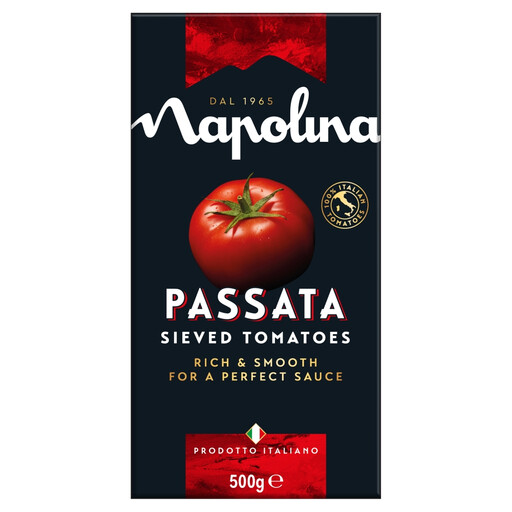 No image available
Use as a tomato base when the kitchen prepares its own pasta sauce. Check the current pack for salt and allergens, include any added seasoning in the finished-meal calculation, and assess the final texture against each resident's requirements.
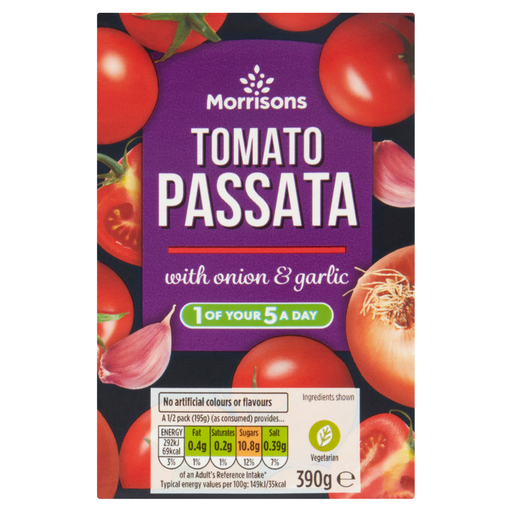 No image available
Consider this tomato base when onion and garlic fit the planned pasta recipe. Check the current pack for salt and allergens, then assess the prepared portion and final texture for the resident being served.
No. Fat and salt are separate measures. ASDA Groceries lists 0.67g salt per 100g and 0.75g per stated 112g serving for Dolmio Bolognese Low Fat sauce, so assess its salt independently of the low-fat wording.
Look for an explicit claim on the current product pack and check its comparison basis with the manufacturer. An amber traffic-light label, a low-fat claim or a lower figure than an unrelated sauce does not establish that claim.
Not without checking individual requirements. Care Quality Commission Regulation 14 guidance for England-regulated services calls for nutritional needs to be met; review each resident's assessed plan before making one sauce the standard for their meals.
Appearance alone cannot establish suitability. Assess the final dish, including pasta and any additions, against the resident's specified texture requirement and relevant professional guidance; Care Quality Commission guidance identifies swallowing problems as a risk requiring attention.
Follow the current pack's refrigeration and use-after-opening instructions for that particular product. Record the opening date and check that the planned portions can be prepared within its stated storage period.