Buying priorities
Start with the dry-product nutrition panel, then decide whether flexibility, quick preparation or gluten-free certification matters most for your breakfast routine.
| Priority |
What to check |
Your needs |
| Carbohydrate for the planned ride |
Compare carbohydrate per 100 g and the stated serving size. Check whether a bulk pack lets you scale the portion, and plan the rest of the meal separately. |
I want breakfast to fit my body mass, departure time and expected ride duration, rather than relying on one fixed bowl. |
| Reduced salt |
Compare salt on the same basis, preferably per 100 g of dry product. Check whether the figure is numeric or described only as trace, and keep hydration planning separate from the oat choice. |
I want a clearly declared low-salt oat base, without assuming that breakfast oats determine my fluid or electrolyte plan for every ride. |
| Convenience and ingredient control |
Check whether the product is a large plain-oat pack or a fixed sachet. Read the ingredient list for flavourings, sugars and other additions where a simple base matters. |
On busy mornings, quick preparation may matter most; on other days, I may prefer to choose my own portion and toppings. |
| Gluten-free and allergen suitability |
Look for a gluten-free product label where required. Check ingredient, allergen and cross-contamination information, especially for products containing added wheat protein. |
If I have coeliac disease or need to avoid gluten cross-contamination, ordinary oats are not automatically interchangeable with labelled gluten-free oats. |
Joybuy product options
Joybuy options for low-salt pre-ride porridge, covering plain oats, gluten-free oats and a quick sachet format.
 No image available
Morrisons Free From Gluten Free Oats 1kg
A gluten-free oat option for riders who need a plain, portion-adjustable breakfast base.
Lists 100% gluten-free oat flakes, 62.2 g carbohydrate per 100 g and trace salt; the pack size is 1 kg.
Trace is not a numeric salt value, so check the current pack if a strict zero-salt threshold is important. Check the current ingredient and allergen label for individual dietary needs.
Joybuy
 No image available
Scotts Porage Oats Old Fashioned Porridge Oats 1kg
A plain rolled-oat option for riders who want to set their own portion and toppings.
Lists 100% rolled oats, 60 g carbohydrate and 0 g salt per 100 g; stovetop and microwave preparation instructions are provided.
May contain wheat and barley, so it is not a substitute for specifically labelled gluten-free oats.
Joybuy
 No image available
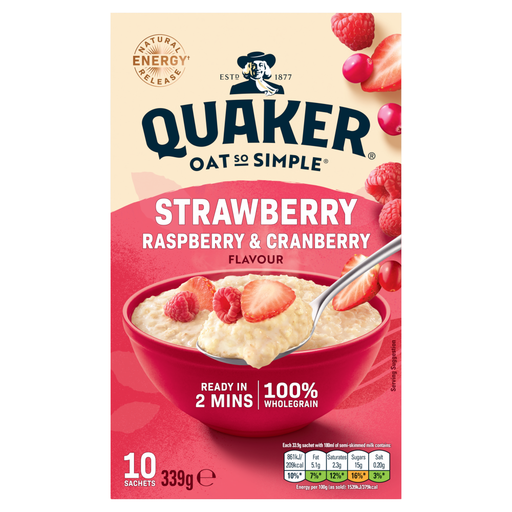
Quaker Oat So Simple Strawberry, Raspberry and Cranberry 10 Sachets 339g
A quick microwave sachet option when a fixed, portable breakfast format matters more than a plain custom-topped base.
Lists 68 g carbohydrate and 0.0 g salt per 100 g, with preparation in about two minutes.
Only 79% of the product is oats and it contains sugar and flavourings. It also contains cereals containing gluten and may contain barley.
Joybuy
 No image available
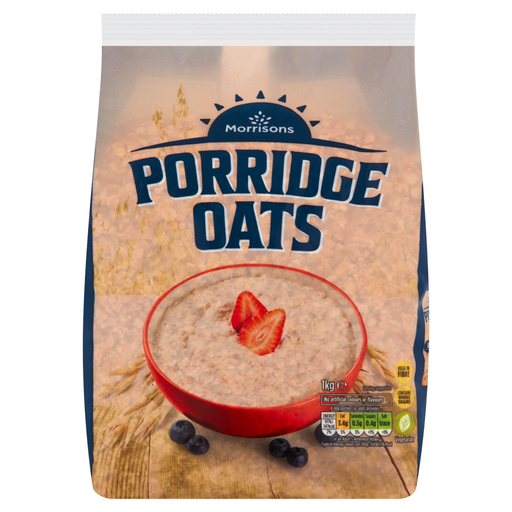
Morrisons Porridge Oats 1kg
A large-format oat product for riders who want to build a breakfast with their own toppings.
The listing gives 56.1 g carbohydrate per 100 g and declares trace salt.
Check the current pack before buying for a plain rolled-oat base: the ingredient wording is “Oat Biscuits (100%)”, and no gluten-free claim is provided.
Joybuy
Frequently asked questions
Are porridge oats enough to fuel a long bike ride?
No. Porridge can be a useful foundation for a pre-ride breakfast, but British Cycling advises adjusting the quantity to individual requirements and aiming for 1–2 g of carbohydrate per kilogram of body mass before a big ride. It also advises ongoing carbohydrate intake and hydration during longer rides.
Does reduced-salt porridge mean I should avoid electrolytes on every ride?
No. A low-salt oat product can suit a breakfast preference, while hydration is a separate part of planning for a big ride. Match drinks and any electrolyte approach to the ride, weather, sweat losses and any clinician-led dietary advice.
What is the easiest way to compare salt in UK porridge oats?
Compare the nutrition-panel salt figure on a consistent basis, preferably per 100 g of the dry product. Waitrose Essential and Quaker Rolled Porridge Oats list 0 g salt per 100 g, while Jordans Organic Jumbo lists 0.03 g per 100 g; check the current pack before buying.
Can a cyclist with coeliac disease use ordinary porridge oats?
Do not assume so. The NHS notes that oats can be contaminated with gluten-containing cereals, so choose a specifically labelled gluten-free product where required and check the current label. Some people with coeliac disease may still be sensitive to oats, including gluten-free oats, so follow individual clinical advice.


