What to check before buying
Start with the dry-product salt figure, then choose the oat format that fits your cooking routine and check the exact pack for ingredients and allergen information.
| Priority |
What to check |
Your needs |
| Comparable salt figures |
Compare dry oat products per 100g. The NHS describes 0.3g salt or less per 100g as low in salt. Keep prepared portions separate from dry-product figures. |
I want a plain oat base whose salt figure is easy to compare before I add milk, butter, cheese or toppings. |
| Texture and preparation time |
Check whether the oats are jumbo, rolled or sachet oats. Look for the stated hob or microwave method when cooking time matters. |
A thicker bowl and flapjack flexibility may point to jumbo oats; a weekday breakfast may call for a sachet with a stated quick method. |
| Gluten and allergens |
Read the gluten-free claim and the exact allergen statement. Organic and “100% oats” wording does not establish gluten-free suitability. |
If gluten-free oats are required, I need a clearly gluten-free labelled product rather than relying on the oat format or brand name. |
| Plain oats versus oat products |
Check the ingredient list for added sugar, milk, rye, oil or flavourings. Confirm whether the item is plain porridge oats, granola or a convenience pot. |
I want a neutral porridge ingredient, not a sweet granola or flavoured pot that changes the ingredients and serving profile. |
Joybuy porridge-oat options
Joybuy product options for a low-salt porridge-oat shop, including plain rolled oats, gluten-free-labelled oats and a quick sachet format.
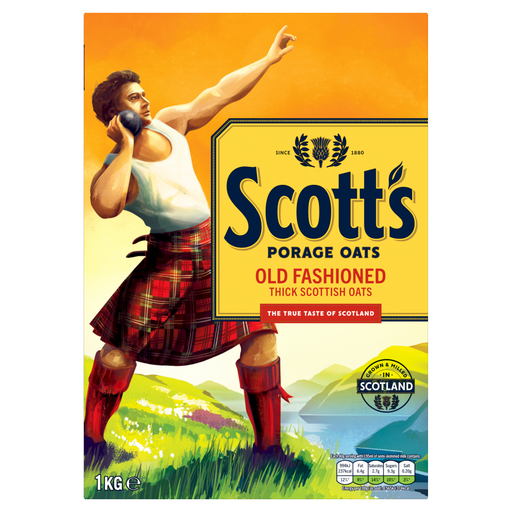 Image unavailable
Scotts Porage Oats Old Fashioned Porridge Oats 1kg
A plain rolled-oat option for shoppers who want a low-salt base and flexible preparation.
100% rolled oats; 0g salt per 100g.
Stovetop preparation is stated as 4–5 minutes, or 2–3 minutes in a microwave.
May contain wheat and barley; it is not a gluten-free-labelled option.
View on Joybuy
 Image unavailable
Flahavan's Organic Porridge Oats 2kg, 2 x 1kg
A larger plain-oat supply for households looking for an organic wholegrain option.
100% organic wholegrain oat flakes; salt is listed as less than 0.01g per 100g.
Supplied as two 1kg packs.
Not presented here as a gluten-free option; check pack instructions if cooking time or texture matters.
View on Joybuy
 Image unavailable
Flahavan's Organic Porridge Oats 1kg
A single-pack plain-oat choice for shoppers who prefer organic wholegrain oat flakes.
100% organic wholegrain oat flakes; salt is listed as less than 0.01g per 100g.
Not presented here as a gluten-free option; check pack instructions if cooking time or texture matters.
View on Joybuy
 Image unavailable
Morrisons Free From Gluten Free Oats 1kg
A plain oat-flake option where gluten-free-labelled oats are required for porridge or baking.
Listed as 100% gluten-free oat flakes and described as gluten and wheat free.
Check the current pack nutrition panel if you need to compare a specific salt figure per 100g.
View on Joybuy
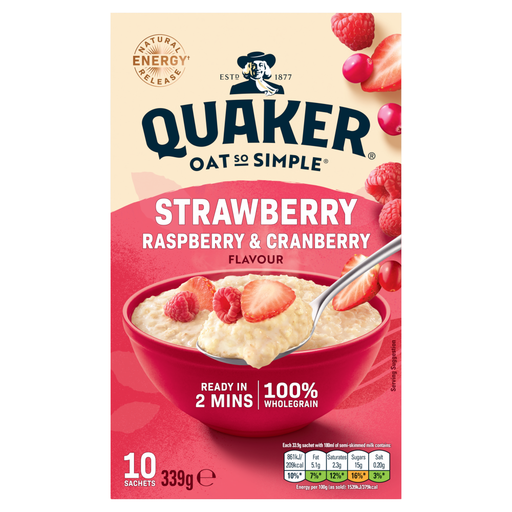 Image unavailable
Quaker Oat So Simple Strawberry, Raspberry & Cranberry 10 Sachets
A quick sachet choice for a time-limited breakfast rather than a neutral plain-oat base.
Individual sachets have a stated two-minute microwave method and list 0.0g salt per 100g as sold.
Flavoured and sweetened; may contain barley, soya and wheat, and it is not a gluten-free-labelled option.
The prepared bowl depends on the milk added.
View on Joybuy
Frequently asked questions
Does “reduced salt” mean I need a special porridge-oat product?
Not necessarily. The NHS defines low salt for foods as 0.3g of salt or less per 100g, and several plain oat products already fall at or below that figure. Check the current pack label rather than assuming a “reduced salt” claim is needed.
Why can salt differ between dry oats and a prepared bowl?
Nutrition panels can show both dry-product and prepared-serving values. Quaker UK lists 0g salt for a dry 27g Oat So Simple Original sachet but 0.20g for a serving prepared with semi-skimmed milk, so preparation ingredients need to be considered separately.
Are organic or 100% oat products automatically gluten free?
No. Coeliac UK states that “100% oats”, “pure oats” and “organic” do not establish that an oat product is gluten free. For a gluten-free claim, Food Standards Agency guidance sets a limit of no more than 20mg/kg gluten in the food as sold to the final consumer.
Can granola replace porridge oats in a low-salt shop?
Only if granola is what you want to eat. Dorset Oaty Granola lists a low salt figure per 100g, but it also contains golden syrup, oil and rye flakes, so it is not a like-for-like neutral porridge-oat ingredient.
What should I check for wheat, barley or nut allergies?
Read the exact product label and allergen statement on the pack. Mornflake says its Jumbo Oats are not suitable for wheat or barley allergy sufferers because of manufacturing methods, while Jordans Organic Porridge may contain other gluten sources and nuts.


