What to check before buying
Start with the salt declaration for the oats, then check how the chosen liquid and additions change the prepared bowl. Pack format and allergen information can be just as important when dinner needs to be quick or food is going to a setting.
| Priority |
What to check |
Your needs |
| Declared salt |
Compare dry-product values on the same basis, such as per 100g or per serving. Check whether the panel covers dry oats, water preparation or milk preparation. Avoid adding salt, stock cubes and salty sauces to the child’s portion. |
I want an oat base with a low declared salt value, while keeping an eye on the salt in the rest of dinner. The NHS states that children aged 1 to 3 should have no more than 2g of salt a day. |
| Cooking routine |
Check the pack’s microwave or hob method, wattage and standing instructions. Sachets can provide a measured portion; larger oat bags allow flexible portions. Follow the instructions for the exact product. |
A short preparation time matters on busy evenings, but I still want to prepare and serve the oats as directed. |
| Allergen information |
Read ingredients and allergy advice for oats and any stated milk, nuts, wheat, barley or soya cross-contact. Check for a specific gluten-free label where that is required. Recheck the current pack before packing food. |
I need the exact product to fit my child’s requirements and the food rules of the setting receiving it. |
| Meal role |
Choose plain, unsweetened oats where appropriate. Consider the liquid, toppings and accompaniments separately. Plan oats as one part of meals across the day rather than assuming the bowl is a complete dinner. |
I want porridge to be an unsalted cereal or starchy component alongside a varied toddler diet. NHS toddler meal guidance includes unsweetened porridge as a meal option. |
Joybuy product options
Joybuy product options for a plain, lower-salt oat base for toddler meals at home. Check the preparation ingredients, current allergen label and any setting policy before serving or packing.
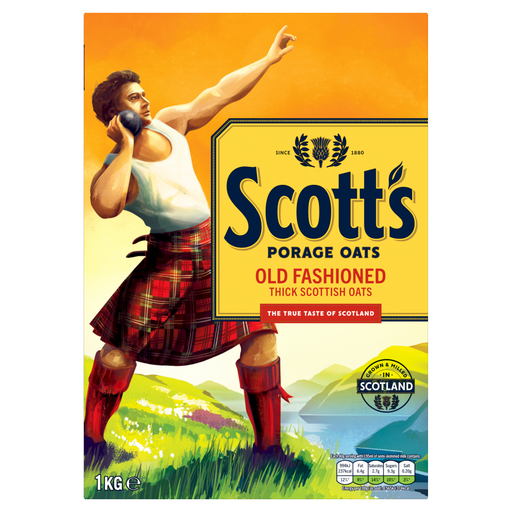 Image unavailable
Scotts Porage Oats Old Fashioned Porridge Oats 1kg
A plain oat option for a lower-salt toddler meal base prepared at home.
The listing states 100% rolled oats, 0g salt per 100g and a 40g preparation method. Its microwave method takes 2–3 minutes and includes a one-minute standing time.
May contain wheat and barley; check the current pack and local setting policy before packing. Consider the salt in milk, toppings and other dinner components.
Joybuy
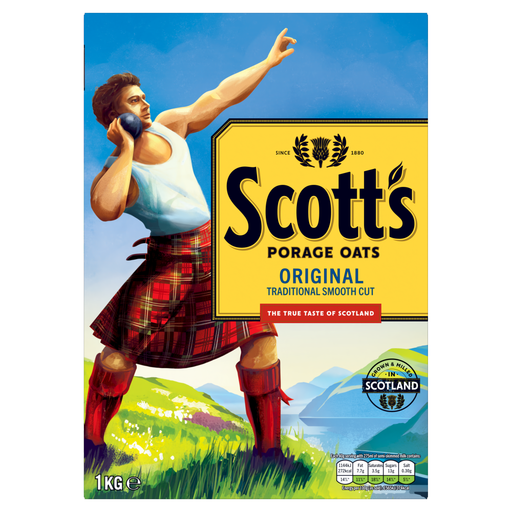 Image unavailable
Scotts Porage Oats Original Porridge Oats 1kg
A plain oat option when you want flexible water-or-milk preparation for a toddler meal component.
The listing states 100% oatmeal, 0g salt per 100g and per 40g dry portion, with 25 portions in a 1kg pack.
The listed example with 275ml semi-skimmed milk shows 0.30g salt per serving. May contain wheat and barley; check the pack method, allergen information and chosen additions.
Joybuy
 Image unavailable
Flahavan's Organic Porridge Oats 2kg (2 x 1kg)
A larger plain-oat supply for households preparing flexible portions and controlling additions.
The listing states 100% organic wholegrain oat flakes and less than 0.01g salt per 100g and per 40g serving. The pack contains two 1kg bags.
Contains oats (gluten); check the current pack and any nursery or school policy. Check the pack instructions if rapid preparation is important.
Joybuy
 Image unavailable
Flahavan's Organic Porridge Oats 1kg
A 1kg plain organic oat option for building an unsalted cereal or starchy part of dinner.
The listing states 100% organic wholegrain oat flakes and less than 0.01g salt per 100g and per 40g serving.
Contains oats (gluten); check the current pack and destination-setting policy before packing. The prepared meal’s salt depends on the milk, toppings and sauces used.
Joybuy
Frequently asked questions
What is a lower-salt porridge choice for a toddler?
Start with the nutrition panel rather than the front of the pack. The NHS says children aged 1 to 3 should have no more than 2g of salt a day, so choose plain oats with a 0g or similarly low declared salt value where appropriate, avoid adding salt, and assess milk, toppings, sauces and the rest of dinner separately.
Can porridge be served for toddler dinner?
Yes, porridge can be an unsalted cereal or starchy element of a toddler meal, but it should not be assumed to be a complete dinner on its own. NHS guidance for children over 12 months emphasises meal and food-group variety, so plan the wider meal around the child’s age, appetite and dietary needs.
Does 0g salt on dry oats mean the prepared bowl has 0g salt?
No. Check the nutrition basis: ASDA lists Quaker dry oats at 0g salt, while its example prepared with 180ml semi-skimmed milk is listed at 0.20g salt per serving. Account for the liquid and every topping used in the bowl.
Are ordinary oats suitable where gluten avoidance is required?
Do not assume they are. The Food Standards Agency states that food labelled gluten-free must contain no more than 20mg/kg gluten, and oats remain an allergen in their own right even where a product is gluten-free. Check the current pack for a suitable label and allergy information where a gluten-free requirement applies.
What should I check before sending oat porridge to nursery or school?
Check the current ingredients and allergy panel, then follow the individual setting’s food policy. For example, Waitrose instant oats may contain milk and nuts, while the listed Quaker product carries possible wheat, barley and soya cross-contact information.


