Who this suits

Parents baking simple oat treats with children

Choose a straightforward pantry oat for biscuits, bars, crumble toppings or bread when you want the recipe texture and added ingredients to determine the result. Plain oat products with very low declared salt make it easier to control what is added to the bake.

Families managing a lower-salt eating pattern

Check the declared salt for the oats separately from the ingredients used in the recipe. The NHS notes that much dietary salt comes from packaged everyday foods, so sauces, cheese, stock, salted nuts and toppings deserve the same label check.

Households needing an allergy-aware oat choice

Read each current pack’s allergen wording rather than assuming all oat products suit a gluten-free or nut-allergy diet. The Food Standards Agency sets conditions for gluten-free oat labelling, while manufacturer warnings can differ between products.

What to check before buying

Fine oatmeal

Choose it when: You want a smoother oat texture in biscuits, bars or other bakes where visible flakes may be less appealing.

Keep in mind: It has less distinct oat bite than larger flakes, and Mornflake says its Fine Oatmeal is not suitable for people with wheat or barley allergy.

Pinhead oatmeal

Choose it when: You want a more noticeable oat texture in brown bread, biscuits or similarly rustic bakes.

Keep in mind: The coarser cut may not give the smooth finish wanted for every flapjack, cookie or toddler-oriented recipe.

Plain rolled oats

Choose them when: A recipe calls for oat flakes or you want one versatile base for cookies, bars and crumble toppings.

Keep in mind: Rolled oats stay more visible than fine oatmeal, and a gluten-free claim must be checked where it is medically required.

Priority What to check Your needs
Salt in the finished bake Compare salt per 100g on plain oats; check that the ingredient list is uncomplicated; review sauces, cheese, stock, butter alternatives, nuts and toppings as well. I want a plain oat base with little declared salt, while keeping an eye on the packaged ingredients added to the recipe. The NHS notes that much dietary salt comes from packaged and everyday foods.
Oat texture Use fine oatmeal for a smoother consistency; choose pinhead oatmeal for more bite; use rolled flakes when visible oats suit the recipe. A smoother biscuit or bar may need a finer cut, whereas bread, crumble toppings and textured biscuits can work well with more noticeable oats.
Allergen wording Read the current ingredient and allergen statement; check cross-contact notices; only choose a product specifically labelled gluten-free where that claim is required. I need the exact pack to match an allergy or medically necessary gluten-free requirement, rather than relying on the word “oats”.

Common buying mistakes

  • Treating plain oats as the only salt source in the bake

    Plain oats may have a very low declared salt value, but salted nuts, cheese, stock, sauces and toppings can change the salt content of the finished recipe.

    Start with a plain oat base, then check the labels of every packaged ingredient and avoid adding table salt unless the recipe calls for it.

  • Buying sachets for regular batch baking because they look convenient

    Individual portions can be handy for breakfast, but they can be less practical when weighing larger quantities for repeated baking.

    For frequent baking, compare pack size and make sure the oat cut matches the recipe before choosing sachets.

  • Assuming all oat products are appropriate for gluten-free or nut-allergy needs

    A plain ingredient list does not establish suitability for every medical dietary need. Oat products can carry product-specific gluten-related and cross-contact warnings.

    Where gluten-free or nut avoidance is necessary, use the current pack statement and choose a specifically suitable product rather than relying on the word “oats”.

  • Using a coarse oat when the recipe needs a smooth binding texture

    Fine oatmeal, pinhead oatmeal and rolled oats are different cuts, so substituting one for another can alter the bite and consistency of a bake.

    Use fine oatmeal for a smoother result, pinhead oatmeal for texture, and plain rolled flakes when visible oats are wanted.

Relevant brand references

Mornflake

Relevant for shoppers seeking a fine oatmeal format specifically presented for home baking, alongside standard porridge-oat products.

  • Stoneground Oatmeal Fine is described by Mornflake as suitable for home baking, with 100% oatmeal and salt below 0.01g per 100g.
  • Mornflake says this product is not suitable for wheat or barley allergy sufferers because of its manufacturing methods.

Flahavan's

Relevant for standard oat flakes and a pinhead oatmeal format specifically positioned for home baking.

  • Flahavan’s Pinhead Oatmeal is described as suitable for brown bread and biscuits and is made from 100% wholegrain oats.
  • Use pinhead oatmeal for texture and rolled oats where a recipe calls for flakes.

Waitrose

Relevant own-label option for a straightforward plain rolled-oat base.

  • Waitrose Scottish Porridge Oats lists wholegrain oat flakes and 0.0g salt per 100g.
  • Waitrose advises checking the pack because product recipes can change, including nutrition and allergen information.

Quaker

Relevant mainly for convenience-oriented original oat sachets rather than a first-choice bulk baking format.

  • Quaker Oat So Simple Original sachets are listed as 100% wholegrain oats with 0g salt per 100g.
  • Their 27g portions are less convenient when regularly weighing ingredients for batch baking.

Jordans

Relevant for organic wholegrain rolled oats where an organic plain-oat option is wanted.

  • Jordans Organic Porridge lists organically produced wholegrain rolled oats and 0.03g salt per 100g.
  • Its listing warns that the manufacturing location handles nuts and other gluten sources, and says people with nut allergy should not eat the product.

Dorset Cereals

Less directly relevant to plain porridge-oat baking because its current range is focused on muesli and granola rather than a confirmed plain porridge-oat product.

  • Its muesli and granola range uses wholegrain oats alongside other ingredients.
  • Muesli and granola are not interchangeable with plain oats for recipes or allergy needs because their ingredient lists are more complex.

Joybuy porridge oat options

Joybuy product options for baking with children where a plain oat base, low declared salt or a specific oat texture may matter.

Morrisons Free From Gluten Free Oats 1kg

Morrisons Free From Gluten Free Oats 1kg

A rolled-oat option for recipes using visible flakes when a specifically gluten-free product is required.

The listing states 100% gluten-free oat flakes suitable for baking, with trace salt per 100g. Rolled flakes will not give the smoother texture associated with fine oatmeal; check the current pack for any additional allergen needs.

Joybuy

Flahavan's Organic Porridge Oats 2kg, 2 x 1kg

Flahavan's Organic Porridge Oats 2kg (2 x 1kg)

A plain rolled-oat base for family baking where visible flakes suit the recipe.

The listing specifies 100% organic wholegrain oat flakes and salt below 0.01g per 100g. Rolled oats are coarser than fine oatmeal, and the current pack should be checked where a specifically gluten-free product is required.

Joybuy
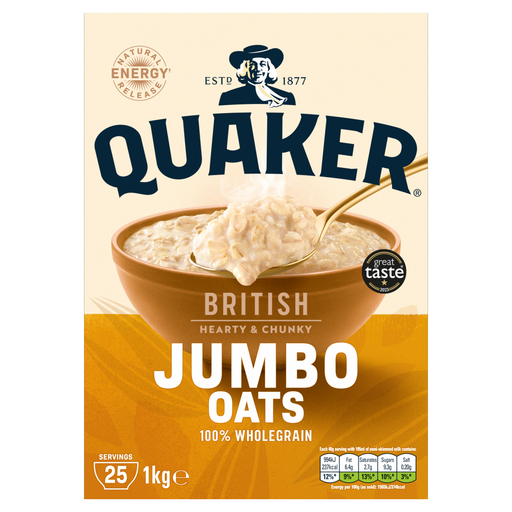
Quaker Jumbo Rolled Oats 1kg

Quaker Jumbo Rolled Oats 1kg

A visible-oat choice for cookies, crumble toppings and bars where a more noticeable texture is welcome.

The listing describes 100% wholegrain oat flakes for baking and declares 0.01g salt per 100g. It may contain traces of wheat, so check the current pack if wheat avoidance or medically necessary gluten-free use applies.

Joybuy
Scotts Porage Oats Original Porridge Oats 1kg

Scotts Porage Oats Original Porridge Oats 1kg

A plain oatmeal option for recipes that can use a thicker oat texture.

The listing states 100% oatmeal with no additional ingredients and 0g salt per 100g. Check the recipe’s preferred oat cut for smooth bakes, and note that the listing says it may contain wheat and barley.

Joybuy

Frequently asked questions

Do I need a product labelled “reduced salt” for baking with children?

Not necessarily. Check the declared salt per 100g and the ingredient list first. The plain-oat examples discussed here range from 0.0g to less than 0.01g salt per 100g, while the NHS advises that salt from packaged foods and recipe additions also contributes to a child’s overall intake.

Which oat format is easiest for a smoother bake?

Fine oatmeal is the most directly supported choice for a smoother bake: Mornflake describes its Fine Oatmeal as suitable for home baking. Choose pinhead oatmeal instead when you deliberately want more texture in biscuits or bread.

Can ordinary porridge oats be used when a child needs gluten-free food?

Choose an oat product specifically labelled gluten-free when that is medically required. The Food Standards Agency states that foods labelled gluten-free must contain no more than 20mg/kg gluten, and oats must still be emphasised as an allergen even when gluten-free.

What should I check on the pack before letting children help bake?

Check the current ingredient list, allergen statement, salt value and any cross-contact warning. For example, Jordans Organic Porridge warns that its site handles nuts and other gluten sources, while Mornflake Fine Oatmeal carries a wheat and barley allergy suitability warning.

How should I compare salt values between oat products in the UK?

Compare the salt line per 100g where available rather than comparing different serving sizes. GOV.UK nutrition-labelling guidance states that nutrition information must be expressed per 100g or 100ml when provided.