Who this is for

Older shoppers reducing dietary salt

For shoppers comparing the salt declaration on dry oats with the finished bowl. GOV.UK advises adults to have no more than 6g of salt a day overall, while nidirect recommends checking processed-food labels for lower-salt choices.

Independent older adults needing easy preparation

For people who may value a shorter cooking time, lighter handling or a measured portion. Plain instant oats and pots can simplify preparation, but ingredients and salt still vary by product.

Carers or family shoppers checking dietary labels

For anyone buying for a person with a diagnosed allergy, coeliac disease or another dietary requirement. Check the current pack, and choose an explicitly labelled gluten-free product where that is required.

What to check before buying

Plain rolled oats

Choose when: You want flexible portions and control over what is added to the bowl.

Keep in mind: The final bowl changes when milk, sweeteners, toppings or salt are added.

Quick-cook oats and sachets

Choose when: Faster preparation or a pre-measured portion matters, while a plain oat ingredient list is still preferred.

Keep in mind: Check the pack rather than assuming every sachet has the same ingredients or nutrition declaration as loose oats.

Porridge pots

Choose when: Boiling-water or microwave preparation and reduced washing-up are genuinely more practical.

Keep in mind: A pot can contain ingredients beyond oats, including sugar or milk powder.

Priority What to check Your needs and label use
Declared salt Compare salt per 100g on products as sold. Check whether a serving figure is for dry oats or a bowl made with milk or water. I want to compare like with like before choosing plain oats or a convenience format. In the Food Standards Agency and Ipsos Northern Ireland 2024 survey, 49% of 611 interviewed Northern Ireland consumers said they actively used traffic-light labelling when shopping for food; this measures label use, not demand for low-salt oats.
Preparation and texture Check the stated cooking method, portion size and whether the oats are traditional flakes, smaller quick-cook flakes or a pot. Consider safe handling of hot water or a microwave. A shorter preparation time or a measured portion may matter more to me than a large loose pack. Traditional oats allow flexible portions, while smaller flakes and pots can reduce steps.
Ingredients and allergens Read the current ingredient list and allergen declaration. For a gluten-free requirement, look for an explicit gluten-free label and check any may-contain wording. I need a product that matches an established dietary requirement, rather than assuming ordinary oats are automatically suitable.
Pack practicality Choose a pack size that can be stored cool and dry and used comfortably. Compare loose oats with individually portioned formats based on handling needs. I may prefer a smaller or pre-portioned format if weighing and storage are difficult, while a larger pack can suit regular household use.

Common buying mistakes

  • Comparing prepared porridge with dry oats as if the figures match

    Milk, water and toppings can change the nutrition of the finished bowl. Quaker’s retailer listing gives 0g salt per 100g for dry oats and 0.30g salt for its stated serving prepared with semi-skimmed milk.

    Compare dry products per 100g first, then check the preparation basis and account for what you add at home.

  • Assuming all plain-looking porridge formats contain only oats

    Convenience formats can include ingredients such as sugar or milk powder. Flahavan’s Quick Oats Pot Original, for example, lists wholegrain rolled oats, sugar and skimmed milk powder.

    Use the ingredient list to distinguish 100% oats from a formulated porridge product.

  • Choosing sachets without considering whether the format is needed

    Single portions can make preparation easier, but loose oats may be more practical where the shopper can measure a portion and store an opened pack.

    Decide whether reduced handling or portion control is important before selecting sachets instead of loose oats.

  • Treating ordinary oats as automatically gluten-free or allergy-safe

    The Food Standards Agency distinguishes gluten-free labelling from oat allergen status, and individual products can carry warnings for other cereals, milk or nuts.

    For a diagnosed gluten-related condition or allergy, select an appropriately labelled product only after checking its current allergen statement.

Relevant brand references

Waitrose

A retailer own-label route with loose rolled oats, instant oats and a gluten-free porridge-oat option in its porridge-and-oats range.

  • Waitrose Essential Porridge Oats lists wholegrain oat flakes and 0.0g salt per 100g.
  • Waitrose advises checking the pack because recipes can change, especially where nutrition or allergens matter.

Quaker

A widely distributed brand with plain rolled oats and instant-porridge formats.

  • The cited Quaker Porridge Oats listing describes 100% wholegrain rolled oats and 0g salt per 100g.
  • Its prepared-with-milk figure uses a different basis from the dry-oat panel, so the two should not be compared directly.

Mornflake

An oat specialist offering traditional, organic, superfast and oat-bran formats.

  • Mornflake says its Superfast Oats use smaller flakes for faster absorption and lists 0.01g salt per 100g.
  • The manufacturer says this product is not suitable for wheat or barley allergy sufferers because of its manufacturing methods.

Flahavan's

An Irish oat brand offering loose oats, organic sachets and convenience pots, with availability varying by product and retailer.

  • Its Natural Organic Porridge Oat Sachets contain 100% organic wholegrain rolled oats in 8 x 35g portions.
  • Its Quick Oats Pot Original includes sugar and skimmed milk powder and is stated by the manufacturer to be available only in Tesco Northern Ireland.

Jordans

A cereal brand offering conventional and organic porridge made from rolled oats alongside granola products.

  • Jordans Organic Porridge lists organically produced wholegrain rolled oats and 0.03g salt per 100g.
  • The manufacturer advises checking its current warning for other gluten sources and nuts.

Joybuy product options

Joybuy product options for plain rolled oats and plain oat sachets relevant to a lower-salt porridge comparison.

Scotts Porage Oats Old Fashioned Porridge Oats 1kg

Scotts Porage Old Fashioned Porridge Oats 1kg

A plain rolled-oat option for measured portions prepared with water or milk.

100% rolled oats; 0g salt per 100g. Stated preparation is 4–5 minutes on the hob or 2–3 minutes in a microwave. May contain wheat and barley, so check the pack for allergy requirements.

Joybuy

Quaker Oat So Simple Big Bowl Original 6 Pack 231g

Quaker Oat So Simple Big Bowl Original 6 Pack 231g

Pre-measured plain oat sachets for shoppers who prefer not to weigh loose oats.

Six 38.5g sachets with a stated 2½-minute microwave preparation time; the dry nutrition panel lists 0g salt per 100g. Check the pack’s serving basis and allergen declaration before purchase.

Joybuy
Morrisons Free From Gluten Free Oats 1kg

Morrisons Free From Gluten Free Oats 1kg

A plain oat-flake option for shoppers who require an explicitly gluten-free product.

100% gluten-free oat flakes; the nutrition panel declares salt as trace per 100g. Oats remain an allergen, so a gluten-free claim does not make this suitable for an oat allergy.

Joybuy

Flahavan's Organic Porridge Oats 2kg, 2 x 1kg

Flahavan's Organic Porridge Oats 2kg (2 x 1kg)

A larger plain-oat format for repeated household use where storage is manageable.

Two 1kg packs of 100% organic wholegrain oat flakes; dry salt is listed as less than 0.01g per 100g. Contains oats and has no stated gluten-free claim.

Joybuy
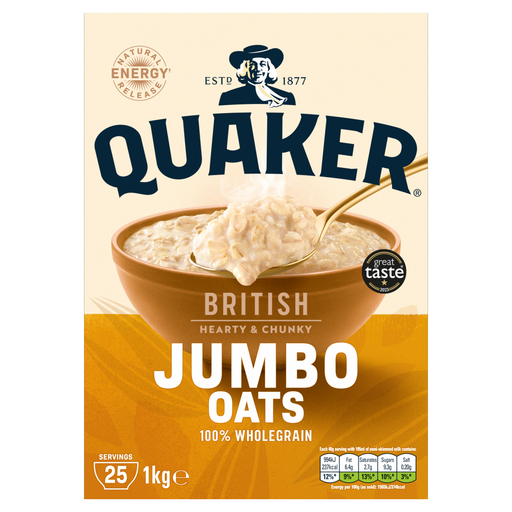
Quaker Jumbo Rolled Oats 1kg

Quaker Jumbo Rolled Oats 1kg

A plain wholegrain-oat option for porridge, overnight oats or baking where additions can be chosen separately.

100% wholegrain oat flakes; 0.01g salt per 100g. May contain traces of wheat, so check the current pack if a gluten-free product is required.

Joybuy

Frequently asked questions

Do plain porridge oats need a reduced-salt claim for a lower-salt choice?

No. Compare the declared salt on the nutrition panel and the ingredients rather than relying on a reduced-salt description. Current cited examples include Waitrose Essential and Quaker Porridge Oats at 0.0g salt per 100g, and Mornflake Superfast Oats at 0.01g per 100g; the rest of the meal still contributes to daily salt intake.

Why can the salt number change after porridge is made?

A nutrition panel may show both dry oats and a serving prepared with milk or water. Quaker’s cited retailer listing gives 0g salt per 100g dry oats but 0.30g salt for a 40g serving prepared with 300ml semi-skimmed milk, so compare dry products per 100g before considering your chosen preparation.

Are ordinary porridge oats suitable for someone who requires gluten-free food?

Do not assume so. The Food Standards Agency states that food labelled gluten-free must contain no more than 20mg/kg gluten as sold, while oats remain an allergen in their own right. Choose a pack explicitly labelled gluten-free for a gluten-free requirement and read its current allergen statement.

What allergen information should a retirement shop or carer check?

Check the current pack’s ingredients and allergen declaration before purchase or service. UK guidance includes oats among cereals containing gluten that must be communicated where applicable, and product-specific warnings can also cover ingredients or traces such as milk, nuts, wheat or barley.

Should a customer choose a pot instead of loose oats for easier use?

Choose a pot only if the person can safely use boiling water or a microwave and values fewer preparation steps. Flahavan’s Quick Oats Pot Original is stated to be ready with boiling water or in a microwave in 2 minutes, but it includes sugar and skimmed milk powder rather than being plain 100% oats.