Low-salt household cooks
People reducing salt across breakfasts and home cooking who want a plain oat base with a low per-100g salt value, while managing gravy, stock and sauces separately in a Sunday roast.


Choose plain oats with a nutrition panel showing no more than 0.3g salt per 100g, which the NHS classifies as low salt. Rolled and jumbo oats can provide a low-salt base for porridge, baking or oat-based cooking, but gravy, stock, sauces and other roast ingredients still need their own label checks. For gluten-free or allergy-related needs, rely on the current pack claim and allergen declaration.
People reducing salt across breakfasts and home cooking who want a plain oat base with a low per-100g salt value, while managing gravy, stock and sauces separately in a Sunday roast.
People choosing between creamy standard rolled oats and thicker jumbo oats for porridge, flapjacks or other baking, without treating texture as a salt claim.
People who need to distinguish an explicit gluten-free claim from ordinary oats and account for oat allergy and possible cross-contact statements.
Choose this when: You want a versatile base for creamy porridge, baking or recipes where you control the additions.
Keep in mind: Milk, stock, cheese, gravy granules and sauces can change the salt content of the finished dish.
Choose this when: You prefer a thicker porridge or oats that retain more bite in baking.
Keep in mind: Jumbo texture is a cooking preference, so compare the current per-100g salt panel rather than assuming it is lower in salt.
Choose this when: Organic production is an additional preference alongside a low-salt plain-oat option.
Keep in mind: Organic wording does not establish gluten-free suitability, and oats remain an allergen.
| Priority | What to check | Your needs |
|---|---|---|
| Salt per 100g | Compare products on the same per-100g basis. The NHS describes 0.3g salt or less per 100g as low salt. | I want a plain oat product that makes only a small direct salt contribution to my cooking. |
| Whole-meal salt | Check gravy, stock cubes, sauces, cured ingredients and seasoning separately. A plain oat panel does not describe the finished meal. | I am using oats in a roast-related dish and want to manage salt across the recipe, not only in the oats. |
| Texture and use | Choose standard rolled oats for a softer, creamier result or jumbo oats for a thicker texture and more bite. Check whether sachet values are dry or prepared. | I want the oat cut to suit my porridge, baking or cooking plans as well as my salt requirement. |
| Gluten and allergens | Look for an explicit gluten-free claim where needed and read the current allergen statement. Gluten-free oats are still oats. | I need a pack that matches my gluten-related requirement or need to avoid oats because of an oat allergy. |
A plain oat product can be low in salt while gravy, stock, sauces, cheese or cured ingredients add salt to a Sunday-roast-style dish.
Use oats as a plain base, then compare salt per 100g on added ingredients and consider lower-salt gravy or sauce choices.
Preparation can change the value shown for a serving. Quaker states 0g salt for its dry Oat So Simple Original oats but 0.2g for its specified serving prepared with semi-skimmed milk.
Compare dry products per 100g first, then check the nutrition of the exact liquid, toppings and serving size you plan to use.
A gluten-free claim has its own requirements, and oats remain an allergen even where a product is labelled gluten-free.
For coeliac disease, gluten intolerance or oat allergy, check the current pack's explicit gluten-free claim and allergen declaration.
Food products can be reformulated, and retailer availability can change.
Check the live product page and the physical pack's current ingredients, allergen statement and nutrition panel before purchase.
Quaker offers plain rolled oats, jumbo oats and microwave sachets. Its plain oat listings include products with 0g or 0.01g salt per 100g.
Mornflake has jumbo, superfast, organic and gluten-free porridge-oat lines.
This oat brand has standard, quick, jumbo and organic oat products in UK retail listings.
Jordans offers organic wholegrain rolled oats alongside other cereal products.
Its UK range is centred on muesli and granola with oats, fruit, seeds and nuts rather than a verified plain porridge-oat product.
Waitrose has Essential Porridge Oats and other oat options, including a dedicated gluten-free porridge-oat product in its category listings.
Joybuy product options for low-salt plain-oat cooking, including organic, gluten-free, standard rolled and jumbo oat choices.
 No image available
A plain organic oat option for porridge, baking and recipes where added salt remains under your control.
100% organic wholegrain oat flakes; less than 0.01g salt per 100g. Not presented as gluten-free; check salt in milk, stock, gravy and sauces used with the oats.
 No image available
An option for shoppers seeking an explicitly gluten-free and wheat-free plain-oat pack.
100% gluten-free oat flakes with trace salt per 100g. Oats remain an allergen, so this is not suitable for an oat allergy.
 No image available
A 1kg organic plain-oat option for flexible cooking where you choose the additions.
100% organic wholegrain oat flakes; less than 0.01g salt per 100g. Do not treat organic or 100% oats wording as a gluten-free claim.
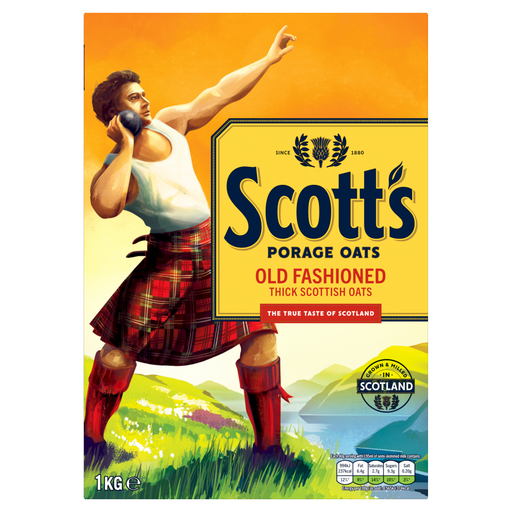 No image available
A thicker rolled-oat option for regular porridge and general oat cookery.
100% rolled oats and 0g salt per 100g. The prepared serving with milk has different nutrition from the dry-oat panel; check the exact liquid and toppings used.
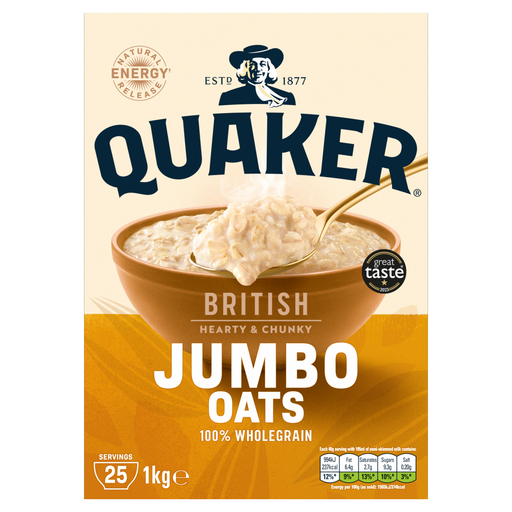 No image available
A jumbo-flake choice for a more textured porridge, overnight oats and baking.
100% wholegrain oat flakes and 0.01g salt per 100g. May contain traces of wheat; jumbo texture is not itself a lower-salt advantage.
The NHS classifies a food with 0.3g salt or less per 100g as low salt. Compare nutrition per 100g rather than only a prepared serving, because milk and other additions can change the salt value of the bowl.
No. Plain oats can contribute little or no salt themselves, but the overall salt content depends on the full recipe. The NHS identifies gravy granules and sauces among foods to limit when reducing salt, so check stock, gravy, seasoning, sauces and processed sides separately.
Do not assume so. The Food Standards Agency states that food labelled gluten-free must contain no more than 20mg/kg gluten, while oats still need to be emphasised as an allergen. Choose an explicitly gluten-free pack and read its current allergen information.
Not necessarily. The Food Standards Agency explains that oats can cause the allergic reaction, whereas gluten causes the intolerance. Gluten-free oats are still oats and remain relevant to an oat allergy.
Choose according to preparation and the nutrition panel. Plain oat bags make it easier to control additions, while sachets offer portion convenience; check whether values are for dry oats or oats prepared with milk.