For a roast-dinner side, filling or leftover dish, start by comparing the salt figures on spring-water tuna tins rather than assuming the packing medium makes every tin low in salt. M&S declares 0.75g salt per 100g for its checked spring-water tin, while Princes declares 0.85g per 100g drained; check the exact pack and the amount of tuna you plan to use. Gravy, stuffing and sauces also contribute to the meal’s salt total.
Who is choosing tuna for this meal?
Salt-conscious roast planners
If tuna is going into a potato filling, side dish or leftovers meal, its salt figure matters alongside seasoned ingredients such as gravy and stuffing. Compare the exact tins by salt per 100g drained where that basis is given; spring water does not mean salt-free.
Small-household meal preparers
A single tin may be easier to use up than a larger opened quantity, while separate cans can serve planned meals. Check drained weight and the purchased pack’s instructions for storing unused tuna.
Shoppers checking sourcing
If sourcing affects your choice, look for a statement on the exact product as well as its salt panel. M&S describes its checked tuna as pole-and-line caught; Sainsbury’s says its checked spring-water tuna comes from a pole-and-line catch and an MSC-certified fishery.
What matters when buying?
For tuna in a roast-dinner side or leftover meal, compare like-for-like salt figures first, then choose a quantity you can use and check any sourcing details important to you.
| Concern |
What to check |
Who this matters to |
| Salt in the tuna |
Compare salt per 100g drained on the exact variant, then consider the quantity going into the dish. |
When gravy or stuffing is already part of the meal, I want to keep the tuna’s contribution to salt down. About 50% of consumers put that need first. |
| Portions and leftovers |
Check drained weight, the number of separate cans and the pack’s after-opening instructions. |
If I am making a filling for one or two people, I want enough tuna without leaving an opened tin I cannot use in time. This is the primary concern for about 30% of consumers. |
| Sourcing and format |
Read the exact product’s sourcing statement, ingredients and allergen declaration; compare its salt panel separately. |
I may want a stated sourcing approach or a particular tuna format for a leftovers dish without overlooking the salt figure. About 20% of consumers give that consideration priority. |
What should you avoid overlooking?
-
Assuming spring water means no salt
The checked spring-water products still declare salt: M&S lists 0.75g per 100g, while Princes lists 0.85g per 100g drained.
Read the figure on the tin you intend to buy and account for the portion used in the meal.
-
Choosing brine without comparing the label
Tesco declares 0.51g salt per half tin for its checked brine product and 0.46g per half tin for its checked spring-water counterpart. That difference describes this pair, not every brand.
When reducing salt is the priority, compare the current nutrition panels rather than choosing by packing medium alone.
-
Opening more tuna than the dish needs
Unused tuna needs to be handled according to the purchased pack’s storage instructions. The checked Asda brine product says to transfer it to a covered, non-metallic container, refrigerate it and use it within two days.
Choose a tin or pack format that fits the diners and any planned leftovers.
-
Overlooking the fish allergen or weekly tuna intake
The checked tuna products identify fish as an allergen. Separately, NHS guidance says people who are pregnant or trying for a baby should have no more than four cans of tuna or two tuna steaks in a week.
Read the purchased pack’s allergen statement and, where the NHS guidance applies, count tuna eaten across the week rather than only in this meal.
Brands to consider
These product-line examples help narrow a label comparison; a brand name alone does not establish the salt content of another variant.
M&S
Its checked 160g Tuna Chunks in Spring Water tin provides a stated salt figure for comparison.
- M&S declares 0.75g salt per 100g and describes this product as pole-and-line caught.
- Check the current tin label before relying on the online product details.
Princes
Its spring-water chunks offer a branded option with a drained-weight salt declaration.
- Princes declares 0.85g salt per 100g drained for the checked spring-water product.
- Its checked brine product declares 0.9g per 100g drained; compare the exact variant.
Tesco
The checked own-label spring-water and brine four-packs allow a comparison on the same stated portion basis.
- Tesco declares 0.46g salt per half tin for spring water and 0.51g per half tin for brine.
- The spring-water product still declares about 0.90g salt per 100g drained.
Asda
Its checked spring-water three-pack contains three 80g cans.
- Asda declares 0.50g salt per can and 0.90g per 100g drained for that product.
- Its checked brine product also declares 0.90g per 100g drained, so packing medium does not distinguish those two figures.
Sainsbury’s
Its checked spring-water listing provides product-specific sourcing information.
- Sainsbury’s describes the tuna as pole-and-line caught and from an MSC-certified fishery.
- Read the current pack’s salt panel before comparing it with other tins.
John West
Its range includes spring-water chunks and no-drain formats.
- Separate can and no-drain options give shoppers different ways to plan a dish.
- Compare the salt figure and its stated measurement basis on the exact product before treating formats as interchangeable.
Spring-water tuna on Joybuy
These spring-water tuna tins and multipacks offer different quantities for roast-dinner sides, fillings or planned leftovers. Compare the purchased pack’s salt panel on the same measurement basis before choosing by salt content.
 Image unavailable
John West Tuna Chunks in Springwater, 4 x 125g
Four separate cans may suit roast-dinner fillings prepared across planned meals. The stated pack size is 4 x 125g; check the current label for the drained quantity and salt figure relevant to your portion.
View on Joybuy
 Image unavailable
John West No Drain Tuna Chunks in Springwater, 3 x 100g
The no-drain format may suit a filling assembled without a separate draining step. It contains three 100g cans; check how the salt figure is expressed before comparing it with drained-weight figures on other products.
View on Joybuy
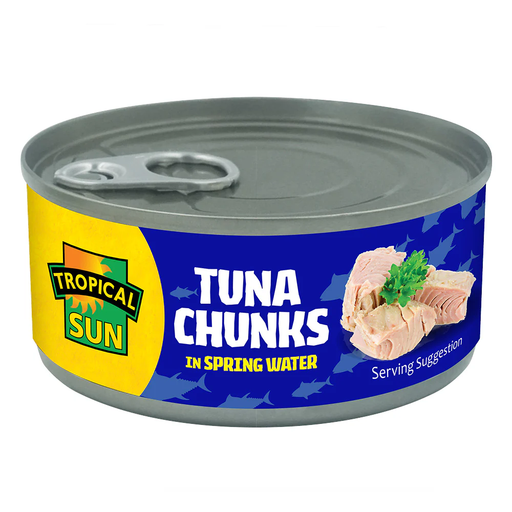 Image unavailable
Topical Sun Tuna Chunks in Springwater, 160g
This single 160g tin offers a different quantity from the multipacks for a planned side or filling. Check the salt panel’s measurement basis before comparing it with drained-weight values, and read the purchased pack’s allergen information.
View on Joybuy
 Image unavailable
Morrisons Fad Free Tuna Chunks in Spring Water, 145g
A single tin may suit a dish planned around one opening rather than several meals. The stated tin size is 145g; compare its current salt declaration with other spring-water tins if minimising the tuna’s salt contribution is your priority.
View on Joybuy
Questions about choosing and storing tuna
Is tuna in spring water automatically low in salt?
No. The checked M&S spring-water tin declares 0.75g salt per 100g, and Princes declares 0.85g per 100g drained. Compare the nutrition panel and measurement basis on the exact tin you plan to use.
Should I choose brine or spring water for roast-dinner leftovers?
Start with spring-water options when reducing salt is the priority, but decide using the labels rather than the packing medium alone. Tesco declares 0.46g salt per half tin for its checked spring-water product and 0.51g for its checked brine product; another pair need not have the same difference.
How should I store tuna left over from an opened tin?
Follow the instructions on the purchased pack. The checked Asda brine product says to transfer unused tuna to a covered, non-metallic container, refrigerate it and use it within two days.
Does pregnancy guidance change how to plan a tuna dish?
NHS guidance says people who are pregnant or trying for a baby should have no more than four cans of tuna or two tuna steaks in a week. That limit concerns tuna eaten across the week, regardless of whether a particular tin is chosen for its salt figure.


