Roast-day cooks watching salt
If tuna is going into a salad, starter, jacket potato or sandwich filling, its salt figure matters alongside the gravy, sauces and other foods you plan to serve.


For a roast-day salad, starter or filling, compare the salt figure on each tuna tin per 100g rather than assuming that spring water or a no-drain format means less salt. Product figures from Waitrose, M&S and John West range from 0.73g to 0.80g salt per 100g for the spring-water examples covered here, while Tesco lists 1.00g per 100g, drained, for one brine product; these examples do not establish a rule for every tin. Check the portion you will use and consider gravy, sauces and other accompaniments as part of the meal.
If tuna is going into a salad, starter, jacket potato or sandwich filling, its salt figure matters alongside the gravy, sauces and other foods you plan to serve.
A no-drain tin can save a preparation step. Compare its nutrition panel with other tins rather than treating convenience wording as a salt claim.
Salt is not the only consideration. NHS guidance for people who are pregnant or trying for a baby sets a separate weekly limit for tuna.
Start with comparable salt figures, then check your portion and how the tuna will fit into the rest of the meal.
| Priority | What to check | Your needs |
|---|---|---|
| Comparable salt | Compare salt per 100g on the same stated basis, including whether a value applies to drained tuna. Check salt per serving against the amount you will use. | I want to compare tins fairly, even when their can sizes or drained weights differ. |
| Packing format | Read the nutrition panel and ingredients for the exact spring-water, brine or no-drain tin. Waitrose lists 0.73g salt per 100g for its Essential MSC spring-water chunks; John West lists 0.80g per 100g for its No Drain spring-water chunks. | A quick-to-serve tin would help, but I do not want to mistake its format for a reduced-salt claim. |
| Whole-meal salt | Consider the tuna portion alongside gravy, sauces, condiments and other foods. The NHS advises adults to have no more than 6g of salt a day. | If the roast has several salty accompaniments, I want to account for what the tuna adds too. |
| Pack instructions | Check the fish allergen declaration and the exact tin's instructions for storing tuna after opening. | I need to serve the tuna with any fish allergy in mind and plan what to do with leftovers. |
Waitrose, M&S and John West list between 0.73g and 0.80g salt per 100g for the spring-water products covered here. The packing liquid alone does not tell you which exact tin has less salt.
Compare the per-100g figures on the tins you are considering, then check the figure for the portion you expect to serve.
Gravy, sauces and condiments can also contribute salt. NHS advice to limit salt includes salt already present in packaged food.
Consider the accompaniments before seasoning the tuna dish; herbs, lemon, garlic or pepper offer other ways to add flavour.
Tesco lists 1.00g salt per 100g, drained, for its Tuna Chunks in Brine, above the figures for the spring-water examples covered here. That comparison does not establish the salt content of every brine or spring-water tin.
Compare the nutrition panels of the particular products available to you, including any difference in how their values are stated.
These examples show why a brand name or packing format cannot replace the nutrition panel for the exact product.
John West lists spring-water chunks and a No Drain spring-water format.
Tesco and Sainsbury's list Princes tuna products in different packing liquids.
Tesco lists own-label tuna in spring water and brine.
Sainsbury's lists own-label tuna chunks in both spring water and brine.
M&S lists Tuna Steak in Spring Water for shoppers choosing steak pieces rather than chunks.
These spring-water tuna options could be used in a roast-day salad or filling. Compare the salt panel on the exact pack before choosing one for a lower-salt meal.
 No image available
The no-drain format is an option when preparing a roast-day salad or filling quickly. Joybuy lists 0.80g salt per 100g for this product, and its ingredients include salt; compare the on-pack figure with other tins rather than treating no-drain as a reduced-salt claim.
 No image available
This four-can spring-water pack is another option for a salad or filling. Check its salt figure on the exact pack, including whether the value is stated for drained tuna, before comparing it with a no-drain tin.
 No image available
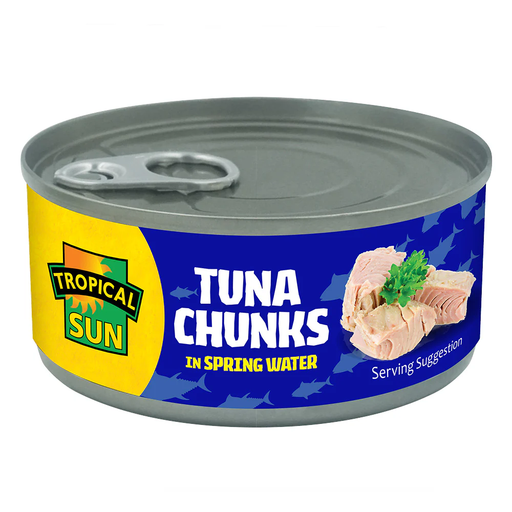
This 160g spring-water tin is an option for a roast-day side or filling. Read the exact pack's salt figure and its per-100g basis before comparing it with other tins.
No. Waitrose, M&S and John West list 0.73g, 0.75g and 0.80g salt per 100g respectively for the spring-water products covered here. Compare the nutrition panel on the exact tin rather than relying on the packing-liquid name.
The NHS advises adults to have no more than 6g of salt a day. That includes salt already in packaged food as well as salt added during cooking or at the table, so consider the tuna alongside the rest of the meal.
Check the storage instructions on the exact tin before opening it, and plan how much you will use. Follow that pack's directions for refrigerating and using any leftovers.
Tuna is fish and is not suitable for someone with a fish allergy. Check the ingredients and allergen declaration on the exact pack, particularly for flavoured or mixed products.
Yes. NHS guidance says that people who are pregnant or trying for a baby should have no more than 4 cans of tuna a week or 2 tuna steaks a week because tuna contains higher levels of mercury than other fish.