Students comparing salt labels
If salt reduction is the priority, compare the declared amount on each tin using the same measurement basis. The packing liquid alone does not tell you the salt content.


For a student choosing tinned tuna with salt reduction in mind, compare the salt declaration on the exact tin rather than assuming spring water means less salt. Sainsbury's checked 145g spring-water tin declares 0.12g salt per 100g drained; the checked Princes and Tesco tins declare 0.85g and 0.90g respectively on the same basis. Drained quantity, opening format and instructions for leftovers also matter when stocking a new cupboard.
If salt reduction is the priority, compare the declared amount on each tin using the same measurement basis. The packing liquid alone does not tell you the salt content.
If a tin needs to work across several meals, check its drained weight and pack count. The weight including liquid does not show how much tuna is available to use.
With limited equipment or shared fridge space, an easy-open or no-drain format may simplify a quick meal. Check its salt declaration and what the label says about storing leftovers.
Compare salt on a like-for-like label basis first, then choose a drained quantity and opening format that fit your meals.
| Concern | What to check | Who this matters to |
|---|---|---|
| Declared salt | Compare salt per 100g on the exact tins, checking whether the figures refer to drained tuna. Read the stated serving amount too. | If I am choosing tuna mainly to reduce salt, I need a comparable figure rather than a reassuring packing description. About 45% of consumers put the declared salt figure first. |
| Usable quantity | Check drained weight and the number of tins in the pack. | When stocking a first cupboard, I want to know how much tuna I can use across meals. For about 27% of consumers, usable quantity and pack size are the primary concern. |
| Opening and leftovers | Look for an easy-open or no-drain format if needed, and read the exact tin's instructions for opened contents. | If kitchen equipment is limited during move-in week, opening and storing a partly used tin can shape my choice. Convenience and portion practicality come first for about 18% of consumers. |
| Sourcing and meal use | Check any sourcing statement on the exact pack and whether its format suits your planned dishes. | I may want one cupboard ingredient for pasta, sandwiches or salads while checking its stated sourcing credentials. That combined need is the main priority for about 10% of consumers. |
Spring-water products can have different salt declarations. For example, the checked Sainsbury's, Princes and Tesco tins declare 0.12g, 0.85g and 0.90g salt per 100g drained respectively.
Use spring water to narrow the formats you inspect, then compare the nutrition panels on the exact tins.
A tin's total weight includes its packing liquid, so it does not show the quantity of tuna available for meals.
Check drained weight alongside pack count when planning cupboard portions.
A tin that is too large for one meal leaves tuna that needs suitable storage. The checked Sainsbury's label says to refrigerate transferred contents and use them within one day; checked M&S and Princes information specifies two days.
Choose a size that fits your likely portions and follow the storage and use-by-opening instructions on your own pack.
Leftovers also need space in a shared fridge.
The checked own-brand 145g tuna chunks in spring water offer a label to examine when salt is the first selection criterion.
The checked own-brand spring-water chunks are offered in a four-pack format.
Its checked no-drain spring-water chunks provide a format for meals where draining is inconvenient.
The checked 145g spring-water chunks are a cupboard-meal option with a drained-weight salt declaration.
The checked own-brand 145g spring-water tin gives both a salt declaration and a drained weight.
This spring-water tuna selection is suited to checking for quick cupboard meals; confirm the drained-weight salt declaration on the pack before choosing it specifically for salt reduction.
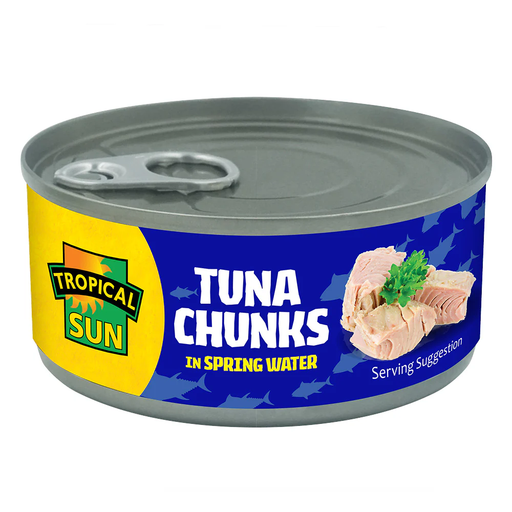 Image unavailable
For quick cupboard meals, this 160g tin contains tuna chunks in spring water. Check its salt per 100g drained on the exact pack before comparing it with drained-weight declarations from other tins; also check the drained weight when planning portions.
No. The checked spring-water tins carry different salt declarations: Sainsbury's declares 0.12g, Princes 0.85g and Tesco 0.90g per 100g drained for the specified products. Compare the exact nutrition panels on the same basis.
The NHS advises that adults have no more than 6g of salt a day, including salt already in food and salt added during cooking. That general guidance does not replace individual advice for someone following a clinician-directed diet.
Follow the instructions on your exact pack. The checked Sainsbury's tin says to transfer the contents to a non-metallic container, refrigerate and use within one day; checked M&S and Princes information specifies refrigerated use within two days.
Tuna is fish, so check the allergen and ingredient information on the exact pack before buying. Do not rely on a different tin's label, even when the products have similar names.