Parents comparing salt labels
If salt is your main consideration for a toddler dinner, compare the exact tin's salt per 100g and the amount you intend to serve. A spring-water description alone does not tell you its salt value.


Compare the salt per 100g on the exact tin rather than choosing by its spring-water description. Sainsbury's Tuna Chunks in Spring Water 145g lists 0.12g salt per 100g drained, while the other named spring-water tins checked list 0.75g–0.90g per 100g; check the current label and its measurement basis before buying. Fish allergy, possible bones and storage after opening also matter when planning a toddler dinner.
If salt is your main consideration for a toddler dinner, compare the exact tin's salt per 100g and the amount you intend to serve. A spring-water description alone does not tell you its salt value.
Tuna is fish, so check the product's allergen declaration. The NHS advises introducing foods that can trigger allergic reactions one at a time when starting solids; follow existing clinical advice if a child has a diagnosed allergy.
A toddler dinner may leave some tuna in the tin. Check the pack size and the exact product's instructions for storing and using anything left after opening, and inspect the tuna for bones before serving.
Start with the exact tin's nutrition panel, then check its allergen information and whether its pack size works for the portions you plan to serve.
| Concern | What to check | Who this matters to |
|---|---|---|
| Salt on the label | Compare salt per 100g on the exact tin, noting whether the value is for drained tuna or the product as sold. Consider the amount served alongside the rest of the meal. | When salt is my main concern, I want a comparable label value rather than relying on the words 'spring water'. About 50% of consumers would put that salt comparison first. |
| Fish allergy and bones | Read the fish-allergen declaration and inspect the tuna for bones before serving. Follow the NHS advice on introducing allergenic foods where applicable. | If fish introduction or an existing allergy is the deciding issue, I need to address that before choosing a tin by its salt value. This would be the primary concern for about 30% of consumers. |
| Portions and leftovers | Check pack size, stated servings and the product's instructions for storage after opening. | When I need only a small portion, I want a pack and storage routine that work for the next meal too. For about 20% of consumers, that practicality would come first. |
The named spring-water tins list different salt values. Sainsbury's, Marks & Spencer, ASDA and Tesco product information spans 0.12g–0.90g per 100g across the products checked.
Compare the current nutrition panels for the exact tins, using the same per-100g basis where possible.
An adult reference-intake percentage on a retailer's nutrition panel does not specify how much tuna to serve a toddler.
Look at the salt per 100g and the amount you plan to serve, including the other foods in that dinner.
Tuna is fish, and some of the checked product information warns that bones may remain. Fish and shellfish are distinct allergens; do not assume a tuna tin contains shellfish unless its own label declares it.
Read the actual tin's allergen information and inspect and break up the tuna before serving. The NHS advises introducing foods that can trigger allergic reactions one at a time when starting solids.
Storage directions differ: the checked Sainsbury's tin says to refrigerate transferred leftovers and use them within one day, while the checked Tesco, ASDA, John West and Princes products give two days.
Follow the instructions on the product you buy, including how to transfer and store any leftovers.
These figures describe specific tins and pack formats, not every tuna product from each brand. Check the current label before comparing salt values.
The 145g Tuna Chunks in Spring Water tin is a reference point for salt-focused comparisons.
The checked Tuna Chunks in Spring Water comes in a 640g four-pack.
The checked product is Tuna Chunks in Spring Water, 4 x 132g.
The checked Tuna Chunks in Spring Water is a 4 x 145g pack.
The checked spring-water tuna comes in a 3 x 80g pack.
The checked own-label Tuna Chunks in Spring Water is a 4 x 145g pack.
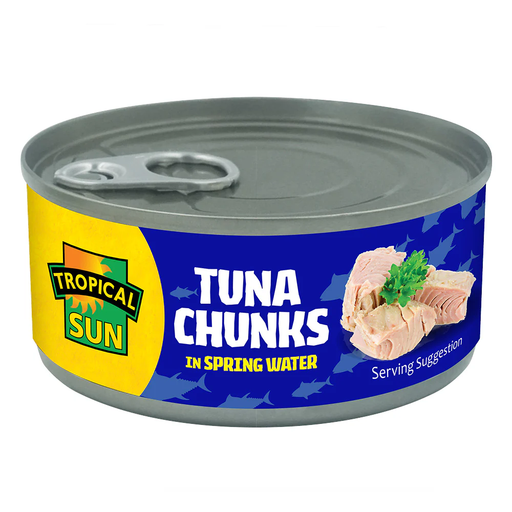
This spring-water tuna tin is an option to examine for a toddler dinner. If reducing salt is your priority, compare the current can's nutrition panel with other tins before choosing.
 No image available
For a salt-focused toddler dinner, compare this tin's current salt per 100g with alternatives on the same measurement basis. Check its fish-allergen declaration, inspect the tuna for bones before serving and follow its instructions for leftovers.
Sainsbury's Tuna Chunks in Spring Water 145g lists 0.12g salt per 100g drained. The named M&S, John West, Princes, Tesco and ASDA spring-water products list 0.75g–0.90g per 100g; check each current label and its measurement basis before comparing tins.
No. The named spring-water products list different salt values, from 0.12g to 0.90g per 100g across the checked tins. Use the exact product's nutrition panel rather than its packing-liquid description to make the comparison.
Tuna is fish, so check the tin's fish-allergen declaration. The Food Standards Agency identifies fish and shellfish separately as allergens; do not treat shellfish as an ingredient of a particular tuna product unless its label says so. The NHS advises introducing foods that can trigger allergic reactions one at a time when starting solids.
Follow the instructions on the tin you buy. The checked Sainsbury's product says to transfer and refrigerate leftovers and use them within one day; the checked Tesco, ASDA, John West and Princes products give a two-day refrigerated-use period.