Parents and carers comparing salt
If tuna is going into sandwiches, wraps or pasta salad, the salt figure per 100g makes tins of different sizes easier to compare. Spring water on the label does not, by itself, mean low salt.


For a school packed lunch, compare the salt figure per 100g on the exact tuna product rather than choosing by packing medium alone. Sainsbury's and M&S each list 0.75g salt per 100g for the spring-water products examined, while John West lists 1g per 100g for its Tuna Chunks in Brine; none of those figures meets nidirect's low-salt threshold of 0.3g or less per 100g. Check the portion, preparation instructions and your school's fish-allergy arrangements before packing it.
If tuna is going into sandwiches, wraps or pasta salad, the salt figure per 100g makes tins of different sizes easier to compare. Spring water on the label does not, by itself, mean low salt.
A standard tin, multipack and no-drain format involve different preparation steps. Check serving information and instructions for any tuna left after opening when planning more than one lunch.
Tuna is fish. Before sending it in a packed lunch, read the product label and check any packed-lunch or allergy guidance issued by the child's school.
Start with the exact product's salt figure, then check whether its format and the school's arrangements work for the lunch you are preparing.
| Priority | What to check | Your needs |
|---|---|---|
| Salt | Compare salt per 100g on the exact product, including when choosing between spring water and brine. Nidirect defines low salt as 0.3g or less per 100g; a lower figure than another tin does not necessarily meet that definition. | I want to choose between tins on the same basis, rather than assume that every spring-water product is low in salt. |
| Ingredients | Read the ingredient list if you want plain tuna for a sandwich or salad filling. Check the nutrition panel for any particular product rather than transferring values from another variant. | For a simple filling, I'd rather choose the tuna first and decide separately what else goes into it. |
| Fish allergy | Check the current allergen label and the school's packed-lunch guidance. The Department for Education's England school allergy guidance describes school allergy-safety arrangements; it does not establish that tuna is allowed in every school. | Before packing fish, I need to know what my child's school asks families to do. |
| Preparation and portions | Check whether the product needs draining, its stated servings and the instructions for leftovers. M&S instructs customers to transfer unused contents of its 160g spring-water tuna to a non-metallic container, refrigerate them and eat them within two days. | A no-drain format would save a step, but I still want to pack a suitable amount and follow the storage instructions for anything left over. |
Packing medium is not a salt classification. Princes lists 0.85g salt per 100g drained for its Tuna Chunks in Spring Water, above nidirect's low-salt threshold of 0.3g or less per 100g.
Use spring water or brine as a prompt to compare products, then decide from the salt figure on the exact tin.
Pack sizes and serving counts differ, so a per-tin figure does not give a like-for-like comparison.
Compare salt per 100g first, then check the serving information and how much tuna you plan to put in the lunch.
Tuna contains fish, and a food used at home may need a separate check against a school's packed-lunch guidance. The Department for Education's England guidance addresses school allergy-safety arrangements.
Read the product label and check the school's current guidance before packing tuna.
Ingredients and nutrition information can change; M&S advises customers to read the product label rather than rely on its listing alone.
Check the tin you are using for its current salt figure, ingredients and allergen information.
These product examples show why the exact label matters; the figures do not describe every tuna product sold by each brand or retailer.
Sainsbury's Tuna Drained & Ready Water 120g is a ready-to-use spring-water option.
M&S Tuna Chunks in Spring Water 160g is a plain tuna-and-spring-water product.
Princes Tuna Chunks in Spring Water is a plain spring-water tuna option.
John West offers conventional tins and a no-drain spring-water fridge pot.
Tesco Groceries lists own-label spring-water tuna in single-tin and multipack formats, alongside branded options.
These tinned-tuna options include spring-water multipacks, no-drain cans and a sunflower-oil variant. Compare each current salt label and preparation instructions against the lunch you plan to make; the formats are not interchangeable.
 Image unavailable
The no-drain format avoids a draining step when preparing a sandwich or salad filling. Compare the current salt figure per 100g and check the school's fish-allergy guidance before packing it.
 Image unavailable
Four cans offer a format for preparing lunches on separate days. Check the salt figure on this variant and its draining instructions rather than assuming they match a John West no-drain product.
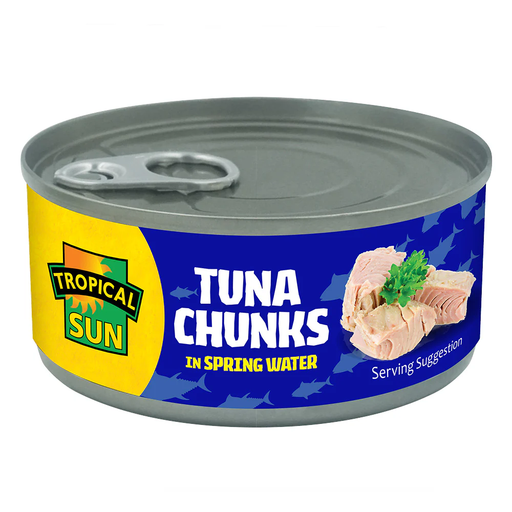 Image unavailable
This single 160g can is an option when preparing a tuna filling at home. Read its current salt and allergen labels before comparing it with other tins, and follow the pack's preparation instructions.
 Image unavailable
The no-drain cans remove a preparation step, but this variant is packed in sunflower oil, not spring water. Compare its current salt label with the alternatives if reducing salt is the deciding factor.
 Image unavailable
The six-pack format may suit households preparing tuna lunches on several days. Spring water alone does not establish its salt level: compare the current figure per 100g and check the draining instructions on the pack.
No. Nidirect defines low salt as 0.3g or less per 100g, while Princes lists 0.85g per 100g drained for its Tuna Chunks in Spring Water. Read the salt figure on the exact tin, even when comparing spring-water products.
Compare the exact products: Sainsbury's and M&S each list 0.75g salt per 100g for the spring-water examples discussed here, while John West lists 1g per 100g for its Tuna Chunks in Brine. Those figures do not establish a rule for every spring-water or brine variant.
Check the individual school's packed-lunch and allergy guidance before sending it. Tuna contains fish, and the Department for Education's England school allergy guidance addresses school allergy-safety arrangements rather than granting permission for every packed lunch.
No-drain describes preparation, not salt content. John West lists 0.9g salt per 100g for its No Drain Fridge Pot Tuna Steak in Spring Water, compared with 0.75g per 100g for the Sainsbury's and M&S spring-water examples; compare the labels of the particular products you are considering.
Follow the instructions on that product. For its 160g Tuna Chunks in Spring Water, M&S says to transfer unused contents to a non-metallic container, refrigerate them and eat them within two days.