Who each option suits
The intended activity and the way you store and prepare drinks matter more than the word “sport” on the front of the pack.
People avoiding sugar during lighter activity
If you want a ready-to-drink bottle for walking, casual sport or a light workout, check for an explicit zero-sugar declaration. Sainsbury’s describes the Lucozade Sport Zero Sugar Orange & Peach product as intended for low-intensity exercise; that positioning does not establish its suitability as a carbohydrate source for a longer session.
Households short on cupboard space
Sachets offer a compact, mix-as-needed alternative to bottled stock if water and a suitable container will be available. Gatorade’s Hydration Booster contains carbohydrate and lists sugar among its ingredients, so its low-sugar description should not be mistaken for sugar free.
People choosing carbohydrate for exercise
If carbohydrate in the drink is part of your intended exercise use, compare the amount you would consume, not just the front-of-pack description. ASDA lists 4.1g carbohydrate and 4.1g sugars per 100ml for Powerade Berry & Tropical Fruits; it is a different choice from a zero-sugar drink.
What to check before stocking up
Decide whether these drinks are for routine availability or a particular exercise session, then compare the label for the amount you expect to drink.
Zero-sugar bottles
Choose when: You want a drink ready to open for lighter activity and avoiding sugar is the priority.
Trade-off: Bottles take up cupboard space, and a zero-sugar label does not mean the drink supplies carbohydrate for exercise.
Drink-mix sachets
Choose when: Compact stock and mixing a serving when needed matter more than immediate convenience.
Trade-off: You need water and a container; a powder described as low sugar may still contain sugar.
Carbohydrate-containing isotonic drinks
Choose when: You specifically want carbohydrate in a drink intended for use during exercise.
Trade-off: A conventional formulation will not meet a zero-sugar preference; check the amount in the bottle you plan to drink.
| Priority |
What to check |
Your needs |
| Sugar and carbohydrate |
Compare sugars and carbohydrate per 100ml and per serving or bottle. Check whether the label says zero sugar or low sugar; those descriptions are not interchangeable. |
For drinks kept on hand for lighter activity, I would rather avoid sugar. If I want carbohydrate during exercise, I need to choose the amount deliberately. |
| Format and storage |
Compare bottle or sachet size, the number of servings and any mixing directions. Check the best-before date and storage instructions before buying a multipack. |
A bottle suits me when I need something ready to drink; sachets make more sense when cupboard space matters and I can mix them with water. |
| Purpose of the drink |
Separate routine fluid intake from a drink chosen to supply carbohydrate during exercise. Check declared carbohydrate and electrolytes rather than assuming every sports drink has the same formulation. |
If I am simply stocking drinks for everyday use, I do not need to treat an isotonic drink as the default: the NHS identifies water as a choice for routine hydration. |
| Ingredients and warnings |
Read the current ingredients, sweeteners and any pack warnings. For example, ASDA’s listing for Powerade Berry & Tropical Fruits states that it contains a source of phenylalanine. |
When a particular ingredient matters in my household, I need to check the exact flavour and pack I am buying, not rely on a previous purchase. |
Brand and product-line references
These examples illustrate different formulations; the details below apply to the named product lines and flavours, not every drink sold under each brand.
Lucozade Sport
The Sport range includes conventional drinks and Zero Sugar variants. Sainsbury’s describes the Orange & Peach Zero Sugar product as intended for low-intensity exercise.
- The Orange & Peach Zero Sugar listing states zero sugar and 4 kcal per serving.
- Its low-intensity positioning should not be read as a claim that it supplies carbohydrate for longer exercise. Check the current pack when choosing a flavour or multipack.
Gatorade
Gatorade UK presents Hydration Booster as a carbohydrate-electrolyte drink-mix powder with B vitamins, sold in multi-serving bundles.
- Sachets offer a compact format for mixing servings when needed.
- Gatorade UK describes the powder as low sugar, not zero sugar; its listed ingredients include sugar. It must be mixed with water.
Powerade
Coca-Cola Great Britain describes Powerade as an isotonic drink containing carbohydrate for exercise use.
- ASDA lists 4.1g carbohydrate per 100ml for Powerade Berry & Tropical Fruits, making its carbohydrate content clear for comparison.
- The same product lists 4.1g sugars per 100ml and states that it contains a source of phenylalanine; it is not a zero-sugar option.
Joybuy sports-drink options
These options include mix-with-water powders and a ready-to-drink Lucozade Sport multipack. Compare the current label for sugar and carbohydrate when choosing a drink for a diet-focused pantry.
 No image available
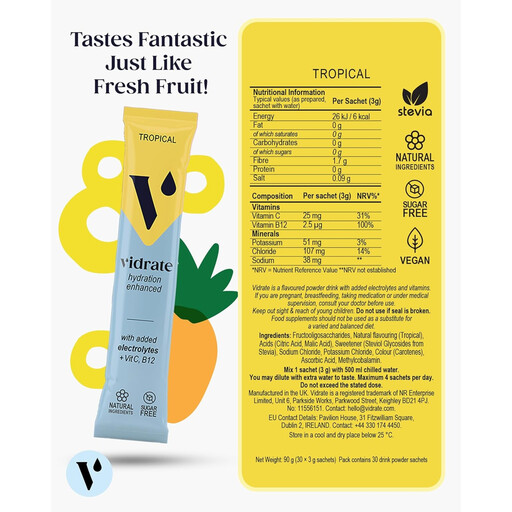
Vidrate Tropical Flavour Hydration Powder, 10 x 3g
A sachet format to consider when you want to keep drinks in the cupboard and prepare them as needed. Mix a sachet with water according to the supplied directions rather than consuming the powder undiluted, and check the pack’s daily-use and ingredient guidance.
View on Joybuy
 No image available
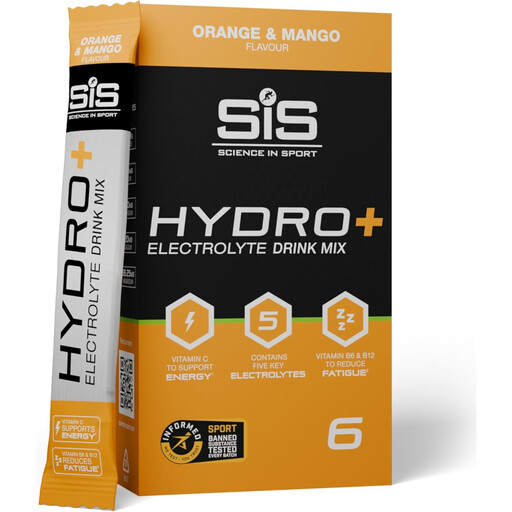
Science in Sport Hydro+ Orange & Mango, 6 x 4.3g
These sachets offer a mix-as-needed format for exercise use and require cold water. If reducing sugar is the deciding factor, check the current nutrition label before choosing this product; follow the pack directions and cautions for use.
View on Joybuy
 No image available
Lucozade Sport Orange, 4 x 500ml
A ready-to-drink multipack for someone deliberately choosing a carbohydrate-containing sports drink rather than a zero-sugar one. Check the sugars and carbohydrate on the current pack for the amount you intend to drink; refrigerate after opening and follow its use-by-opening directions.
View on Joybuy
Common questions
Is a zero-sugar sports drink suitable for every workout?
No single formulation covers every purpose. If avoiding sugar for lighter activity is your priority, check a zero-sugar drink’s label and intended use; if you deliberately want carbohydrate during exercise, compare the carbohydrate and sugars in the amount you plan to drink.
Does “low sugar” mean “sugar free” on a drink powder?
No. Gatorade UK describes Hydration Booster as low sugar, while its ingredients list includes sugar. Read both the nutrition panel and ingredients for the exact powder you choose.
Should sports drinks be the main drink kept for everyday hydration?
A sports drink need not be the household default for routine fluid intake. The NHS identifies water as a choice for hydration and notes that lower-sugar drinks can also count towards fluid intake; choose a sports-drink formulation for the use and ingredients you actually want.
What should I check before buying a sports-drink multipack?
Compare sugars and carbohydrate per 100ml and per bottle, then check ingredients, warnings, the best-before date and storage directions. Check the exact flavour: ASDA’s Powerade Berry & Tropical Fruits listing, for example, states that it contains a source of phenylalanine.


