Home G&T drinkers cutting back
If you want to keep the familiar tonic-and-garnish serve, decide whether you mean less alcohol in the glass or less sugar and energy from the mixer. Those changes require different choices.


To reduce the alcohol in a G&T-style serve, change the alcoholic base rather than just the tonic: a slimline or light tonic does not reduce the units in a regular measure of gin. Choose a base with a clearly labelled alcohol by volume (ABV), then choose the tonic according to its flavour, sugar and sweeteners.
If you want to keep the familiar tonic-and-garnish serve, decide whether you mean less alcohol in the glass or less sugar and energy from the mixer. Those changes require different choices.
Slimline tonics and light tonics can differ in both sugar and sweeteners. Read the ingredients alongside the nutrition panel if either matters to you.
Individual cans may suit one or two serves without opening a larger bottle. Whatever the pack size, the base drink determines whether an alcoholic mixed drink contains fewer units.
Choose the base drink for the alcohol level you want; choose the tonic separately for its ingredients, flavour and serving size.
When it fits: Choose a slimline or light tonic if your aim is to change the mixer’s sugar or energy content.
The limit: Changing only the tonic leaves the alcohol units from the measured spirit unchanged.
When it fits: Use a clearly labelled alcohol-free or lower-ABV substitute in place of the regular spirit if reducing alcohol is the goal.
The check: Read the substitute’s ABV; a light tonic does not tell you the alcohol content of the finished serve.
| Priority | What to check | Your needs |
|---|---|---|
| Alcohol content | Check the base drink’s ABV and the amount poured. The NHS calculates units as ABV percentage × volume in ml ÷ 1,000. | I want less alcohol in my usual at-home serve, not simply a different tonic alongside the same spirit. |
| Sugar and energy | Compare nutrition values at the amount of tonic you intend to pour. Sainsbury’s lists less than 0.5 g sugars and 4 kcal per 250 ml of its Diet Indian Tonic Water; its Fever-Tree Refreshingly Light listing gives 3.8 g sugars and 15 kcal per 100 ml. | I would like to change what the mixer contributes, while keeping that separate from the alcohol in the base drink. |
| Sweeteners and flavour | Read the ingredient list rather than relying on ‘light’. Sainsbury’s lists aspartame in Schweppes Slimline; Fever-Tree’s Refreshingly Light listing says it contains no artificial sweeteners. Fentimans describes its Naturally Light tonic as botanically brewed. | I may prefer a sweetener-based slimline tonic, or choose a light tonic with sugars because its ingredients or flavour matter more to me. |
| Pack size | Match cans or bottles to the number of serves you expect to make, and follow the pack’s storage instructions after opening. | For an occasional drink at home, I would rather open an amount I expect to use. |
A mixer can change the sugar or energy in a drink without changing the units supplied by a regular spirit. The NHS calculates alcohol units from ABV and the volume of the alcoholic drink.
If alcohol reduction is the aim, choose and measure the base drink first; then select the tonic.
The cited Fever-Tree Refreshingly Light and Fentimans Naturally Light products list sugars. The cited slimline and diet examples use sweeteners instead.
Compare the nutrition panel for your intended serving and check which sweeteners or sugars the ingredients list names.
A 1 litre bottle may be less convenient for an occasional single serve than individual cans.
Choose a pack size that fits your plans and follow its instructions for storage after opening.
Sainsbury’s listing for Schweppes Slimline Tonic Water names aspartame and states that the drink contains a source of phenylalanine.
Check the label before choosing it if you need to avoid that ingredient or prefer a different sweetener.
These references describe named tonic products or mixer ranges, not every product made by each brand.
Refreshingly Light Premium Indian Tonic Water is an option for comparing light tonic with sweetener-based slimline tonic.
Slimline Tonic Water is a sweetener-based choice for a portioned tonic serve.
Naturally Light Tonic Water offers a botanically brewed tonic for shoppers considering flavour as well as the nutrition panel.
Low Calorie Indian Tonic Water is an own-label option in a 1 litre bottle.
Diet Indian Tonic Water is an own-label option in a 1 litre bottle.
Britvic describes mixers among its range of juices and soft drinks.
These portioned tonic packs are options for choosing a mixer at home. To make a lower-alcohol serve, choose the base drink separately by its labelled ABV.
 No image available
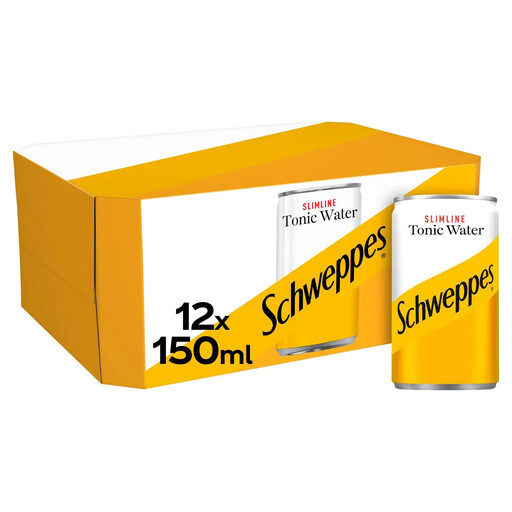
Individual cans suit portioned at-home serves. Sainsbury’s listing for this pack gives 0 g sugars and 3 kcal per 150 ml; it names aspartame and states that the drink contains a source of phenylalanine. The tonic does not reduce units from a regular spirit.
 No image available
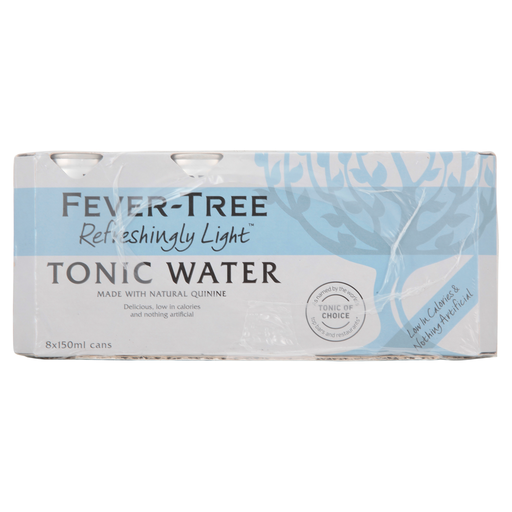
This eight-can pack offers individual 150 ml tonic serves. Check its own ingredients and nutrition panel when comparing light tonics; choose the base drink separately if alcohol reduction is your aim.
 No image available
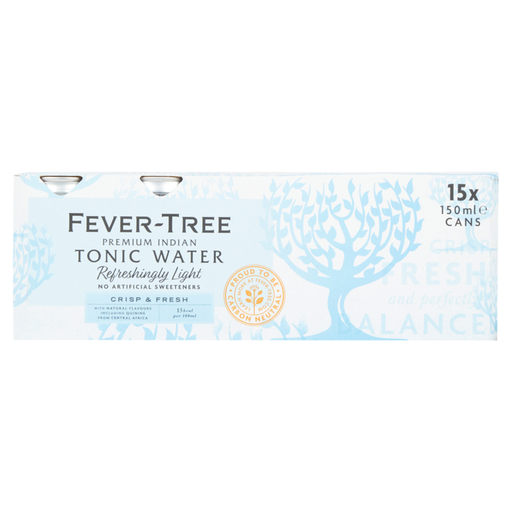
The 15 individual cans suit households planning several serves. Check this pack’s nutrition and ingredient label when comparing sugar and sweeteners; a light tonic does not change the alcohol units in a regular spirit.
 No image available
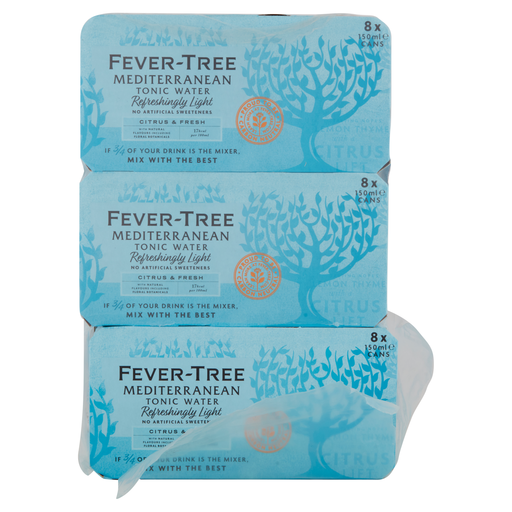
This Mediterranean tonic comes in eight individual 150 ml cans. Compare its own ingredients and nutrition panel with other light tonics, and check the base drink’s ABV if you want less alcohol in the serve.
No. Changing to slimline tonic does not reduce the units from the gin you pour. To reduce alcohol in the serve, check the base drink’s ABV and measure how much you use.
UK Government guidance says that an alcohol-substitute drink using the voluntary ‘low alcohol’ description should be no more than 1.2% ABV and show its maximum ABV. That guidance concerns alcohol-substitute drinks, not ordinary soft-drink mixers such as tonic water.
Use the NHS calculation: ABV percentage × volume of the alcoholic drink in ml ÷ 1,000. Check the ABV and your actual pour; ordinary tonic water does not add alcohol units.
Yes. Sainsbury’s lists 3.8 g sugars per 100 ml for Fever-Tree Refreshingly Light Premium Indian Tonic Water, while Fentimans lists 3.4 g per 100 ml for Naturally Light Tonic Water. Compare the label for the particular tonic and serving size you intend to use.
The NHS advises men and women not to regularly drink more than 14 units a week. For a mixed drink, calculate the units from the alcoholic base’s ABV and the volume poured rather than judging by the tonic.