
24/7 Customer Support

Free returns

Same-day & Next-day Delivery

Quality Guaranteed

Unlock Your Welcome Offers: FREE Delivery | Up to 80% OFF | Free 30-day JoyPlus trial
Download the APP
Lower back stiffness can make desk work, commuting, exercise and travel less comfortable. A lower back massager may offer convenient vibration, heat, percussion or electrical stimulation at home, but choosing the wrong design can leave you with an expensive device that is difficult to position, uncomfortable to use or unsuitable for your routine.
Before buying a back pain relief massager, look beyond impressive-sounding claims and check how the product will work in everyday UK conditions.
A powerful massage gun is not automatically the right choice for the lower back. Percussion devices need to be moved across muscle rather than held on one spot, and their shape may make it difficult to reach the centre of your back without assistance.
A curved waist device, massage pillow or vibrating muscle roller may provide more practical coverage for seated use. Check whether the product is designed for self-use and whether its handle, strap or shape allows you to maintain a comfortable position.
A heated massager can feel pleasant around stiff muscles, but heating speed, temperature levels and coverage matter more than the word “heat” on the packaging. Check whether heat can be controlled independently, whether both sides of the device warm up and whether the instructions explain safe contact times.
Heat should not be used over damaged skin or areas with reduced sensitivity. Stop immediately if the device becomes uncomfortably hot.
A rechargeable massager is convenient only when its battery, charging method and controls suit your routine. Confirm whether it uses USB-C, whether it can operate while charging and how long a full charge is expected to last.
For UK buyers, also check the supplied charger or charging guidance, product instructions, UK seller information and applicable UKCA or CE marking where relevant. A device that cannot be cleaned properly or stored dry may become less appealing after regular use.
Different technologies suit different preferences:
Start with the lowest setting. Do not apply percussion directly over bones, the spine, joints, open wounds or injured areas.
If warmth is important, look for the number of heat levels, the heating area and whether heat is available during every mode. A broad heat panel may be more useful for sitting at a desk, while a heated massage head may be preferable for targeted muscle work.
Descriptions such as “rapid heating” should be supported by a stated warm-up time. For example, the Breo device below lists heating in five seconds, while the SKG W9 Pro lists three hot-compress levels and a stated heat area.
A portable massage device should be easy to hold, position or pack. Consider:
A product with more modes is not necessarily more useful if the settings are difficult to understand.
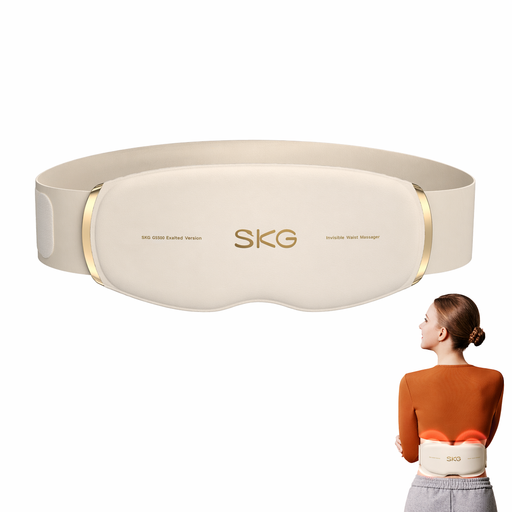
Why This Fits Their Persona: Its slim, portable lower-back format suits shoppers who want a dedicated waist device for home, office or gifting without carrying a larger percussion massager.
The dedicated waist shape avoids the awkward reach and positioning issues associated with some handheld massage guns.
Slim profile, portable construction and a design focused specifically on the lower back.
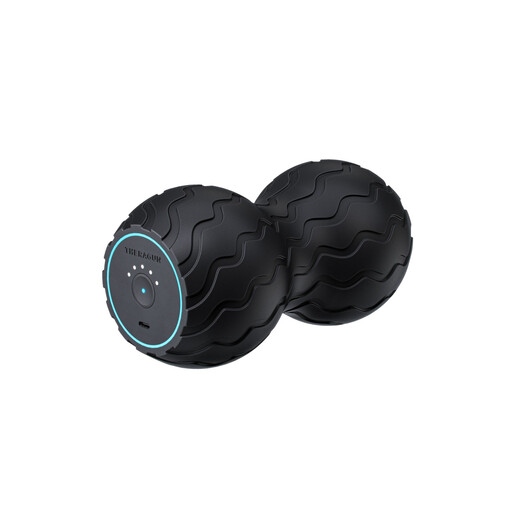
Why This Fits Their Persona: The dual-sphere roller is suited to people who prefer controlled rolling around the back, neck and spine, including commuters and frequent travellers.
Its contoured dual-sphere format is designed to guide movement around the spine instead of relying on difficult one-handed positioning.
Five vibration settings, travel pouch and a rechargeable battery listed for up to 200 minutes of use.
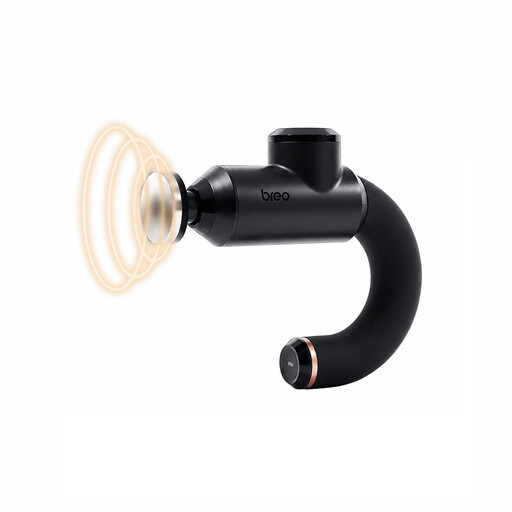
Why This Fits Their Persona: Gym users and sports recovery shoppers may prefer interchangeable heads and adjustable percussion for larger muscle groups, legs, shoulders and back.
The specification lists four speeds, 12 mm amplitude and six heads, making the operating range clearer than vague power claims.
1,400–2,600 RPM range, up to 19 kg stall force, USB-C charging and a heated head.
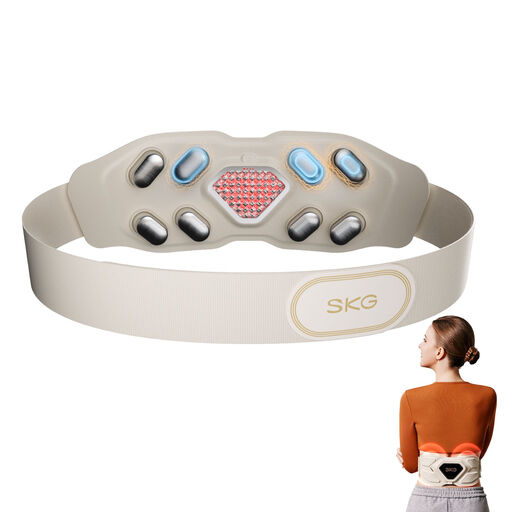
Why This Fits Their Persona: Users specifically comparing EMS and TENS massager options with heat may value its dedicated waist format and app-based controls.
The listing identifies the electrical modes, number of settings, massage heads and heat levels, giving shoppers specific features to compare.
EMS and TENS modes, 14 massage modes, eight heads and three hot-compress levels.
We have compiled a complete, real-time list of products that fully satisfy these strict selection criteria and UK safety regulations.
Start at the lowest intensity and follow the supplied instructions. Keep percussion devices moving over muscle and avoid the spine, bones, joints, injured areas and open wounds. Do not use a powered device while sleeping, driving or operating machinery. Stop if you experience numbness, unusual pain or overheating.
Battery life varies by motor, heat use, intensity and product design. Compare the stated operating time rather than assuming all rechargeable massagers perform alike. Using heat and higher speeds generally consumes more power. USB-C charging can be useful when travelling, but check whether the device can be used while charging.
It may suit the muscles around the lower back when used carefully, but it is not designed to press directly on the spine. A massage gun is generally more versatile for legs, shoulders and sports recovery, while a waist massager, pillow or roller may be easier for regular seated use. If discomfort is persistent, severe or accompanied by other symptoms, seek appropriate medical advice rather than relying on a massage device.