Who is this choice for?
The useful label checks depend on whether you are counting carbohydrate, comparing calories or meeting a dietary requirement.
People counting carbohydrate
If a snack needs to fit a personal carbohydrate plan, start with the total carbohydrate in the amount you will eat. Leeds Teaching Hospitals NHS Trust advises using total carbohydrate rather than only the 'of which sugars' figure when counting carbohydrates.
People comparing calories and carbohydrate
If calories matter to your snack choice, compare them alongside carbohydrate for the same portion. Diabetes UK lists snack ideas by both carbohydrate and calorie amounts; one figure does not stand in for the other.
Shoppers with dietary requirements
For a gluten-free, vegan or allergen-related requirement, check the ingredients and allergen statement on the exact flavour and pack. Another bar in the same range may have different ingredients.
What should you check on the label?
Start with the portion you intend to eat, then compare carbohydrate and calories for that portion. Use the remaining label details to distinguish bars that otherwise seem similar.
| Priority |
What to check |
Your needs |
| Total carbohydrate |
Find total carbohydrate per bar or calculate it from the declared serving. Do not substitute the 'of which sugars' figure: Leeds Teaching Hospitals NHS Trust advises using total carbohydrate for carbohydrate counting. |
I need to know how much carbohydrate the bar adds to the portion I plan to eat, particularly if I follow an individual carbohydrate-counting plan. |
| Calories and portion |
Compare kcal for one bar, and check whether the nutrition table refers to one bar, another serving size or 100g. Check how many bars you would actually eat. |
A smaller calorie figure is useful to me only if I also know the bar's carbohydrate amount. Diabetes UK presents snack ideas using both calorie and carbohydrate figures. |
| Sugars and fibre |
Read sugars and fibre for the same portion as the carbohydrate figure. Check the ingredients for sugar, syrups or honey rather than treating oats or fruit as a complete guide to the bar. |
I want to compare the ingredients as well as the numbers on the front of the pack. Diabetes UK cautions that cereal bars can contain substantial amounts of sugar. |
| Dietary suitability |
Check the current ingredients, allergen statement and any gluten-free or vegan designation for the exact variant. Do not transfer one flavour's details to another. |
If I have an allergy or another dietary requirement, I need the particular bar to meet it as well as fit the portion I intend to eat. |
Brand ranges to compare
These ranges offer different bar types, but the exact product and portion determine which label figures are relevant.
Kellogg's
Kellogg's UK publishes per-bar nutrition for several small cereal-and-milk and Special K bars.
- Its Coco Pops Snack Bar is listed at 82 kcal and 14g carbohydrate per 20g bar; its Special K Red Berry Bar is listed at 104 kcal and 20g carbohydrate per 27g bar.
- Those figures describe different products and portion sizes. Neither calorie figure establishes suitability for an individual carbohydrate plan.
Graze
The Oat Boost range offers oat-based flapjacks rather than small cereal-and-milk bars.
- Tesco Groceries lists Graze Cocoa Vanilla Oat Boost at 116 kcal per boost and describes it as high in fibre.
- Check total carbohydrate on the current pack of the particular flavour before deciding whether its portion fits your needs.
Nature Valley
Its UK range includes Crunchy oat bars and distinct Protein variants.
- Nature Valley UK identifies its Protein Peanut & Chocolate Bars as gluten-free and lists 10g protein and 4g fibre for that product.
- Those features do not establish the carbohydrate or calorie amount of another Nature Valley flavour; compare exact packs.
Eat Natural
Eat Natural UK lists fruit-and-nut bars alongside protein, high-fibre, vegan and gluten-free products.
- The range gives shoppers several distinct ingredient and dietary-feature options to examine.
- Check the nutrition and allergen details of the chosen variant; a range-level description does not give its per-bar carbohydrate amount.
Trek
Its Original Oat Protein Flapjack is a larger protein-focused portion than the small cereal bars discussed above.
- Myprotein UK lists 10.2g protein per 50g Original Oat Protein Flapjack.
- The same listing gives 217 kcal, 21.1g carbohydrate and 12.2g sugars per 50g bar. Compare the full portion rather than selecting it for its protein description alone.
Alpen
Alpen is a cereal brand, but a remembered Alpen bar may not be a current product.
- Its product-availability information identifies individual former bar varieties by name.
- Alpen says several former bars, including Alpen Light Chocolate & Orange, are no longer made. Confirm the exact product before relying on an older bar's nutrition figures.
Cereal bars on Joybuy
These Joybuy options include individually portioned oat and cereal bars, plus a larger oat-bar portion with different dietary features. Compare the current pack's carbohydrate and calorie figures before choosing one for your own needs.
 No image available
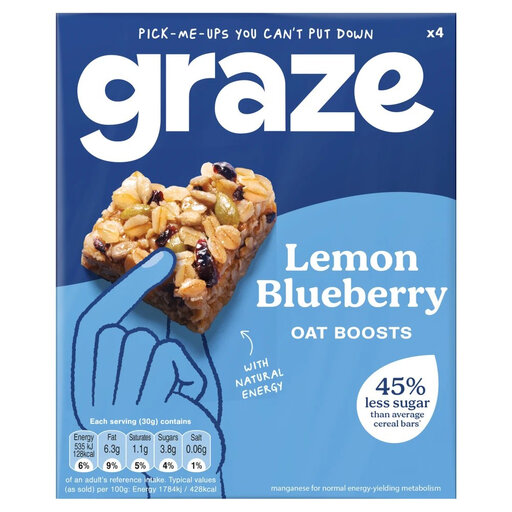
Graze Oat Boosts Lemon Blueberry, 4 × 30g
For an individually wrapped oat-bar portion, compare the nutrition for one 30g bar with your carbohydrate plan. Check the current ingredients and allergen statement, including any advice about nuts or peanuts.
View on Joybuy
 No image available
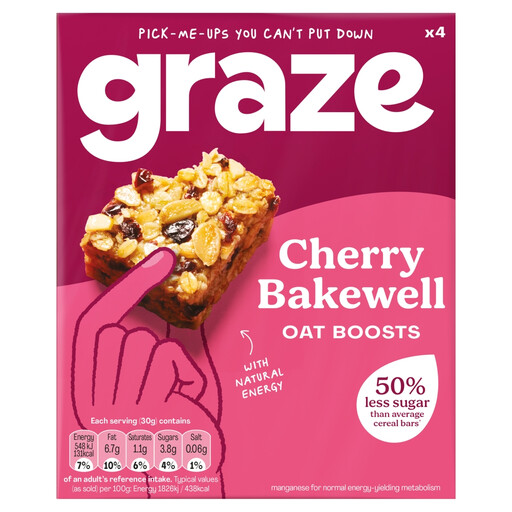
Graze Oat Boosts Cherry Bakewell, 4 × 30g
This is another 30g Oat Boosts flavour, not a reason to assume identical nutrition or ingredients to the Lemon Blueberry bar. Check its own carbohydrate, calorie and allergen declarations, particularly if almonds are a concern.
View on Joybuy
 No image available
Special K Dark Chocolate Snack, 6 × 21.5g
The 21.5g wrapped portion makes a per-bar comparison practical. Use the nutrition and allergen details for this Dark Chocolate Snack specifically; figures for the differently sized Special K Red Berry Bar do not describe it.
View on Joybuy
 No image available
Cadbury Brunch Light Orange Cereal Bar, 4-pack, 104g
For this four-pack, establish the weight of the bar you will eat before using any nutrition values stated per 100g. Check the current ingredients and allergen statement rather than treating 'Light' as a carbohydrate description.
View on Joybuy
 No image available
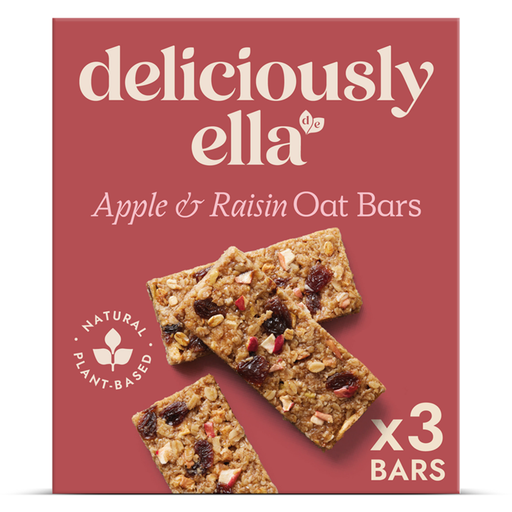
Deliciously Ella Apple, Raisin & Cinnamon Oat Bars, 3 × 50g
Each 50g bar is a larger stated portion than the other individually sized bars here. If its oat-bar ingredients or dietary features interest you, compare the full bar's carbohydrate and calories with your intended snack portion, and check the pack for allergen advice.
View on Joybuy
Questions about cereal bars and diabetes
Is a low-calorie cereal bar automatically suitable if I have diabetes?
No. Diabetes UK advises considering the amount of carbohydrate eaten, so compare total carbohydrate and calories for the portion you intend to have. Whether that portion fits depends on your individual plan.
Should I count total carbohydrate or 'of which sugars'?
Use total carbohydrate for carbohydrate counting, as Leeds Teaching Hospitals NHS Trust advises. The sugars figure can help you compare labels, but it does not include all the carbohydrate in a bar.
Can traffic-light labels help me compare cereal bars?
Yes, where present. GOV.UK explains that traffic-light labels show levels of fat, saturates, sugars and salt, alongside calorie information. If you need to track carbohydrate, also read the total carbohydrate for the portion you will eat.
Does a protein, high-fibre, vegan or gluten-free label mean fewer carbohydrates?
No. Those descriptions identify particular features, not a carbohydrate amount. For example, Myprotein UK lists 21.1g carbohydrate per 50g Trek Original Oat Protein Flapjack; check the exact bar's nutrition panel and ingredients rather than relying on its range description.


