Gym-goers packing a light spare snack
If the bar is there for an occasional snack rather than a protein-focused eating occasion, start with calories per complete bar. Check the portion shown on the wrapper before comparing bars of different sizes.


For a lighter gym-bag snack, compare the calories in the whole bar you intend to eat, rather than relying on words such as “protein” or “natural”. A smaller cereal or oat bar may fit that purpose; choose a higher-energy protein bar when its protein content matters to your snack choice, and check sugars, saturated fat and allergens alongside calories.
The useful comparison depends on whether the bar is a small spare snack, a protein-focused choice or something that must meet a dietary restriction.
If the bar is there for an occasional snack rather than a protein-focused eating occasion, start with calories per complete bar. Check the portion shown on the wrapper before comparing bars of different sizes.
Compare protein and energy for the same bar. Kellogg’s lists 1.4 g protein and 99 kcal for its 25 g Frosties Cereal Milk Bar; Nature Valley lists 10.2 g protein and 195 kcal for its 40 g Protein Peanut & Chocolate bar. They serve different snack preferences, not interchangeable portions.
Read the ingredients and allergen statement for the exact variant. An oat-based name does not establish gluten-free suitability, while a protein-bar name says nothing about whether it contains peanuts, milk or soya.
Choose when: You want a lighter snack: Kellogg’s, Tesco and Kellogg’s respectively list 99 kcal for a 25 g Frosties bar, 116 kcal for a 30 g Graze Cocoa Vanilla bar and 136 kcal for a 37 g Nutri-Grain Apple bar.
Check alongside it: The Frosties and Nutri-Grain examples list just 1.4 g and 1.5 g protein per bar respectively; Nutri-Grain Apple also lists 12 g sugars.
Choose when: Protein is a deliberate part of the snack choice: Nature Valley lists 10.2 g protein and 195 kcal per 40 g bar, while Myprotein lists 10.2 g protein and 217 kcal for a 50 g Trek flapjack.
Allow for: These are larger, higher-energy servings than the light-bar examples; the Nature Valley variant contains peanuts, soya and milk.
Decide what role the snack has, then compare the declared portion and the nutrients that matter to you.
| Priority | What to check | Your needs |
|---|---|---|
| Calories per bar | Find the kcal for the complete bar or stated serving. Check whether a serving contains one bar or more, then use per-100 g values only as a separate comparison of foods with different portion sizes. | I want a snack that fits the amount I plan to eat, without mistaking a smaller wrapper for the same-sized portion. |
| Protein and portion size | Compare protein grams and kcal for the same complete bar. Check its weight before treating a 25 g cereal bar and a 40–50 g protein bar as equivalent snacks. | If protein is the reason I am choosing the bar, I want to know what comes in the whole serving. Otherwise, a smaller snack may suit the occasion. |
| Sugars, saturates and salt | Read the amounts per bar. Where a traffic-light label is provided, use its high, medium or low indications for fat, saturated fat, sugars and salt alongside the full nutrition declaration. | An oat, nut or protein description is not enough for me to judge the nutrition label. I want to compare what is in the portion I will actually eat. |
| Ingredients and allergens | Check the exact variant’s ingredients, declared allergens and any “may contain” statement. Look for an explicit gluten-free or vegan designation if it is relevant to your choice. | Before putting a bar in my bag, I need to know whether its current wrapper meets my dietary requirements. |
Those words do not tell you the calories, sugars or saturated fat in the bar. In its November 2025 review of 458 snack bars from 10 major UK retailers, Action on Salt & Sugar classified 37% as high in sugars and 55% as high in saturated fat under UK front-of-pack thresholds. Those figures describe products assessed, not shoppers’ preferences.
Compare the nutrition values for the bar you will eat, and consider protein grams separately.
The cited Kellogg’s, Tesco, Nature Valley and Trek examples have stated servings ranging from 25 g to 50 g. A per-100 g comparison alone does not show the calories in each wrapped portion.
Start with kcal per complete bar, then use per-100 g values if you also want to compare nutritional density.
Nature Valley states that its Protein Peanut & Chocolate bar contains peanuts, soya and milk and may contain tree nuts. Eat Natural lists peanuts and soya in its Dark Chocolate & Peanut Protein Bar and warns of possible milk and tree-nut allergens.
Check the exact current wrapper and its “may contain” statement rather than relying on the bar’s category or a previous pack.
Alpen’s UK FAQ lists several former bars, including Light Bars Chocolate & Orange, as no longer being made.
If you have an Alpen variant in mind, confirm the exact product before using an older nutrition listing to compare it with a current bar.
These brand references illustrate different bar formats; the nutrition and allergen details belong to the named products, not every bar from each brand.
Its Protein Peanut & Chocolate bar is a larger, protein-focused example for comparison with smaller cereal bars.
Frosties Cereal Milk and Nutri-Grain Apple provide two different individually portioned cereal-bar examples.
Cocoa Vanilla Oat Boosts offer a 30 g oat-flapjack example.
Dark Chocolate & Peanut Protein Bar is a nut-based option rather than a small, lower-energy cereal bar.
Original Oat Protein Flapjack is a 50 g protein-flapjack example.
Alpen is worth checking by exact variant rather than by an older bar-line name.
These options include smaller cereal and oat bars for a gym-bag snack, followed by a larger Nature Valley protein bar for shoppers considering a different portion and protein trade-off. Check each current pack for nutrition and allergen details before choosing.
 No image available
A smaller cereal-bar format to consider when packing a light snack. The product name gives a 104 g four-pack; check the current wrapper for energy per bar, ingredients and allergens.
 No image available
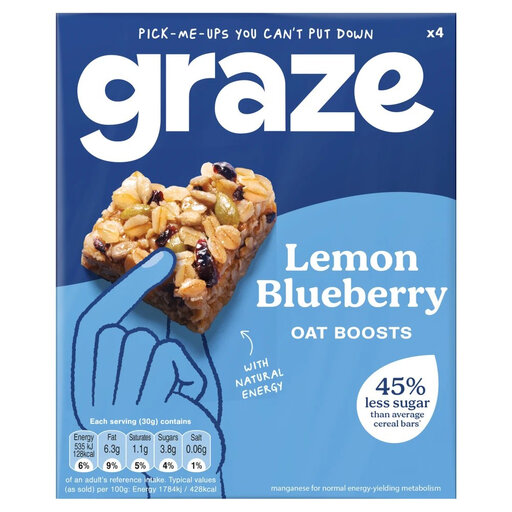
A 30 g oat-bar portion for comparing with other individually sized gym-bag snacks. Check this flavour’s own nutrition and allergen label rather than applying values from a different Graze Oat Boosts variant.
 No image available
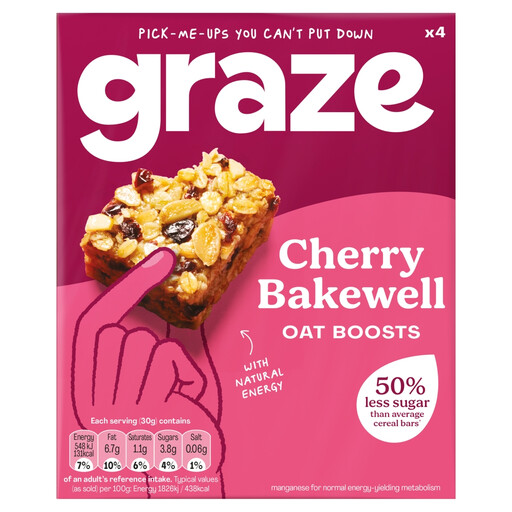
Another 30 g oat-bar option if you prefer this flavour. For a meaningful comparison with the Lemon Blueberry variant, use the calories and sugars on each variant’s current pack and check the Cherry Bakewell ingredients if you avoid nuts.
 No image available
The 21.5 g bar size makes the complete portion particularly important when comparing it with larger oat or protein bars. Read the current wrapper for its nutrition values and allergen declaration.
 No image available
Consider this larger bar when protein matters more to your snack choice than selecting the smallest portion. Nature Valley lists 195 kcal, 10.2 g protein and 4.3 g fibre per 40 g Protein Peanut & Chocolate bar; it contains peanuts, soya and milk and may contain tree nuts. Confirm the details on this pack before eating it.
Start with the kcal for the complete bar or stated serving you intend to eat. For example, Kellogg’s lists 99 kcal for a 25 g Frosties Cereal Milk Bar, while Myprotein lists 217 kcal for a 50 g Trek Original Oat Protein Flapjack. Check whether the pack’s serving is one bar before using per-100 g figures as an additional comparison.
No: choose it for its declared protein and portion if those suit the snack you want. Nature Valley lists 10.2 g protein and 195 kcal per 40 g Protein Peanut & Chocolate bar; Myprotein lists 10.2 g protein and 217 kcal per 50 g Trek Original Oat Protein Flapjack. A smaller cereal bar may suit you when a lighter snack is the priority.
Compare energy, sugars, saturated fat and salt for the portion you will eat. GOV.UK’s consumer label guidance explains that traffic-light labels, where provided, indicate high, medium or low amounts of fat, saturated fat, sugars and salt; read the full nutrition declaration for the exact bar too.
No. Check the exact product’s ingredients, allergen declaration and any explicit gluten-free designation. Nature Valley identifies its Protein Peanut & Chocolate bar as gluten free, but says it contains peanuts, soya and milk and may contain tree nuts; its Crunchy Oats & Dark Chocolate bar may contain wheat, peanuts and tree nuts.
Follow the storage instructions on its current pack. For example, Joybuy’s listing for a Nature Valley Protein Peanut & Chocolate multipack says to store it in a cool, dry place; check the instructions for a different brand or variant rather than assuming they are the same.